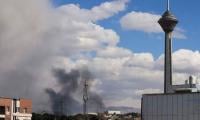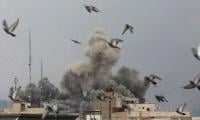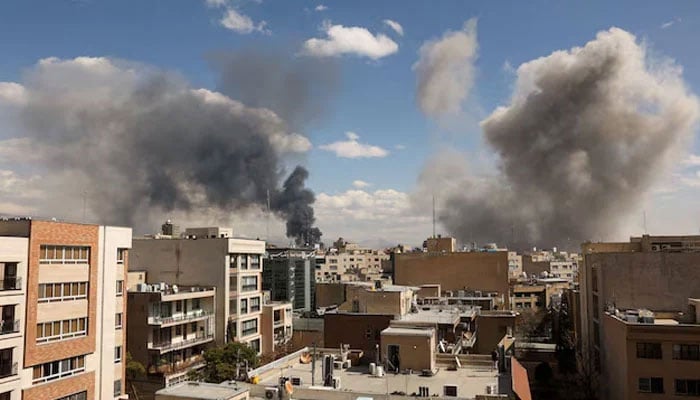
US and Israeli airstrikes on Iran and Tehran’s retaliation have thrust the region into one of its most dangerous moments in years. At the same time, Pakistan has launched air operations against militant targets inside Afghanistan in response to repeated terrorist attacks on its territory.
Multiple theatres of conflict now operate simultaneously, and their interaction will directly shape Islamabad’s strategic calculations in the days and weeks ahead.
Pakistan cannot afford to treat events in Iran as distant or abstract. It shares a long, sensitive border with its western neighbour and sustained instability there will generate immediate consequences. Refugee flows could overwhelm border management systems. Armed groups could exploit disorder to move across porous terrain. Sectarian actors could inflame tensions inside Pakistan. Economic activity in Balochistan could contract further under pressure. If Iran experiences even temporary destabilisation, Pakistan’s entire western security architecture will face new strains. Islamabad must plan not for best-case scenarios, but for rapid deterioration.
Key international actors – including Pakistan’s principal Muslim partners, the EU and the US – have endorsed Islamabad’s position that it is exercising its inherent right of self-defence when it comes to Afghanistan. The justification is direct and widely understood: militants have launched repeated attacks from Afghan soil, drawing on safe havens, logistical pipelines and operational freedom. These attacks have targeted civilians, security personnel and critical infrastructure.
Pakistan must now consolidate the momentum it has generated. Rather than conduct limited or symbolic strikes, it should methodically dismantle the architecture that sustains militancy – training facilities, command and control centres, ammunition depots, communication nodes and cross-border supply chains. Groups such as the TTP depend on these structures to recruit, indoctrinate, train and deploy operatives. If Pakistan degrades these assets comprehensively, it will significantly curtail their operational reach and planning capacity.
The expanding confrontation involving Iran compresses Pakistan’s strategic window. As global diplomatic and military attention shifts towards Tehran, Islamabad risks operating in an increasingly crowded and unpredictable environment. Prolonged action could invite external pressures or unintended escalation. Pakistan should therefore define clear operational objectives, execute with precision and intensity and conclude its campaign on its own terms.
Simultaneously, Pakistan must also secure its eastern flank. Israeli strikes on Iran followed shortly after Indian Prime Minister Narendra Modi concluded a visit to Israel on February 25. No evidence links that visit to subsequent military action, yet strategic partnerships often involve intelligence coordination and advance assessments and must not be ruled out in this case. Given India’s deep defence relationship with Israel, it is reasonable to assume that New Delhi monitored developments closely and would come to Israel’s assistance as and when needed.
Pakistan, therefore, cannot dismiss the possibility that India might test its resolve during this unsettled period. Even without initiating full-scale conflict, India could employ calibrated escalation. Such moves would stretch Pakistan’s military resources, generate internal pressure and complicate its western operations. Islamabad must deter this possibility through visible readiness, credible signalling and sustained diplomatic engagement.
Four immediate priorities demand attention: first, Pakistan should intensify efforts to dismantle militant networks operating from Afghan territory. As these groups lose infrastructure, they will likely pivot to asymmetric tactics, especially suicide bombings. Security agencies must anticipate this shift, penetrate networks through intelligence operations, disrupt recruitment pipelines and harden vulnerable urban and military targets. The state must seize the initiative rather than react to events.
Second, Pakistan must preserve operational momentum while preventing mission creep. Its air superiority grants it control over timing and scope. By establishing firm timelines and measurable objectives, Islamabad can avoid becoming mired in an open-ended campaign that drains resources and invites regional complications.
Third, Pakistan must reinforce deterrence along the eastern border. Even if India refrains from overt military action, hybrid strategies remain plausible. Islamabad should maintain a strong defensive posture, enhance surveillance and communicate resolve clearly to prevent miscalculation.
Fourth, Pakistan must strengthen internal security in a coordinated and sustained manner. External operations will succeed only if matched by domestic vigilance. Federal and provincial authorities should integrate intelligence databases, improve law-enforcement coordination, tighten border controls and expand counter-radicalisation efforts. Militant networks under pressure often seek symbolic or soft targets; the state must deny them space to operate.
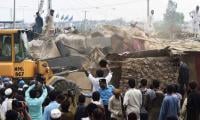
The recent unrest following Ayatollah Ali Khamenei’s assassination and the tragic deaths of protesters during confrontations with law enforcement highlights the need for proactive planning. Authorities should refine crowd-management strategies, deploy security forces more judiciously and engage religious scholars, community elders and civic leaders before tensions escalate. By communicating early and consistently, the state can channel grief and anger into peaceful expression rather than destructive violence.
Pakistan stands at a decisive juncture. It possesses the military capability, diplomatic space and operational initiative to neutralise threats emanating from Afghanistan. Yet capability alone will not suffice. Islamabad must align speed with strategy, deterrence with diplomacy and external action with internal cohesion. As crises converge around Iran, Afghanistan and potentially India, hesitation will magnify risk.
Clear objectives, rapid execution, firm signalling and vigilant internal security can allow Pakistan not merely to withstand this turbulent period, but to also emerge from it more secure and strategically confident.
The writer is a journalist based in Karachi. He tweets/posts @omar_quraishi and can be reached at: [email protected]