The IMF’s recent report on corruption in Pakistan neither offers a fresh insight on already known patterns of graft nor provides guidance for fresh solutions to tackle a challenge that has hit Pakistan very hard.
The publication of the report on the website of the finance ministry, though the subject of recent discussions across the country’s TV shows, instantly became a reminder of complacency across the power structure. Instead of being jolted to take decisive action, a succession of past regimes have treated corruption as a fait accompli.
Pakistan is no exception to the powerful reality witnessed worldwide that country after country failed when its leaders chose to ignore corruption. Further damaging to Pakistan’s mainstream population has been the reality of broken down systems of governance, long ignored when they were of little consequence to the ruling elite. At the heart of the IMF’s report lie two tragic trends.
First, its publication at the behest of a foreign lender rather than a home grown initiative underlines the lack of sincerity on this front across the power structure. This is nothing short of being outright tragic. Second, the report has highlighted the gaps that have fueled corruption across Pakistan. But short of the need to overcome those gaps, the report in itself offers little guidance on innovating the road ahead to battle corruption. And the obvious point in need of being addressed squarely relates to the need to reform the structures of governance, leadership and public representation.
Today, Pakistan’s ruling structure is more exposed on its failure to tackle corruption at the grassroots than before. Access to areas that must be the right of every citizen such as reliance on the police in cases needed, or access to municipal services or access to healthcare and education, have become luxuries for the far too few.
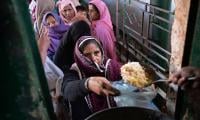
In the midst of this journey towards elitism, policy directions across the board have primarily become confined around the relatively few. Fancy initiatives such as EV buses or more motorways or indeed a planned glass covered train from Rawalpindi to Murree via Islamabad, have become baffling choices, coinciding with increasing nationwide food insecurity. The visibly growing incidence of impoverishment across the country, notwithstanding official claims to the contrary, have pointed to a sorry state within the state of Pakistan.
Going forward, successfully tackling corruption is linked to a massive policy change that is centrally driven by the needs of the people of Pakistan. And primary within this journey remains the cause of lifting prospects for Pakistan’s rural areas, notably the rural economy. In the midst of an acute crisis driven by fast rising climate change and an ever growing population burden, Pakistan’s future requires at least three radical choices.
First, fanciful projects undertaken in the name of development must be immediately suspended. In the 1990s, Pakistan witnessed its first ever Lahore to Islamabad motorway. That was tied to the promise of new motorways leading to robust industrialisation and Pakistan’s economic revival. More than three decades later and following the arrival of other motorways well beyond the Lahore to Islamabad route, the promised economic take-off is still awaited.
Second, with the fast emergence of a climate induced crisis and its related challenges, Pakistan must focus exclusively on this major front. Saving Pakistan from future climate related disasters is just about the only avenue to rid the country from coming catastrophes. In this journey, a robust revival of the rural economy centrally tied to agriculture is a must. Other areas such as a robust expansion of Pakistan’s fast depleting forest cover must be a center-piece in this journey.
Finally, tackling corruption as an emergency requires a comprehensive review of the patterns of Pakistan’s development spending. In the past, at least one departing senior UN official prior to leaving Islamabad, claimed in a background briefing that as much as 55 per cent of the funds allocated for development in Pakistan, ended up getting lost in wastage and corruption. If true, this pattern is clearly very alarming.
But making a comprehensive change requires an overhaul of the ruling structure in Islamabad and Pakistan’s provinces. Matters such as persuading Pakistan’s lawmakers to robustly back taxes on incomes of affluent farmers have not been short of an uphill struggle. Even today, the circumstances on the ground present major gaps that continue to raise questions over the applicability of this law. More vitally, making more affluent Pakistanis pay their taxes remains a struggle.
Besides, arming each elected politician from the ruling party with generous funds for development in their constituencies, for long has been criticised for enabling corruption at the grassroots.
Finally, halting all fanciful projects undertaken in the name of development is essential for a key reason. There needs to be a comprehensive review of oversight mechanisms in place, before public money is spent wisely and honestly. And that must be a centrepiece to battling corruption as a top priority for Pakistan.
The writer is an Islamabad-based journalist who writes on political and economic affairs. He can be reached at: [email protected]