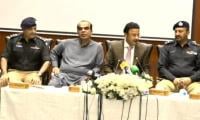
KARACHI: The Sindh government has directed a fresh and comprehensive mapping exercise of Afghan nationals residing illegally in the province, following a high-level meeting held at the Sindh Secretariat under the chairmanship of the Additional Chief Secretary (Home).
The review session assessed the progress of the ‘Illegal Foreigners Repatriation Plan (IFRP) Phase-III’ and issued wide-ranging instructions to police, intelligence agencies, NADRA, and district administrations.
According to official data presented by the Additional Inspector General of Police, Special Branch (AIGP-SB), a total of 231,381 Afghan nationals have been repatriated to date under all three phases of the government-mandated drive. These include 82,916 under Phase-I (November 2023–February 2025), 44,584 under Phase-II (February–August 2025), and 103,881 so far under the ongoing Phase-III.
The forum was briefed that 101,238 Afghans repatriated voluntarily through the Chaman border, while 2,643 individuals were processed via Sindh-wide transit points under Phase-III. Official estimates indicate the presence of approximately 297,800 Afghan nationals in Sindh, including those mapped as illegal residents, registered Afghan Citizen Card (ACC) holders, and Proof of Registration (POR) holders.
The meeting emphasised that the estimated 66,419 Afghan nationals still remaining in Sindh represent a “high number that must be taken seriously”, especially in view of recent intelligence assessments. It was decided that the Special Branch, district police, and military intelligence will jointly conduct a fresh mapping exercise to verify the remaining presence of Afghans in the province. The meeting also expressed concern over potential secondary migration of the Afghans, warning that Afghans leaving Karachi, historically attempt to resettle in other districts of province.
The District police outside Karachi division were directed to remain vigilant, dismantle emerging settlements, and take immediate action against individuals attempting to relocate. Participants were informed of several suspected fraudulent Pakistani CNICs allegedly obtained by Afghan nationals. NADRA officials were instructed to fast-track verification to ensure swift action against those found to hold forged documents. District police and Special Branch were directed to identify and report such cases for administrative action.
The meeting also focused on reports of properties, assets, and businesses owned or indirectly managed by Afghan nationals. Deputy Commissioners have been tasked with collecting detailed information on such holdings, with Commissioners overseeing the process. The Home Department will then present consolidated findings to the provincial government for further policy action.
The Chair also ordered action against individuals — including landlords — who provide shelter to Afghan nationals by renting them properties. It was directed that public awareness messages be disseminated through mosques and social media platforms. The forum was briefed on the slow ongoing registration of Ismaili Afghan nationals, averaging around 65 registrations per day since late October. To accelerate the process, NADRA will establish a static registration centre at a Jamat Khana, with capacity to register about 500 persons daily. Ismaili community representatives were asked to assist in communicating accurate phone numbers and addresses for effective coordination.
Authorities also discussed relocating the Afghan registration point from TMC Gaddap due to electricity shortages. NADRA requested a room at Police Station Gaddap to establish a static centre to handle rising numbers. DIG East confirmed that the rush has become manageable, and Malir district authorities were instructed to facilitate the relocation.
The meeting concluded with the decisions of fresh mapping of Afghan nationals under joint police and intelligence oversight, action against re-settlement attempts outside Karachi, acceleration of CNIC verification and reporting of forged cases, property and business ownership survey by DCs across the province, and dedicated registration facilities and community assistance for Ismaili Afghans.