It is an undeniable truth that the cycle of arrival and departure in this world has continued since the beginning of time. Every moment, countless souls open their eyes on this earth, and many breathe their last. Yet history remembers only those individuals who devoted their lives to courage, wisdom, dignity and service to humanity. Such remarkable visionary people change societies through their character and leave an everlasting example for generations to come.
In this context, November 20 holds special significance for our region. This date reminds us of two great personalities whose legacies continue to inspire us: the fearless ruler Tipu Sultan, born on this day, and the revolutionary poet Faiz Ahmed Faiz, who passed away on the same date. Both, in their own spheres, became symbols of resistance, courage, hope and dignity.
Sultan Fateh Ali Sahab Tipu, also known as the Tiger of Mysore, was born on November 20, 1750. He emerged as one of the strongest pillars in India’s early resistance against colonial domination. At a time when various local rulers had bowed before the East India Company, Tipu Sultan refused to accept foreign tyranny. As the ruler of Mysore, he stood like an iron wall to safeguard the entire Subcontinent. His life was defined by courage, strategic brilliance and an unshakeable commitment to freedom.
When the British attacked his capital, Seringapatam, in 1799, Tipu fought on the battlefield until his final breath. His martyrdom opened the path for complete British domination, and the triumphant declaration of the British general – “Today India is ours” – remains a bitter reminder of the price paid for freedom.
Yet Tipu Sultan’s legacy is far greater than his defeat. Even today, his famous saying, “To live like a lion for a day is far better than to live for a hundred years like a jackal”, continues to echo as a symbol of dignity, sovereignty and honour across the globe. He proved that a nation’s pride rests on the shoulders of fearless leaders who stand firm against imperial powers.
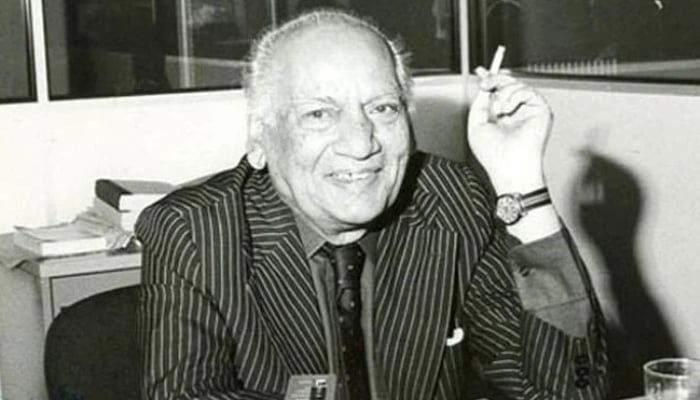
In another realm of expression–thought, poetry, and the struggle of words–lives the legacy of Faiz Ahmed Faiz, who left the world on November 20, 1984. Faiz was a poet of resistance, justice and human dignity. His verses awakened hope in the hearts of the oppressed and offered courage to those struggling against darkness. Faiz’s poetry teaches that systems built on injustice cannot endure forever – spring eventually arrives, and light overcomes shadows.
During General Musharraf’s era, especially during the Lawyers’ Movement, when Faiz's iconic poem 'Hum Dekhenge' was aired on Geo TV, it transformed into a symbol of hope for those demanding rule of law. Eventually, when the democratically elected PM Yousaf Raza Gilani ordered the release of the detained judges, it felt like a poetic manifestation of the very ideals Faiz stood for – justice, courage and democratic resolve.
Faiz mastered the art of expressing dissent in the language of love. His verses contained rebellion and tenderness, conviction and compassion. In public gatherings and street demonstrations, Faiz’s words ignited passion and unity. This is why even across the border in our neighbouring country, human rights movements continue to draw strength from his immortal poetry.
In my view, both Tipu Sultan and Faiz Ahmed Faiz – though born centuries apart and engaged in different kinds of struggles – represent the same universal truth: history honours those who raise the banner of freedom, dignity and humanity. Tipu fought with the sword; Faiz battled with the pen. One shed his blood on the battlefield, the other illuminated the path with ideas. Their methods differed, yet their noble mission remained the same.
This November 20, the lives of these two great legends reminded us that true greatness comes from staying strong in difficult times. When a person holds a noble purpose, firm resolve and self-respect, their name is remembered in history forever.
The writer is a member of the National Assembly and patron-in-chief of the Pakistan Hindu Council. He tweets/posts @RVankwani