ISLAMABAD: Reform never looks neat midstream. Despite turmoil, Pakistan’s institutions are restructuring, not disintegrating. Every state that modernised – from Turkey and South Korea to Vietnam, Singapore, Malaysia, Brazil, Chile, Rwanda and Spain – passed through such turbulence before coherence emerged.
The 27th Amendment, however contested, signals that the state is moving towards redefinition. This is institutional reconfiguration, not collapse. This is systemic evolution, not demise.
The ‘managed hybrid’ model – civilian front with military efficiency – has worked in states including Thailand, Egypt, Turkey, Vietnam, Myanmar, Algeria, Indonesia, Bangladesh, Nigeria, Tunisia and Venezuela. Vietnam’s Communist Party provides the civilian face of governance, while the military remains deeply embedded in state management, infrastructure and industry – a textbook example of a durable hybrid where legitimacy is political and efficiency is institutional.
The coercive power of the Pakistani state has expanded, and authority has concentrated. History shows that the same concentration of power that can suppress can also stabilise, streamline and modernise – if directed strategically. Yes, coercion can entrench stagnation – or it can forge the disciplined backbone of a modern state.
A red alert: power itself is not the problem; the direction of power is. When concentrated authority emerges, as it has in Pakistan, the central question is not who holds it, but how it is used. The test, therefore, is directional: whether power is exercised to silence dissent or to solve dysfunction.
The hope is that concentrated authority will become instrumental rather than oppressive. That it will target bottlenecks – energy leakages, judicial backlog and fiscal indiscipline. That decisions will move faster, projects will close sooner, and outcomes will begin to restore confidence. That is the politics of correction: discipline used to enable, not disable.
History is witness that silencing dissent wins calm, but it cannot win confidence. History is witness that solving dysfunction wins results – and results generate legitimacy. Right now, the test before Pakistan’s leadership is directional: will power be used to manage perception or to repair performance?
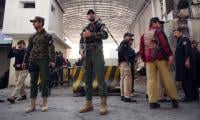
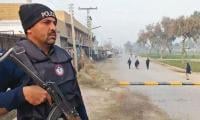
The attacks in Wana and Islamabad are tragic, but they are triggering institutional alignment. The hope is that coordination between military intelligence, NACTA and provincial CTDs will intensify. That urban counter-terrorism grids will be reactivated. That Pakistan’s coercive power will be channelled into precision security and not political control.
Stability, even if imposed, lowers uncertainty. And in capital markets, uncertainty carries a price. The greater the uncertainty, the higher the ‘risk premium’ investors demand. Pakistan’s Eurobonds currently trade with an 800–1,000 basis-point premium over US Treasuries. If stability trims that premium by even 150–200 basis points, Pakistan could save $1 billion to $2 billion a year. Uncertainty repels capital; stability – even if imposed – invites it.
The storm may be loud, but the ship has a new engine room. All that is needed is a compass.