Pakistan should immediately establish the Pakistan Gaza Reconstruction Task Force (PAK-GRT) and move swiftly to secure a first-mover advantage. The goal: capture 20 to 30 per cent of the $50 billion reconstruction programme — roughly $10 to $15 billion in potential contracts.
The Frontier Works Organisation (FWO) is the natural lead agency. Its domain covers engineering, infrastructure and logistics, with a proven national portfolio — the Swat Motorway (M-16), Karakoram Highway (KKH), Diamer-Bhasha Dam, M-9 Karachi-Hyderabad Motorway, and headrace tunnels of Jaggran-II Hydropower Project. FWO’s post-conflict reconstruction record in Swat and former-Fata adds credibility in crisis zones.
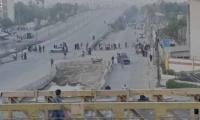
In Gaza, the FWO can clear debris, build prefabricated housing for two million displaced Palestinians, and lay roads and utility corridors. The debris-removal phase alone — estimated at 50 million tonnes — carries an allocation of $20 billion over two years.
Meezan Bank is experienced in Sharia-compliant corporate, project and infrastructure finance. Meezan can act as a banking partner for multilateral agencies and Gulf donor-banks wishing to channel funds into reconstruction under Sharia terms.
The Indus Hospital Network can deploy mobile clinics and field hospitals to deliver emergency care. PTCL, Jazz, and Zong can help restore and expand telecom grids, ensuring communication lines remain open throughout the reconstruction phase.
The National Logistics Cell (NLC) has a proven record in disaster-relief logistics within Pakistan and in the transport of UN peacekeeping equipment, relief supplies and personnel across Somalia, Sudan, South Sudan, Congo, Liberia and Sierra Leone. In Gaza, NLC can establish port-to-inland supply chains to move construction materials and humanitarian aid efficiently and securely.
Pakistan Army Corps of Engineers has proven expertise in combat engineering, flood management, port rehabilitation and demining. In Gaza, the Corps can secure humanitarian corridors and construct fortified perimeters to protect aid operations.
Style Textile, Interloop Limited and Nishat Mills can secure multi-billion-dollar garment export orders. Getz Pharma, The Searle Company, and Martin Dow can export millions of dollars’ worth of branded generics, pain-management drugs, and anti-infectives.
Lucky Cement, Bestway Cement and Fauji Cement can export large volumes of cement. NESPAK, with prior experience in Oman, Qatar and Saudi Arabia, can serve as Gaza’s technical consultant for urban-renewal and water-infrastructure projects.
Pakistan Red Crescent and Edhi Foundation are recognised humanitarian entities with neutrality credentials. In Gaza, they can field medical units and ambulance networks in coordination with the WHO.
National Bank of Pakistan can partner with the US EXIM Bank and Gulf sovereign funds to establish escrow accounts and process contractor payments under FATF-compliant oversight. The Higher Education Commission (HEC), in collaboration with NUST, can train Gaza’s youth in information technology and reconstruction engineering.
Fifty billion dollars is a staggering sum — 170 per cent of Pakistan’s annual exports. In such a massive reconstruction programme, those who arrive first will shape the contracts, the standards and the supply chains. Pakistan must move before the field is crowded — because in projects of this scale, the first mover doesn’t just participate; it sets the rules of the game.
The writer is an Islamabad-based columnist.