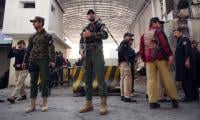
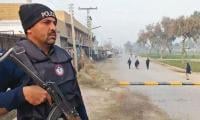
State clarity is emerging. Over recent months, the Pakistan state -- the civil-military nexus -- has shifted from ad-hoc crisis management to a coherent posture: deny, disrupt and degrade at home (TLP) and deny and compel across the border (TTP–Afghanistan). This marks a renewed clarity in confronting both internal and external threats.
For the first time since Operation Zarb-e-Azb (2014), the state appears to have adopted a unified strategy built on decisive kinetic action, political coordination and legal containment. For the first time since Operation Zarb-e-Azb, Pakistan is moving beyond ambiguity towards a doctrine of containment, retaliation and lawful suppression.
Internally, the state is moving from accommodation to proscription. Punjab has formally asked the federation to outlaw TLP and place its leaders on the ATA Fourth Schedule. Externally, Pakistan has carried out precision strikes inside Afghanistan against verified militant sites, signaling a doctrine of denial that extends beyond the fence.
The cost of past ‘ambiguity’ has been steep. Since August 15, 2021 -- the Taliban takeover -- more than 1,600 Pakistani security personnel have been martyred. The year 2024 was among the deadliest in recent memory, marked by a 70 per cent surge in militant attacks over the previous year. Early data from 2025 suggest the toll is climbing even higher.
The state’s recent actions signal a clear shift towards a zero-tolerance doctrine -- no hedging, direct retaliation. The state has denied both the street veto at home and safe havens abroad. Internally, counterterrorism is now kinetic and data-driven. Externally, ISR-led (intelligence, surveillance, reconnaissance) precision guiding fence-line denial and cross-border interdiction.
For the first time in a long time, the police, Rangers, army and intelligence are all reading from the same script. For the first time in a long time, decision loops have shortened. For the first time in a long time, response time has dropped. For the first time in a long time, targets are being verified faster. For the first time in a long time, coordination is replacing confusion.
The state must also ‘cut the money’. The FIA should be tasked to identify and dismantle the 20 highest-value hawala networks and donation funnels, with monthly targets for seizures and closures. For narrative discipline, a weekly neutral briefing should report on charges filed, property damage assessed, and compensation disbursed to police families.
Clarity does three things: it restores deterrence, it improves command and it strengthens institutions. Yes, when the state acts predictably and decisively, adversaries adjust. History is witness that militants, mobs and handlers respond not to rhetoric but to cost. Yes, deterrence is rebuilt when ambiguity ends.