KARACHI: The Hyderabad Chamber of Commerce and Industry (HCCI) has urged the Sindh government to conduct a comprehensive GPS- and GIS-based survey of the Indus River, its delta, canals, and natural drainage systems, warning that illegal housing and encroachments on floodplains have intensified urban flooding and endangered lives.
Civil society and lawyers also backed the HCCI’s call, demanding an immediate investigation and action.
Following these warnings, the Sindh government has ordered immediate action against developers and officials involved in unlawful construction on Hyderabad’s flood-protection lands.
Hyderabad’s fragile flood protection system is under renewed threat after allegations emerged that several private housing schemes have encroached upon flood plains and protective embankments without obtaining mandatory environmental approvals.
A formal complaint submitted before the Sindh Anti-Corruption Establishment (ACE) accused developers of launching housing schemes on over 10 acres of the Flood Protective (Bachao Bund) lands along the Phuleli Canal areas legally reserved for flood mitigation. The developers, allegedly acting in collusion with revenue and irrigation officials, are accused of tampering with land records, creating fake mutations, and obtaining illegal leases through backdated entries to fabricate ownership claims over state land.
According to environmental experts, these encroachments severely undermine Hyderabad’s flood resilience. The Flood Protective Bund, built to safeguard the city from monsoon floods and high tides, could fail under pressure due to illegal construction.
“When controlled breaches are needed to relieve pressure on canals or barrages, those living in encroached areas will face life-threatening risks,” warned environmental researcher Azmatullah Kunbhar, emphasising that “this is not just corruption, it’s endangering lives.”
Experts maintain that the projects are in direct violation of the Sindh Environmental Protection Act, 2014, which requires Initial Environmental Examination (IEE) or Environmental Impact Assessment (EIA) approvals before large-scale development. “Building on flood plains disrupts natural drainage, weakens embankments, and increases the threat of flash floods,” said Dr. Ayesha Khan, a water resources specialist at the University of Sindh. “It will aggravate waterlogging, sewage overflow, and permanent loss of agricultural land while putting pressure on the city’s already strained infrastructure.”
Official documents show that this is not the first such warning. In 2021, the Sindh High Court was informed about at least 22 housing schemes built within the Indus flood zone. Despite court directives to the Sindh Building Control Authority (SBCA) for action, enforcement remained weak. In April 2024, the SBCA Director General sought details of 50 illegal schemes and promised oversight, yet no visible progress followed.
Confirming the seriousness of the allegations, Deputy Director Anti-Corruption Establishment (ACE) Hyderabad, Imran Dawach, told The News, “We have formally initiated action on the complaint. No violator will be spared, whether a developer or a government officer. Manipulation of revenue records and encroachment on flood-protective land is a grave offence.”
Director General ACE Sindh, Imtiaz Abro, added, “The ACE has taken cognizance of the matter and inquiries are underway. This is not merely a corruption case, it’s about public safety. Accountability will be ensured across the board.”
Following the revelations, Sindh Chief Minister Syed Murad Ali Shah directed Irrigation Secretary Zarif Khero to take strict action against encroachments on riverbeds and flood channels. The directives came amid growing pressure from civil society and environmentalists.
The HCCI has called upon the Sindh government to take comprehensive structural and legal measures to prevent further encroachments and urban flooding. It urged the government to conduct GPS and GIS-based surveys of the Indus River, its delta, canals, and drainage systems, notify the official width of rivers and drains through the Sindh government Gazette and Google Maps, share this notified data with the SBCA, development authorities, and the irrigation department., Impose a complete ban on residential and industrial construction over natural waterways, enforce strict legal action under building control and environmental protection laws.
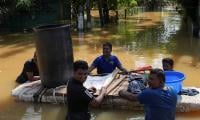
The chamber warned that urban flooding in Sindh has increased drastically due to unauthorised constructions and blockages of natural drainage channels, recalling that the 2020 and 2022 monsoon rains caused trillions of rupees in losses across Karachi, Hyderabad, and other cities.
It added that 20–30 per cent of urban flood damages in Sindh occur due to blocked or encroached drainage channels, and emphasised that Sindh could become a model province in urban planning and flood risk management if preventive measures are implemented.
Environmentalists and civic groups have called upon Sindh Environmental Protection Agency (SEPA), Hyderabad Development Authority (HDA), and the judiciary to intervene immediately. “Hyderabad cannot afford another flood disaster driven by greed and negligence,” said Professor Manzoor Solangi renowned writer and social activist. “Authorities must act before warnings of disaster turn into another tragedy,” concluded Prof Solangi.