History always acknowledges those visionary leaders who dare to take the first step for the progress and prosperity of their nation. It is an undeniable fact that if the seeds are not sown in time, the trees that bear fruit for future generations can never come into existence.
This timeless lesson echoed once again in my mind when news emerged of President Asif Ali Zardari’s visit to the First National Congress Memorial of the Communist Party of China during his recent tour to Shanghai.
At the historic site in Shanghai, 104 years ago in July 1921, thirteen Chinese visionaries – including Chairman Mao Zedong – attended the very first meeting of the Communist Party of China. This historic place, therefore, symbolises the long tireless struggle of the Chinese people who, under the leadership of Chairman Mao, transformed a nation trapped in poverty and backwardness into the world’s second-largest economic, military and technological power.
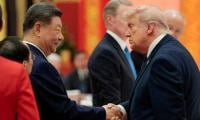
President Zardari was accompanied by First Lady Bibi Aseefa Bhutto Zardari, PPP Chairman Bilawal Bhutto Zardari, Senator Saleem Mandviwalla, Sindh ministers Sharjeel Memon and Syed Nasir Shah, along with Chinese Ambassador Jiang Zaidong and Pakistan’s envoy Khalil Hashmi. On the occasion, President Zardari expressed that the Communist Party’s memorial reflects China’s journey toward becoming a global power, and he also praised President Xi Jinping’s visionary leadership for accelerating this transformation.
In my view, this visit was more than ceremonial. It was a reminder of a significant parallel: just as China’s founding leaders are remembered for laying the foundations of modern China, Pakistan too has leaders who planted seeds for its enduring strength. Allama Iqbal dreamed of a sovereign homeland, Quaid-e-Azam made that dream a reality and Zulfikar Ali Bhutto laid the foundations of Pakistan’s nuclear programme to ensure its defence remains unconquerable. Although other rulers built upon their legacies, history always reserves its highest honour for these three who took the first bold step.
During his presidency (2008–2013), Zardari strengthened the direction of Pakistan-China relations from traditional ties to a deep economic relationship. He recognised that, while cordial cooperation was vital, Pakistan’s long-term stability depended on economic integration with China. His vision materialised in the form of the idea of an economic corridor connecting Gwadar to Kashgar, which he first put forward in 2013.
Zardari visited China nine times during his first tenure, a record for any Pakistani president. These visits built trust with the Chinese leadership and paved the way for long-term cooperation. The historic decision to hand over operational control of Gwadar Port to China was taken by him, transforming Pakistan into a central hub for regional connectivity. Most importantly, he signed the initial framework agreements that officially laid the groundwork for CPEC. Without these courageous moves, the multibillion-dollar investments that followed would never have been possible.
His recent visit to Shanghai’s historic memorial carries a symbolic message: just as Chairman Mao and the early Communist leaders laid the foundation of China’s rise, Zardari too sowed the seeds of Pakistan’s economic prosperity through CPEC. When he chased the slogan 'Long live Pak-China friendship', it was not merely a diplomatic slogan, but a reaffirmation of a legacy in which he himself played a decisive role during his previous tenure.
Today, CPEC has entered its second phase, expanding into industrial cooperation, energy projects and regional trade. Gwadar will soon become the most favourite hub of global commerce. For the people of Pakistan, this is not an abstract vision but a tangible reality taking shape.
As Pakistan moves forward, we must rise above political divisions and acknowledge the fact that CPEC, which transformed Pakistan-China friendship into an economic partnership, is the brainchild of President Asif Ali Zardari. Later governments certainly played their role in nurturing and expanding the project, but if Zardari had not planted the seed at the right time, the mighty tree we see today would never have grown.
The writer is a member of the National Assembly and patron-in-chief of the Pakistan Hindu Council.
He tweets/posts @RVankwani