PESHAWAR: A major financial scandal involving the embezzlement of over Rs106 million from the funds of the Khyber Pakhtunkhwa (KP) World Bank (WB) project has been exposed, where sophisticated forgery and possible collusion with a government bank were used to withdraw public money.
According to documents, the funds were withdrawn from the official account on July 3, 2025, although the provincial finance department had frozen all project funds on June 25, 2025, which remained suspended until July 24, 2025, for the new fiscal year 2025-26.
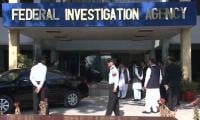
The project administration claims that the cheques, authority letters, and reference numbers were fake, yet the bank released such a huge amount without verification. In this situation, the Project Management Unit (PMU) of the Khyber Pakhtunkhwa Human Capital Investment Project (KP-HCIP) contacted senior officials of the government bank. The KP-HCIP Project Director has urged the bank management to have the fraud investigated through the FIA and to ensure immediate restitution of the stolen funds.
According to documents, the Human Capital Investment Project is being implemented in Khyber Pakhtunkhwa with the cooperation of the World Bank for Rs26 billion, and it is from the account of this very project that the embezzlement of over Rs106 million has been uncovered.
As per a letter sent by the Project Director to the bank on September 5, 2025 (Ref: PMU/KPHCIP/EASE/Admin/2024-25), said that three cheques from the project’s “Revolving Fund Assignment Account” (No0386004174006254), were fraudulently cleared on July 3, 2025, through the Peshawar Cantt Branch. Their details are as follows: Cheque No. 1326903725 (Rs48,760,245), Cheque No. 1326903733 (Rs55,320,306) and Cheque No. 1326903733 (Rs1,964,028)
The repetition of the same cheque number raises further suspicion, with a total embezzled amount of Rs106,044,579. According to official documents, these cheques were allegedly cleared through fake bank authority letters, all bearing the same reference number (PMU/KP-HCIP/EASED/Release/2025 dated June 20, 2025). The PMU has categorically stated that these letters are “fake” and were neither issued by the PMU nor attested by the Accountant General’s Office, Khyber Pakhtunkhwa. Furthermore, the fraudsters submitted fake schedules (Nos337 and 338), carrying forged signatures and official stamps of the Accountant General’s Office.
The PMU’s letter pointed to serious lapses on the part of the bank, which turned a possible fraud into a successful heist. Project Director Asif Shahzad confirmed to this correspondent that it was the project staff who uncovered the fraud. He said that neither had they applied for a new cheque book in recent months, nor had they authorised anyone to collect it. He claimed that they had never even seen the cheque book from which these fraudulent cheques were issued. This raises the fundamental question: where did this cheque book originate from, and how did it reach the fraudsters?
The Project Director further said that multiple levels of verification are required to release funds from a government revolving account, especially for such large amounts. The failure of bank staff to verify the authority letters and schedules with the original issuing authorities (PMU and Accountant General) is the worst form of systemic failure and clear evidence of gross negligence.
The KP-HCIP Project Director said that all the bank officials concerned involved in or negligent during the fraudulent clearance must be identified. The matter should be escalated to the Regional and Head Offices of the bank and formally referred to the FIA Banking Circle for criminal investigation and prosecution.
The bank’s regional executive operations told The News that the complaint has been received and an inquiry is under way. He said that action will be taken against those responsible in accordance with the law. He added that the bank only cleared the cheques, while the funds were withdrawn from a private bank. He further stated that the inquiry is still at a preliminary stage; however, the possibility of collusion by project officials in this scam cannot be ruled out.