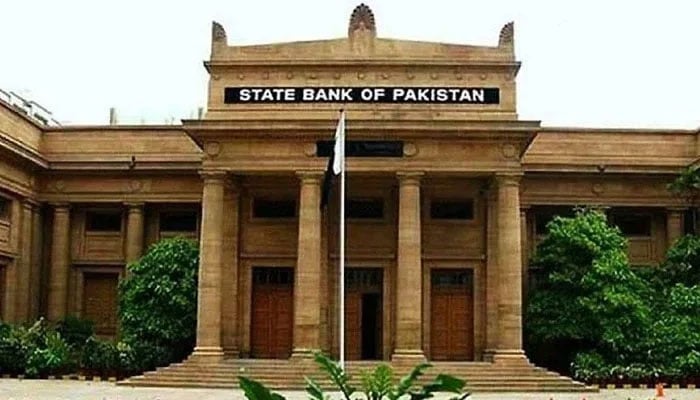
KARACHI: The business community on Wednesday expressed dismay at the State Bank of Pakistan’s (SBP) decision to keep the policy rate unchanged at 11 per cent.
Atif Ikram Sheikh, president of the Federation of Pakistan Chambers of Commerce and Industry (FPCCI), said the monetary policy remained detached from economic fundamentals. “The business, industry and trade community of Pakistan is disappointed with the monetary policy, which continues to be based on a heavy premium over the Consumer Price Index (CPI). The SBP has maintained the status quo in its Wednesday meeting,” he stated.
Sheikh noted that the CPI, according to official government statistics, stood at 3.2 per cent in June 2025. However, the policy rate remains at 11 per cent, implying a premium of 780 basis points (bps) over inflation -- a spread he described as economically unjustifiable.
He added that, following consultations across all sectors, the FPCCI had called for an immediate 500bps cut in the policy rate during the latest Monetary Policy Committee (MPC) meeting. This, he said, was necessary to align monetary policy with the vision of the Special Investment Facilitation Council (SIFC) and the Prime Minister’s objectives of industrial development, import substitution and export growth.
Muhammad Jawed Bilwani, president of the Karachi Chamber of Commerce and Industry (KCCI), also voiced disappointment at the SBP’s decision, which he said contradicted widespread expectations of a rate cut that could have brought the benchmark down to single digits.
“At a time when core inflation has declined sharply, there is no sound economic justification for keeping borrowing costs prohibitively high,” he said. Bilwani criticised the SBP’s rationale -- namely, the rise in inflation during May and June and anticipated upward pressures due to energy costs -- calling it unconvincing and economically flawed.
Ahmed Azeem Alvi, president of the SITE Association of Industry, said the central bank had ignored persistent calls from the business community for single-digit interest rates, dampening hopes for economic recovery and growth.
Junaid Naqi, president of the Korangi Association of Trade and Industry (KATI), said the SBP’s decision ignored the pressing concerns of businesses. He argued that Pakistan’s economic indicators clearly warranted a significant policy rate cut -- ideally to 6.0 per cent -- a level long advocated by industry stakeholders.
Salim Valimuhammad, chairperson of the Pakistan Chemicals & Dyes Merchants Association (PCDMA), also labelled the SBP’s decision a setback for business sentiment and industrial activity.
Chairperson of the Pakistan Hosiery Manufacturers and Exporters Association (PHMA) Muhammad Babar Khan said the unchanged rate would hinder growth for exporters and manufacturers. He added that Pakistan’s elevated borrowing costs, compared to regional peers, made it extremely difficult for exporters to expand or compete with countries like Vietnam, Bangladesh, and India.
Shaikh Muhammad Tehseen, president of the Federal B Area Association of Trade and Industries (FBATI), said the continuation of a double-digit policy rate would stifle investment, and the broader economic growth cycle would remain stagnant.