Under the Pakistan Penal Code (PPC) of 1860, theft is defined in Section 378 as follows: “Whoever, intending to take dishonestly any moveable property out of the possession of any person without that person’s consent, moves that property in order to such taking, is said to commit theft”. The legal definition hinges on five key elements: dishonest intention, moveable property, removal from possession, lack of consent, and physical movement of the property.
Please, consider this: Over the past decade, Pakistan’s currency in circulation has ballooned from Rs2.5 trillion in 2015 to Rs11 trillion today – a surge of 330 per cent, or a compound annual growth of 16 per cent. In this period, five prime ministers have taken office: Mian Nawaz Sharif, Shahid Khaqan Abbasi, Imran Khan, Mian Shehbaz Sharif and Anwarul Haq Kakar. However, one constant has been the relentless printing of money, technically termed ‘monetising the deficit’, to cover government expenses such as salaries, subsidies and interest payments.
The result: A slow, corrosive theft of citizens’ wealth. Rs100,000 in 2014 now holds less than Rs30,000 of real purchasing power. In 2014, a family could buy a month’s worth of basic groceries for Rs15,000. The same basket now costs over Rs45,000.
In 2014, the cost of building a house was Rs1,000–1,200 per square foot. It now costs Rs4,000–5,000 per square foot. The cost of building has quadrupled. In 2014, a middle-class household paid around Rs4,000–5,000/month for electricity and gas. Similar usage now costs Rs18,000–20,000/month; four times more. In 2014, a five-litre pack of cooking oil, essential for every kitchen, cost Rs650. The same now costs Rs2,800.
A fixed salary stretches less each month. Cash savings quietly erode. This is silent theft – one that punishes thrift and responsibility, and disproportionately harms pensioners, housewives, daily wage earners and the poorest of Pakistan’s population.
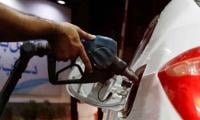
Yes, excessive money printing devalues the rupee. A weaker rupee raises the cost of imported essentials – fuel, medicine, cooking oil and machinery – triggering a vicious cycle of inflation. A falling rupee means a rising dollar, and with it, costlier petrol, higher electricity tariffs and unaffordable food. Imported inflation becomes a daily burden for the average Pakistani.
Yes, monetary instability paralyses investment and stifles growth. Entrepreneurs hesitate. Businesses delay plans. Factories close. Jobs vanish. The economic engine stalls.
Honourable Justices of the Supreme Court of Pakistan, is this not a violation of the people’s right to property and economic security enshrined in our constitution? When the state silently extracts wealth from its citizens without consent, through policies that knowingly erode purchasing power – is this not, in spirit and consequence, a form of theft?
We respectfully urge this Honourable Court to take notice. To inquire. To protect. Savings of Pakistanis are being silently looted. The law recognises theft when something is taken without consent. But what of this systematic plunder – disguised as policy and carried out with impunity? This is an appeal for justice. And a plea for protection from a theft no less real, only less visible.
The writer is a columnist based in Islamabad. He tweets/posts @saleemfarrukh and can be reached at: [email protected]