I was recently invited to attend the National Day of France, a prestigious celebration that not only reflected the cultural pride of the French people but also showcased the commendable efforts of their diplomatic mission in highlighting their nation's global achievements.
Amidst the celebrations, I had the privilege of engaging in discussions with several diplomats from different countries. One topic that sparked deep interest during the conversation was my proposed initiative to establish the Gandhara Corridor, a project designed to connect the federal capital of Pakistan with the capital cities of Buddhist-majority countries through shared spiritual and cultural heritage.
They endorsed my viewpoint that Buddhist tourism is witnessing remarkable growth internationally. With over 500 million Buddhists worldwide, the vast majority residing in countries such as China, Japan, Thailand, Nepal, Sri Lanka, Vietnam, South Korea, Myanmar and Cambodia – nations already friendly toward Pakistan – the potential for meaningful engagement is immense.
Millions of pilgrims from these countries embark on spiritual journeys each year to explore sacred Buddhist sites. Their interest is not only limited to religious devotion but also to exploring ancient Buddhist history, archaeology, and spiritual rejuvenation through temple stays, meditation retreats, and pilgrimage routes.
In many of these countries, Buddhist diplomacy has become a soft power tool – fostering interfaith harmony, cultural exchange and peaceful regional cooperation. For example, the Buddhist Circuit project, developed in collaboration between India, Nepal, and the World Bank, is actively promoting Buddhist pilgrimage routes. Likewise, Nepal’s Lumbini Master Plan, backed by Japan and other nations, has transformed Buddha's birthplace into a global hub for spiritual tourism.
Countries like Thailand, Japan, Korea, and Sri Lanka have gone a step further by opening their ancient monasteries to international tourists. China, too, has incorporated Buddhist tourism into its Belt and Road Initiative, underlining its value as a tool for regional integration and diplomacy.
Similarly, Buddhist festivals such as Vesak (Buddha Purnima) and Kathina are drawing millions globally, uplifting economies and highlighting local culture. Social media has also amplified this movement, offering virtual tours, YouTube documentaries, and mobile apps that raise awareness about Buddhist sites. Many countries have even launched official Buddhist tourism portals, making pilgrimage planning easier than ever.
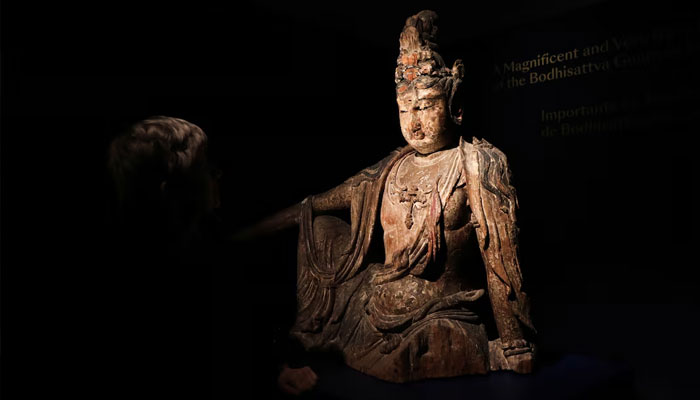
Although Pakistan holds some of the most revered Buddhist sites in the world, it is quite regrettable that the most significant deficiency in international Buddhist tourism is the lack of access to the great Gandhara heritage of present-day Pakistan. The first image of the Buddha in human form emerged here. Pilgrims once departed from Gandhara to spread the peaceful teachings of Buddha across Asia.
Taxila, situated beyond the Margalla Hills of the federal capital, Islamabad, was once known as Takshashila approximately two and a half thousand years ago. The ancient city was not only the cradle of Buddhist civilisation but also a centre of unique Gandhara art, philosophy and education. The Gandhara art, born from a fusion of Indo-Greek Buddhist aesthetics, continues to be revered in museums and art galleries across the globe. From Takht-e-Bahi in Mardan to the Julian Monastery in Taxila and the Shah Allah Ditta caves in Islamabad, Pakistan houses an extraordinary legacy of stupas, monasteries, and relics that can captivate both the devout pilgrim and the modern traveller seeking spiritual awakening and eternal peace.
This is why establishing the Gandhara Corridor, connecting Islamabad to the capitals of Buddhist-majority countries, is not just a cultural or tourism initiative. It is in fact a strategic project to serve as a bridge of peace and prosperity, promoting regional diplomacy, cultural unity, and a new era of tourism-driven economic growth for Pakistan.
In an age where the world seeks dialogue over division and heritage over hostility, Gandhara, in my view, offers Pakistan a sacred key – one that can unlock global goodwill, strengthen bilateral ties and position our beloved country as a guardian of shared human values and interfaith harmony.
The writer is a member of the National Assembly and patron-in-chief of the Pakistan Hindu Council.
He tweets/posts @RVankwani