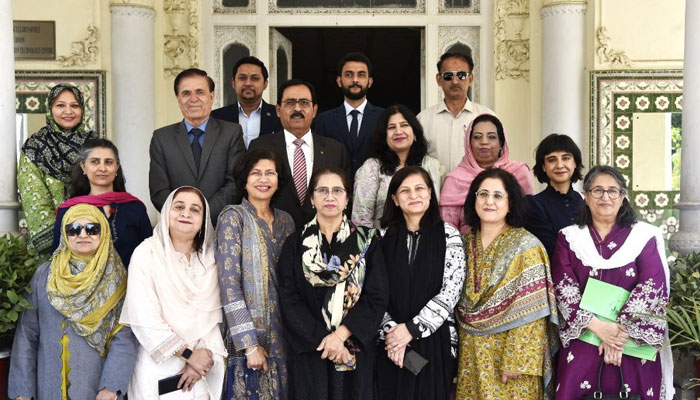
Rawalpindi:Fatima Jinnah Women University (FJWU), in collaboration with the All Pakistan Women Universities Consortium (APWUC) and the British Council Pakistan, hosted a high-level round table discussion titled ‘Bridging Gaps, Building Futures: Investing in Women’s Universities through Policy, Funding, and Partnerships’ here on Monday.
The hybrid-format event was chaired by Prof. Dr. Bushra Mirza (Pride of Performance, Tamgha-i-Imtiaz), Vice Chancellor FJWU and Chairperson APWUC. The event brought together vice chancellors and senior representatives from 18 women’s universities across Pakistan. Distinguished guests included Dr. Noor Amna Malik, Managing Director, National Academy of Higher Education (NAHE), Higher Education Commission (HEC) and Co-Chair APWUC; Maarya Rehman, Deputy Country Director, British Council Pakistan; and Nishat Riaz, Chief Executive Pakistan, Malala Fund.
The Round Table focused on two critical agenda items: Unified advocacy for enhanced funding under the Federal Budget 2025–26; Strengthening outreach through strategic funding and partnerships to build institutional capacity. In her keynote address, Prof. Dr. Bushra Mirza highlighted the urgent need for equitable funding for women-focused higher education institutions. She emphasised the unique operational challenges faced by women’s universities, including student hostel shortages, limited faculty accommodations, and gender-specific admission policies. Dr. Mirza called for a revision of the HEC budget allocation formula to better reflect the realities and requirements of these institutions.
Dr. Mirza further stressed the importance of nurturing a strong academic culture, particularly in newly upgraded universities transitioning from colleges. She underscored the need for qualified faculty recruitment, establishment of research laboratories, and development of purpose-built infrastructure to meet national quality standards and accreditation requirements. Additionally, she proposed utilizing APWUC as a platform for collective initiatives such as joint conferences, training workshops, and resource-sharing programs. Acknowledging the continued support of the British Council, she advocated for expanding public-private partnerships to diversify funding streams and enhance institutional resilience.
In her remarks, Dr. Noor Amna Malik reaffirmed HEC’s commitment to supporting women’s universities while preserving their autonomy. She emphasised collaboration over duplication, encouraging institutions to capitalize on each other’s strengths to maximize impact. Dr. Malik also commended the growing support from male Vice Chancellors towards APWUC’s mission. Nishat Riaz emphasized the importance of identifying and leveraging the hidden strengths of women’s universities. She urged institutions to pursue collaborations with national and international organisations to explore new opportunities for resource generation and capacity building.
Maarya Rehman echoed this sentiment, highlighting the British Council’s longstanding support for higher education development in Pakistan. She specifically referenced the Pak-UK Gateway Programme as a valuable opportunity for universities to showcase innovation, strengthen global linkages, and access new funding avenues. The Round Table concluded with a strong consensus that a unified, collective voice advocating for women’s higher education must be amplified to reach government policymakers and HEC leadership. The event marked a significant milestone in strengthening solidarity among women’s universities and advancing a shared vision for an inclusive, empowered, and sustainable higher education landscape in Pakistan.