International Nurses Day, observed on 12th May every year, acknowledges the commitment and bravery of nurses around the world. You! takes a look…
The theme for International Nurses Day 2026, ‘Our Nurses. Our Future. Empowered Nurses Save Lives’, underscores a simple yet profound truth: nurses are central to saving lives, but they can only reach their fullest potential when they themselves are protected, respected and empowered. Empowerment is not an abstract concept; it is built through safe and fair working conditions, supportive leadership, access to resources and a culture that recognises nurses as indispensable clinical decision-makers.
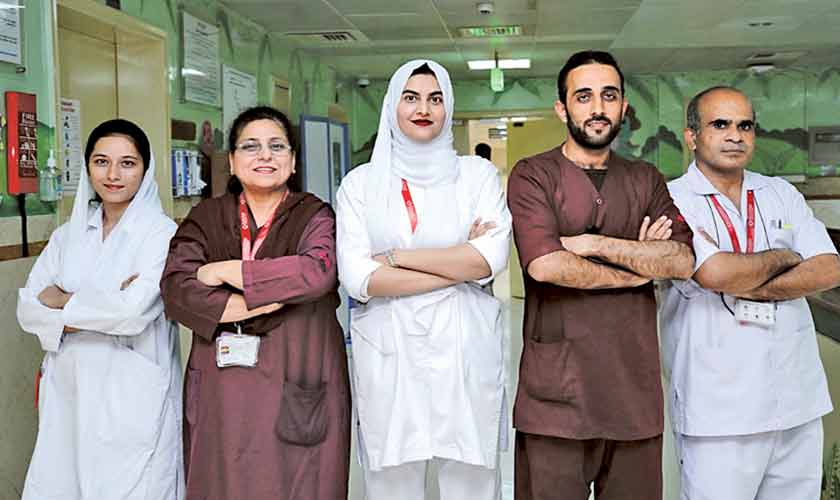
To witness how this idea comes to life in a real clinical setting, I spent nearly two hours shadowing a chemotherapy nurse at Shaukat Khanum Memorial Cancer Hospital and Research Centre, Lahore. What I observed went far beyond task-based care. It was a living demonstration of how empowered nurses employ compassion, vigilance and expertise to create lifesaving impact at the patient’s bedside. Read on…
A day that begins
with purpose
Each morning, Sadia and her colleagues arrive at the hospital not merely to perform a job but to embrace a mission. There is a quiet reverence in the way their day begins - a recognition that every action, decision and interaction may alter the course of someone’s life. For them, the start of an eight-hour shift marks the beginning of an intense and deeply human journey, one focused on easing suffering and guiding patients and their families through one of the most vulnerable chapters of their lives.
Sadia’s world revolves around the chemotherapy bay - a dedicated, comfortable space within a hospital where patients receive chemotherapy treatments while being monitored by oncology nurses. Before she meets her patients, the day begins with a structured handover and briefing that serves as the backbone of teamwork. She listens attentively as the night shift shares updates, carefully absorbing the clinical details, emotional states and individual needs of every patient. No piece of information is too small; a subtle side effect, a change in mood or a concern raised by a caregiver can shape how care is delivered that day.
She then meticulously inspects her equipment, checks her supplies and ensures that every safety requirement has been met. These routines are not mechanical; they are expressions of accountability. Once prepared, she steps into the chemotherapy bay, ready to face the people whose lives will intersect with hers for the day.
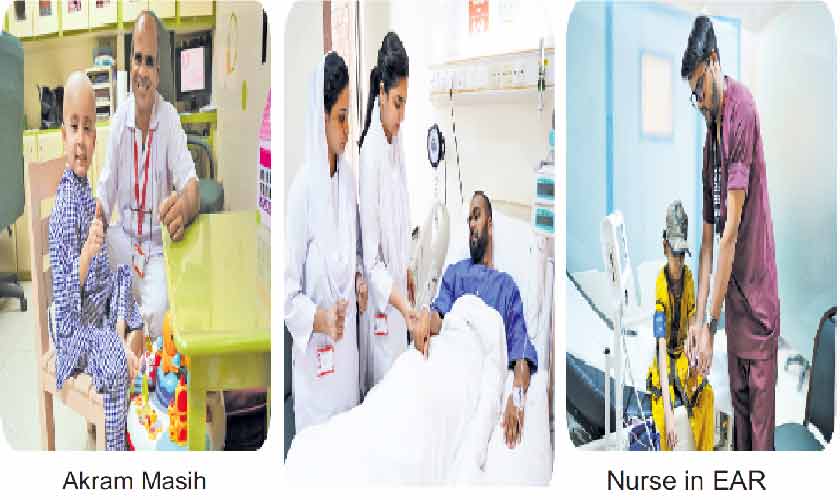
Among these patients is Subhan, a young boy from Lahore whose radiant smile cuts through the clinical atmosphere of the ward. The moment he sees Sadia, his eyes light up. Despite the constant activity around her, Sadia never misses an opportunity to pause and return his smile. In that brief exchange lies reassurance - a reminder to Subhan and his family that they are seen, valued and cared for.
At the bedside, Sadia becomes far more than a person administering chemotherapy. She is a communicator, an educator and a source of emotional strength. She speaks in language that patients and families can easily understand, patiently explaining treatment plans, potential side effects and the precautions required once they return home. For children like Subhan, curiosity often fuels anxiety, prompting endless questions. Sadia answers them all, knowing that clarity and trust are as essential to healing as medication itself. A calm, informed patient is better equipped to cope with treatment and recovery.
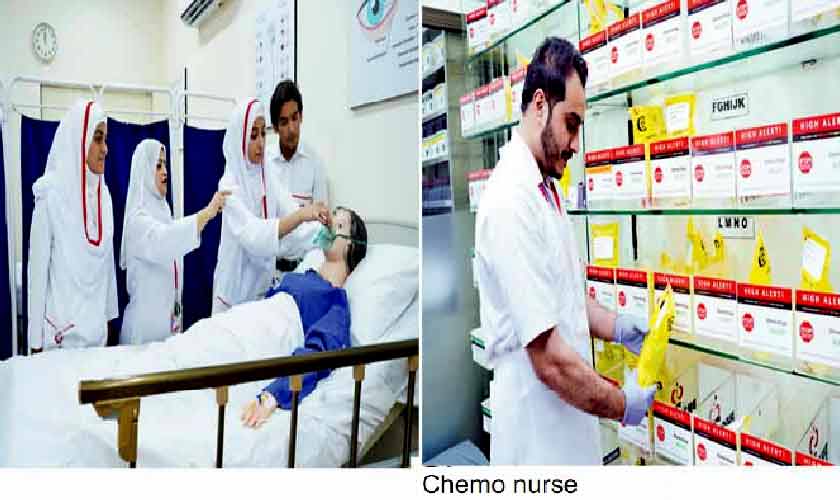
Throughout her work, safety remains Sadia’s priority, a silent vow she renews with each patient. The Medication Room and the Satellite Pharmacy are already stocked with personal protective equipment (PPE), including aprons, gloves and masks, and Sadia has easy access to these before handling chemotherapy drugs. Before any chemotherapy is administered, she verifies a patient’s identity with a colleague and they perform an independent double-check to eliminate even the smallest possibility of error. This is recorded in the digital Hospital Information System, after which chemotherapy is administered according to strict protocols designed to protect both patients and staff.
Her vigilance does not end once treatment is delivered. Hazardous waste is handled with care and disposed of in the bin designated for cytotoxic waste and any bandage that has come into contact with a patient’s body fluids is placed in the bin designated for infectious waste. Used syringes are disposed of in specially designed safety bins, which allow waste to go in but not come out and are later properly eliminated through incineration. These measures protect not only her patients but also fellow healthcare workers and the environment. Such attention to detail is only possible in an environment where nurses are trained, trusted and provided with the tools they need to uphold the highest standards of care.
As chemotherapy sessions conclude and it is time for patient discharge, Sadia transitions into her role as a guide, preparing patients and their families for life beyond the hospital walls. She equips them with instructions, reinforces key safety messages and offers reassurance. Her work becomes a cornerstone of recovery, laying the foundation upon which patients can rebuild hope.
Empowerment also comes through continuous learning. Sadia tells me that on some days, her responsibilities take her away from direct clinical care and into training rooms, where she participates in refresher workshops on various topics such as infection prevention. These opportunities sharpen skills and ensure that nurses remain up to date on different protocols and continue to deliver the best possible care to all their patients.
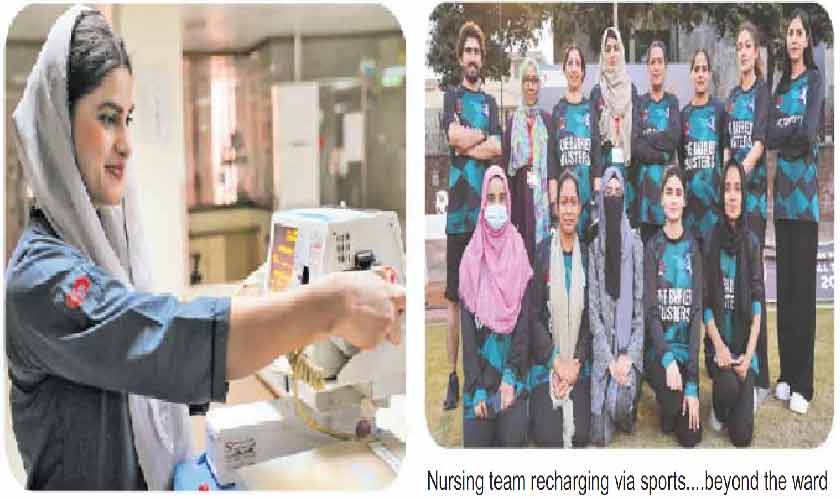
Though the clinical shift officially ends after eight hours, the emotional weight of nursing rarely clocks out so neatly. To recharge, Sadia turns to sports. On the hospital’s cricket ground, which also transforms into a football field, she joins her colleagues in laughter and friendly competition. These moments of connection restore energy, strengthen bonds and remind nurses that their wellbeing matters too. Renewed, she returns the next morning, ready to face another demanding yet meaningful day. After witnessing Sadia’s journey, it is not difficult to conclude that at the heart of every patient’s recovery lies a simple truth: empowered nurses save lives.
The institution’s responsibility
While individual dedication is powerful, empowerment must be sustained by institutional commitment. Fostering a culture of respect for nurses is a shared responsibility but leadership plays a defining role. The tone set by an institution’s leaders, through both personal conduct and organisational policy, determines whether nurses feel safe, valued and supported.
True empowerment includes providing nurses with physically and psychologically safe working environments. This means consistent access to appropriate personal protective equipment, adequate staffing, clear safety protocols and systems that allow nurses to report concerns without fear of blame or retaliation. When nurses are heard and protected, they are better able to protect their patients.
Chai with the Chief Medical Officer
At Shaukat Khanum, one initiative that embodies this culture of respect is ‘Chai with the Chief Medical Officer’. Nurses are invited to sit down with senior clinical leadership in an informal setting over a cup of tea, a notable symbol in our culture. These sessions are reserved exclusively for bedside nurses, giving them uninterrupted access to decision-makers and a platform to share ideas, concerns and experiences.
In a healthcare hierarchy where frontline voices are often overlooked, this initiative sends a clear message: nurses matter. By listening with time and attention, leadership demonstrates that empowerment begins with respect.
Voices from
the frontline
As an adult inpatient nurse at Shaukat Khanum Hospital, I provide pre- and post-surgical care, along with patient education,” shares Arisha Ejaz. Her role also extends to managing the Surgical Extended Care Unit, where patients recover overnight following procedures.
“What sets this hospital apart,” she explains, “is its uncompromised focus on safety. In two other hospitals where I previously worked, even basic PPE and hand sanitizers were often unavailable. Here, everything essential for staff and patient safety is consistently provided.”
For Arisha, the emotional rewards of nursing are equally meaningful. She recalls a Persian-speaking patient who offered heartfelt prayers in gratitude for her care. “Moments like these remind us why we do what we do. They make the challenges worthwhile,” she expresses.
Asad Ullah has spent three years at Shaukat Khanum, including two in the Clinical and Radiation Oncology Department. His work includes assisting with patient cannulation and monitoring sedated children, particularly those under the age of three who require general anaesthesia to remain still during radiation therapy.
“Our timeout process and safety checks at every step distinguish this hospital,” Asad notes. These protocols ensure that every procedure is conducted with maximum precision and accountability. One memory stands out: a patient’s caregiver once left him a handwritten note thanking him for his compassion. “That note meant more than words,” he says. “It reaffirmed the value of being present and attentive,” he adds.
With 15 years of experience as a bone marrow transplant nurse, Akram Masih has witnessed the full spectrum of patient journeys, from chemotherapy and stem cell harvesting to infusion and post-procedure complications. His advanced skills were acquired through specialised training at Shaukat Khanum Hospital.
Having worked in Saudi Arabia and at another hospital in Pakistan, Akram believes what truly distinguishes this institution is the respect afforded to nurses. He recalls moments of profound impact: “Once, our CEO, Dr. Faisal Sultan, waited patiently while I finished with a patient. On another occasion, he knelt beside the workstation instead of asking me to move.”
“These small acts,” Akram reflects, “define a culture of dignity. When nurses feel respected, it strengthens how we care for our patients,” he elucidates.
When nurses thrive, patients survive
As we mark International Nurses Day 2026, the message is clear: nurses are not only caregivers, but also educators, advocates and safeguards. Their empowerment is not optional; it is essential for resilient health systems and better patient outcomes.
When institutions invest in nurses through safety, respect, leadership engagement and opportunities for growth, the impact ripples outward. Patients feel safer, families feel more supported and effective patient care grows stronger.
Because empowered nurses save lives.
The writer is a LUMS alumna and a community social worker with special interest in public health, philosophy and human rights. Her X handle is @mariamibkhan.She can be reached at [email protected]