This week, You! spotlights four accomplished working mothers who show that it’s possible to thrive in your career while being a loving, devoted parent. Read on…
The modern working mother is a master of the impossible. She is the professional who closes the deal in a high-stakes boardroom, the strategist who navigates complex spreadsheets and the same woman who, just hours earlier, was negotiating the existential crisis of a toddler who refused to wear socks. She isn’t just ‘having it all’; she’s doing it all - often while carrying the invisible weight of a society that expects her to work as if she has no children and parent as if she has no career.
But let’s be real: the ‘Superwoman’ trope is exhausted. Behind the polished LinkedIn profile and the seamless school-run transition lies a gauntlet of systemic hurdles. From the ‘motherhood penalty’ that stalls promotions to the agonising lack of affordable childcare, the challenges are as real as the burnout. It’s a delicate dance on a tightrope, performed over a safety net that is frequently frayed or entirely non-existent.
On the occasion of Mother’s Day, celebrated annually on the second Sunday of May, You! is featuring four working mothers. They not only excel in their respective fields but also play their roles beautifully as doting moms. These women are an inspiration to hundreds and thousands of working mothers out there. Read on…
Redefining leadership in tech
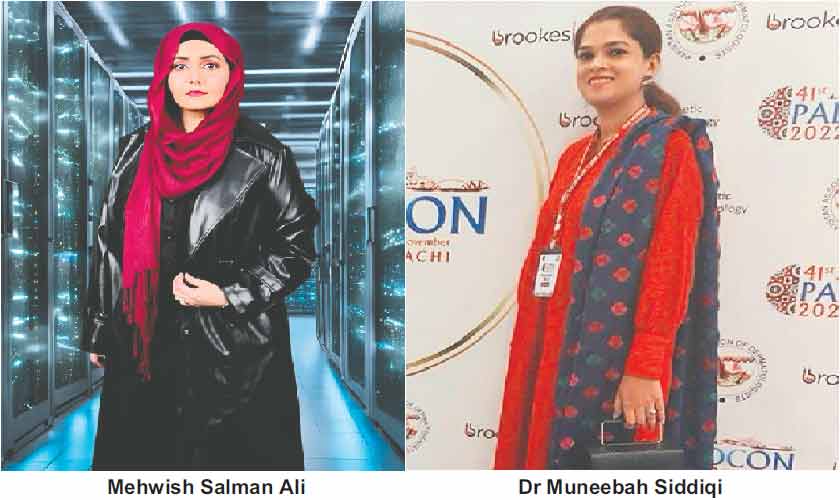
In the high-stakes world of global technology, the image of a pioneer is rapidly evolving. No longer confined to the traditional silhouettes of Silicon Valley, the new face of innovation is embodied by leaders like Mehwish Salman Ali. As the CEO of Data Vault - Pakistan’s first woman-led, solar-powered, quantum-encrypted data centre - Ali is not just navigating the tech landscape; she is fundamentally re-architecting it.
Her journey from a genetics graduate in Karachi to a powerhouse in the Middle Eastern IT sector highlights the resilience required of women in STEM. After launching the 3wOgle Group in Dubai, Ali returned to her roots to bridge the gap between Pakistani talent and global capital. Her recent representation of Pakistan at the International Digital Cooperation Forum (IDCF) in Jordan, alongside Minister Shaza Fatima Khawaja, signalled a turning point for the nation’s digital diplomacy.
Ali’s vision centres on ‘borderless technology’, a concept she championed at the IDCF to attract foreign direct investment. With AI projected to inject $15.7 trillion into the global economy by 2030, she views Pakistan’s $20 billion ambition as only the beginning. As the sole female Pakistani member of the Forbes Technology Council, Ali is leveraging her influence to establish an AI Innovation Lab in Pakistan - a move designed to transform the country into a global centre of excellence.
For Ali, the challenge isn’t just about building servers; it’s about fostering an environment where Gulf investment meets sophisticated Pakistani solutions. By championing AI-friendly policies and bold visionary scales, she is proving that for working mothers in leadership, the goal isn’t just to find a seat at the table - it’s to build an entirely new laboratory.
Building enabling environments
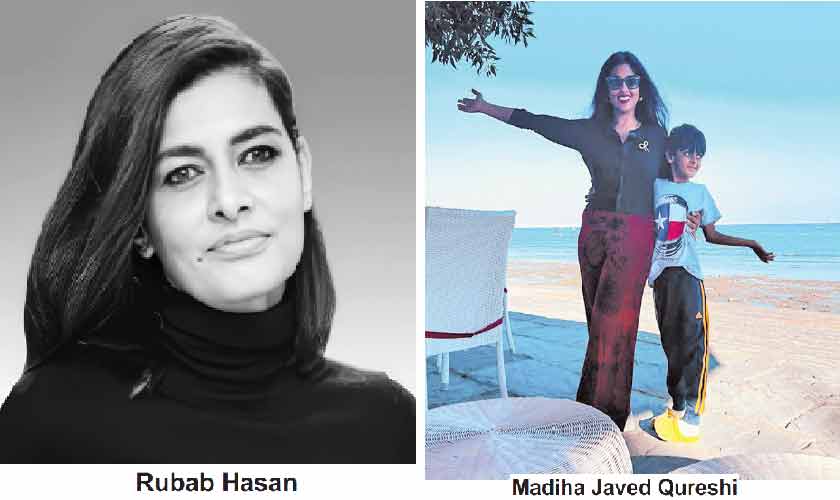
In the evolving landscape, leaders like Madiha Javed Qureshi are demonstrating that the path to a thriving economy is paved with both high-tech innovation and high-empathy infrastructure. As Head of Communications, Bank Alfalah, Qureshi’s trajectory mirrors the shift towards a more inclusive future. However, she has often pointed out that individual brilliance must be matched with institutional support.
Forward-thinking organisations are beginning to bridge this gap by implementing ‘enabling environments’ that treat parenthood as a professional transition rather than a career hurdle. Bank Alfalah, for instance, has set a benchmark by offering a comprehensive six-month paid maternity leave policy, recognising that this duration is essential for mothers to bond with their infants before returning to work. To complement this, the organisation provides five days of paternity leave, emphasising that involving fathers in early childcare is vital for fostering a balanced household and a supportive partnership.
To prevent the ‘out of sight, out of mind’ phenomenon, they also focus on a Stay-in-Touch Programme, which allows mothers to remain connected to their teams through voluntary updates and event invitations. All of this eases the transition back to work without the pressure of an early return. Furthermore, the Maternity Cover Programme offers other employees the opportunity to step into a replacement role for six months. These individuals receive a monetary incentive, ensuring business continuity while providing growth opportunities for the covering staff. Qureshi also mentioned that childcare allowance and daycare arrangements are critical for working mothers. These systemic policies represent the ‘good solutions’ necessary to ensure that the next generation of leaders can take Pakistan towards a global centre of excellence.
Cross-border
marketing leader
Rubab Hasan, Director Marketing & Communication Strategies at The IPG Group/Out&About, represents a new generation of Pakistani professionals building cross-border careers with clarity and intent.
Having relocated to Pakistan while remaining professionally anchored in the GCC, she operates seamlessly across regional markets, leading marketing initiatives in the sports, banking and remittance sectors that are deeply connected to overseas Pakistanis. Her work sits at the intersection of business performance and narrative-building, where strategic communication directly influences outcomes.
With over a decade of experience as an entrepreneur, Hasan transitioned into a leadership role within a growing organisation, bringing with her both an independent mindset and strong execution discipline. This dual perspective allows her to balance structure with agility while maintaining full ownership of the work she leads. As a senior decision-maker, she approaches every project with a clear sense of accountability, viewing results as a direct reflection of leadership rather than circumstance.
Her professional model is inherently cross-geographical. The ability to operate across markets is not just a function of flexibility, but a deliberate way of working - one that reflects the realities of modern business and the increasing interconnectedness of diaspora economies.
Alongside her professional responsibilities, Hasan navigates a co-parenting dynamic, managing both career and home through a system that is structured, intentional and designed to support continuity. Rather than viewing this as a constraint, she approaches it as an operational framework - one that requires efficiency, clarity and thoughtful decision-making at every level.
Her experience also offers insight into an evolving reality: institutions, particularly within education, are still catching up to the pace at which professional and family structures are changing. For working parents operating without traditional support systems, this often means building their own processes to ensure consistency and balance.
What sets Hasan apart is not the presence of complexity, but how she engages with it. She operates with a high degree of ownership, adaptability and focus, qualities that define leadership in today’s environment. Her journey reflects a broader shift in how professionals are structuring their lives and careers: with intention, resilience and a clear understanding that success is not linear, but designed.
A life in balance
For Dr Muneebah Siddiqi, balancing her roles as a working dermatologist, a mother, a wife, a daughter and a daughter-in-law is both fulfilling and deeply challenging. Each day brings the responsibility of caring for her patients with focus and compassion, while also navigating the pressures and expectations of a demanding work environment. At the same time, she is needed at home - emotionally and physically - for her child, her spouse and her extended family. There are moments when these responsibilities overlap, testing her patience, energy and resilience. Yet, through careful time management, prioritisation and a strong sense of purpose, Siddiqi strives to give her best in every role. It is not always perfect, but she has learned to embrace flexibility, seek support when needed and find strength in the balance she is continuously working to create.
This journey would not have been possible without the unwavering support of her family. From the early days of medical student to the demanding years of house job and postgraduate training, Siddiqi carried multiple roles simultaneously - as a mother, a wife, a daughter, and a daughter-in-law. Through long study hours, exhausting night shifts and the pressure of rigorous examinations, her family stood beside her as a constant source of strength. Her parents nurtured her dreams and encouraged her to persevere, while her in-laws, especially her mother-in-law, offered understanding, care and practical support when she needed it most. Her husband’s belief in her and his partnership through every phase made the challenges more bearable. Their collective support created a foundation that allowed her to continue growing professionally without compromising her responsibilities at home. Looking back, Siddiqi realises that every milestone she has achieved is deeply rooted in their sacrifices, encouragement and faith in her.
Building systems where women thrive
In the stories of these women, the myth of ‘having it all’ is replaced with something far more powerful: the reality of building it all, piece by piece, often against the odds. From boardrooms to clinics, from policy rooms to cross-border campaigns, they are not simply participating in the workforce, they are actively reshaping it. What emerges is a collective narrative of resilience, ambition and intentional design where success is no longer defined by perfection but by persistence and purpose.
Yet, their journeys also underline a critical truth: individual strength, while remarkable, cannot substitute systemic support. The burden of balance cannot rest solely on women who are already carrying so much. If Pakistan, and indeed the global economy, hopes to unlock its full potential, it must move beyond celebrating these women as exceptions and begin enabling them as the norm. This means rethinking workplace policies, investing in childcare infrastructure, normalising shared parenting and embedding empathy into leadership itself.
The future of work is not just digital or global; it is human. It recognises that productivity and care are not opposing forces but interconnected realities. When organisations choose to support working mothers, they are not offering concessions, they are making strategic decisions that lead to stronger, more inclusive and more sustainable growth.
The writer is a freelance journalist based in Karachi. She can be reached at [email protected]