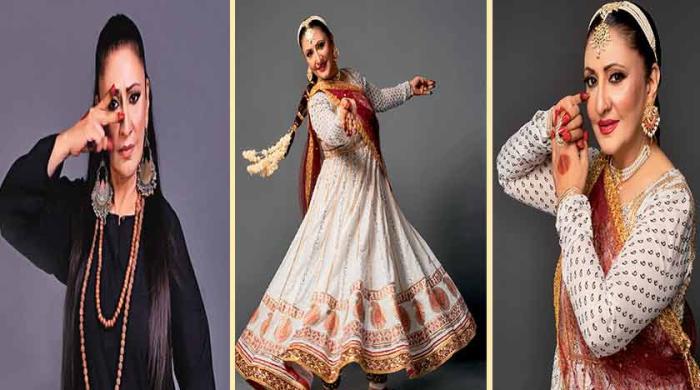
This week You! is in conversation with the legendary Sheema Kermani – a classical dancer par excellence and a social activist. Read on…
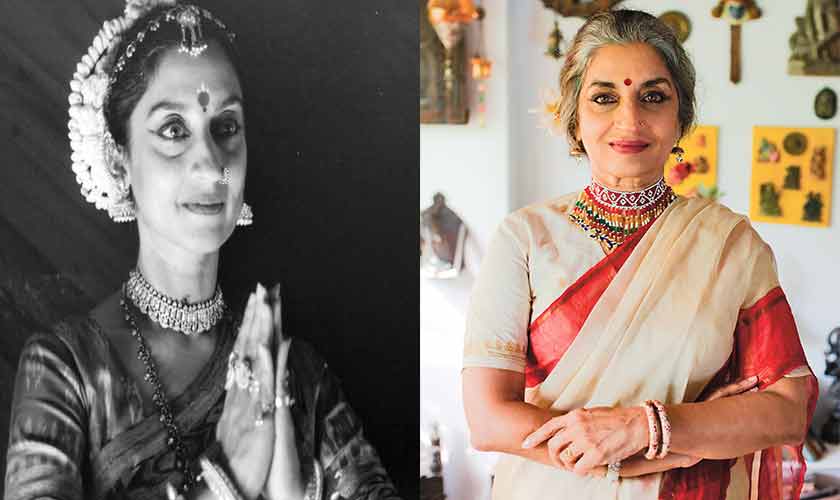
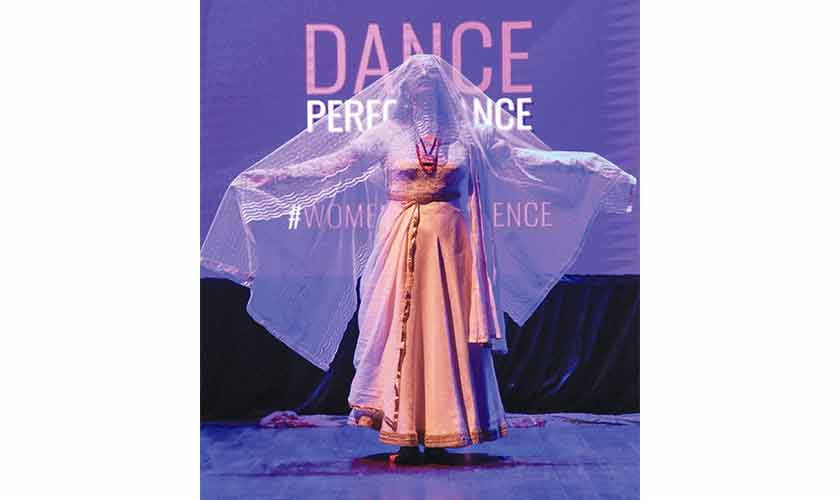
Sheema Kermani needs no introduction. She is a diva in her own right with international stature. She has dedicated her life to dance, art and social causes. Her incessant energy is unmatched. Despite being known internationally, Sheema has no airs about her. A grounded human, she has tirelessly worked for the promotion of classical dance. As one of the pioneers of ‘Aurat March,’ Sheema truly believes in women empowerment. In a candid interview with You! Sheema shares her incredible journey and what it has meant to be a woman. Read on…
You! What made you interested in learning classical dance?
Sheema Kermani: Actually, it was my parents who gave me wonderful exposure to the world of dance, drama and music. My grandparents lived in India and we used to travel by train every summer holidays to visit them. It was here that I first saw classical dance. An ustaad used to come to teach dance and music to my mother and her sisters. This early exposure to Indian classical dance and music during our visits to Hyderabad Deccan, along with Western classical music, which my father was very fond of, stirred my interest in the arts.
You! Where did you receive your formal training?
SK: Learning music and dance was considered part of our education and upbringing and this continued throughout my student life. My first gurus in Karachi were Mr and Mrs Ghanshyam. I began learning from them when I was about thirteen. They had a dance school in Bahadurabad in the 1960s.
I then went away to study Fine Arts at an Art College in UK; however, I continued practicing dance. Later, I went to India to pursue further training. I learnt Bharatanatyam from Guru Leela Samson, Odissi from Guru Mayadhar Raut and Kathak from Ram Mohan. They were all among the most distinguished, well-known and outstanding performers and teachers. I also received a scholarship from ICCR (Indian Council of Cultural Relations) to learn Odissi dance and in total spent three years in India.
You! What challenges did you face pursuing classical dance in Pakistan, especially during restrictive political periods?
SK: When General Zia ul Haq banned dance in Pakistan, I took up the challenge to continue teaching and performing - this was my political defiance against the dictatorial repression.
Gen Zia banned dance and introduced the NOC (No Objection Certificate), an official document that had to be obtained before any kind of public performance. It became a challenge to perform but I continued in spite of all this.
My first solo performance in 1983 was held at a friend’s house, where I invited about 50-60 people, but more than 200 turned up. The English Press covered this performance. On this occasion, we asked people to write down their contact addresses if they were interested in receiving information about future performances.
Over time, I built up a long list of contacts - people who were interested in my work. Before each performance, I would send out circulars to these people with details of the venue, time and date. We also began charging an entrance fee. This is how I continued performing, and of course, it was all underground activity.
During this period, I managed to form a small nucleus of like-minded people who became part of the ‘Tehrik-e-Niswan Cultural Action’ group, which continues to be actively involved in the performing arts even today.
You! How do you see the relationship between feminism and classical dance?
SK: Feminism as an ideology is very much with us and personally, for me, it aligns with my belief in Marxism. I believe that justice, equality and humanism are what we strive for in society - these are principles that shape one’s worldview.
For me, dance is deeply connected to women’s movements. Through dance we learn to straighten and strengthen our spine, hold our shoulders back and cultivate confidence and a sense of dignity – ultimately empowering women.
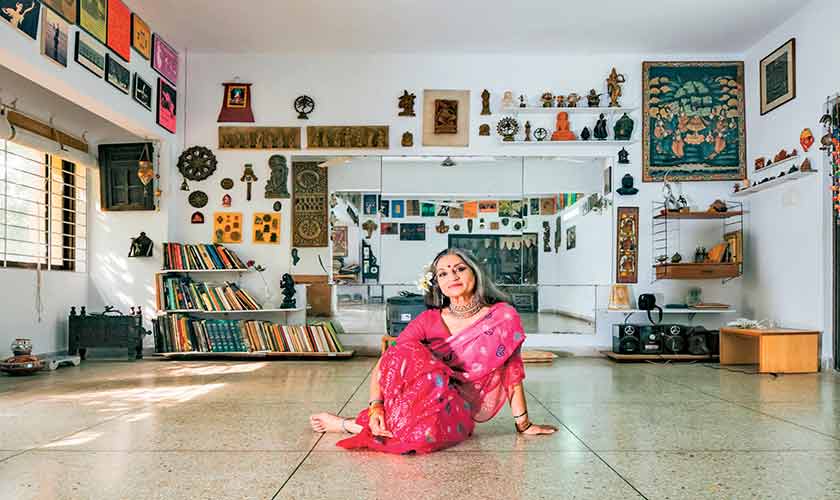
I think art is a reflection of society, of its values and its life. If an artist is aware and thoughtful, they cannot possibly be cut off from contemporary concerns; these concerns naturally appear in their work because they are part of the artist’s lived experience.
Dance, as an art form, is about harmony, about love and beauty. It is about striving to create a better world - and that is what all of us are searching for.
You! What has been the most memorable performance of your career?
SK: In 1995 the Fourth World Conference on Women was held in Beijing, China. Both my mother and I participated in this conference. I was asked to perform at the opening night event. It was the largest international assembly on gender equality and I dedicated my performance to my mother and to all mothers who support their daughters. That was the most memorable performance of my career.
My father passed away in 2006. I wanted to pay tribute to him, so I organised a performance in his memory. This was a very emotional performance for me.
You! Can you name some of the countries where you have performed over the years?
SK: I have performed in UK, USA, France, Germany, Italy, Belgium, Netherlands, Norway, Sweden, China, Bahrain, UAE, Iraq, Morocco, Vietnam, India, Egypt, Indonesia, Sri Lanka, Bangladesh and Nepal.
You! Has international exposure helped shape your career?
SK: Well, yes, having international exposure is certainly very important in the life of an artist. It not only gives one prestige, but is also part of the process of learning and educating oneself.
You! What role does storytelling play in your choreography and performances?
SK: Every performance tells a story and my choreography always has a story to tell. When I choose a poem or a theme, I am telling a story. Sometimes I feel that in dance one is doing much more than simply telling a story - the performer is striving to create a mood and share the essence (Rasa) of an emotion with the audience.
You! What is the biggest misconception about classical dance in Pakistan today?
SK: Most people do not understand classical dance. They view it as just another form of art, whereas classical dance is profound, deep and highly disciplined. It has evolved over the years and represents the culmination of generations of wisdom and experience. It is a highly developed, extremely sophisticated and refined art form. Unlike other dance forms, it requires many years of rigorous training to master.
You! Could you tell us about the vision behind the Tehrik-e-Niswan?
SK: I started to do political work in the 1970s, and the initial idea was to work with the most oppressed section of society. So, we began a dialogue with working-class women. Soon, we felt that women needed a separate platform - a space where they could develop confidence and self-esteem, learn to express their views and problems and demand their rights. This is how Tehrik-e-Niswan came into being.
Our early work involved setting up adult literacy centres for women and girls, as well as centres where women could learn crafts and skills. We continued this work for a couple of years. Alongside this, we held seminars, workshops and conferences and also tried to promote women’s creative potential. We organised an ‘All Women’s Mushaira’, after which we selected some stories and began creating plays.
Once we started this, we realised that theatre and the performing arts were the most effective medium of communication in a society where literacy levels are low and there is little tradition of engaging with papers, seminars and conferences. From that point onward, we focused on using the performing arts as our primary medium. We believe this is the most effective way to put across our message about women’s rights, advocacy and raising awareness.
You! Since 1981, Tehrik-e-Niswan has been presenting plays under its Mobile Theatre Program in low -income areas of Karachi. What has been its impact over the years?
SK: Almost five decades of community theatre have had a huge impact. I believe that our work has contributed to bringing about positive political change in the way women view themselves, in the status of women in our society and the ideological change in women’s values.
We don’t only talk about women’s rights; we talk about human rights. Basically, we address the rights of all oppressed people - women, children, animals, minorities and issues such as religious discrimination. We have done plays on both religious tolerance and intolerance. Our canvas is quite wide.
You! Do you think theatre is a powerful medium to bring meaning social change in people’s lives?
SK: I think theatre is perhaps the most powerful medium to bring meaning social change in people’s ideas and values. Theatre touches individuals on both an emotional and a cerebral level. When both the heart and the mind are impacted, the thinking processes in the brain are set in motion. One is provoked to think, to question and to search for alternatives – to seek new directions and to change the world. This is what theatre can do.
You! What are the biggest issues women face in Pakistan?
SK: Pakistani women face discrimination, sexism and harassment at every level and in their everyday lives. Women’s health is often neglected and many women do not have access to education. Women also have little to no role in decision-making - neither in governance nor in matters concerning their own lives.
You! How do you see ‘Aurat March’ in terms of bringing women rights to the forefront?
SK: As one of the founders of ‘Aurat March,’ I am convinced that we have shaken the pillars of patriarchy in Pakistani society. We have created a dialogue in homes across the country about women’s rights. I see ‘Aurat March’ as a very significant political movement.
You! What advice would you like to give to women?
SK: Women have power and women have strength. Once a woman discovers her inner strength, she becomes an incredible force for change. My advice to women is to find that strength, because once you are empowered, you can do anything – you can change the world and make it a better place to live in.
You! How do you unwind?
SK: I unwind by reading, watching films, gardening, stitching and cleaning my home.
You! What is the most important relationship lesson you have learnt over the years?
SK: The biggest lesson I have learnt is not to depend on anyone and to be self-reliant.
You! What keeps you going at 75?
SK: Love, life, beauty, dance, theatre and being involved in creative work are what keep me going.
You! A few years ago, you said that your ultimate dream was to set up a dance academy in Pakistan. Has this dream become a reality?
SK: I am in the process of turning this dream into a reality. Yes, I think what we need are venues to perform and support to continue our work. Even though I believe that the state and the government should provide us with this - especially if they want to move away from the kind of fundamentalism and extremism that is permeating our society - they are not doing it. So, I am taking my own small steps to build this academy and fingers crossed, we will be successful soon.