It is about time to make genuine efforts to give all women entrepreneurs a fair chance to grow, writes Dr Rakhshinda Perveen…
Once upon a time, I co-founded a non-profit with a man widely seen as sacrosanct. What I underwent there I now understand as a toxic convergence of patriarchy, misogyny and structural inequality. I endured it longer than I should have, believing that proximity to power would eventually lead to justice.
It did not. Leaving was an act of reclaiming power. I returned to an older dream – ‘Creative Anger by Rakhshi’ and decided to formalise it as a sole proprietorship. I went to open a bank account. At the very bank where I had once signed off on transactions worth millions, I was subjected to harsh questioning.
My professional history counted for little. In the end, I needed the ‘favour’ of a young male intern to convince the bank manager that my platform was legitimate. That was decades ago.
Back then, I was already a celebrated TV anchor for live morning and current affairs shows and had produced ’Gender Watch’, PTV’s pioneering 1999 series on gender issues - the first of its kind. I had revived the Urdu alternative Sinf in academic and activist discourse. Yet none of it mattered at that bank counter.
The question is not whether I survived it. The question is: what has really changed since then?
Today, I offer this piece as evidence from the ground. What follows is not abstraction. It is documentation of how rights are denied, justice is rationed and action is punished - particularly for women without protection.
Before I go further: this is neither criticism nor scepticism of women who have succeeded within existing structures. If you sailed across the system, uncovered your workarounds and built something despite it all - I salute you. In the spirit of feminism, I honour all resilient women, however you managed to survive and thrive.
What I am uncovering here is why achievement requires so much more from some of us than from others.
Discrimination at a
micro level
Today, young women like *Shanzay Siddiqui face the same structural barriers I did, often magnified by class, marital status or a lack of connections. Shanzay grew up in Bihar Colony, Karachi and now rides her scooty to a café in Defence to work. Her Instagram feed suggests a blooming graphic design business. But she recently spent three months trying to open a business bank account. As a young, divorced woman running a sole proprietorship, she faced the familiar barrage of questions: Who supports you financially? Can your father provide a reference? Do you have a male business partner who can co-sign? Her education, portfolio and verified income were secondary to her marital status and the absence of visible male backing.
*Sylvia Maalik, from a Christian slum colony in Islamabad, runs a digital marketing agency serving international clients. When she tried to open a business account, the bank insisted on a physical commercial office address than her home address.
“Digitalisation is the latest vogue,” she tells me. “Everyone talks about the digital economy, remote work and borderless business. My clients are in three countries. I work from my laptop. But I can’t open a business account unless I rent an office I don’t need and can’t afford,” she adds.
Over three decades working in Pakistan’s social development sector and founding initiatives to address barriers faced by marginalised women, I have witnessed how inequality operates beneath the language of empowerment.
I have identified five common discriminatory behaviours faced by women entrepreneurs:
1. Your surname matters more than your degree: A woman with a powerful surname can navigate bureaucratic systems that routinely crush equally qualified women without these advantages. Two women with similar credentials: one has a recognisable last name and doors open. The other does not – she faces endless documentation, invasive questions and arbitrary delays.
As a woman running a sole proprietorship with a ridiculed ethnic identity, I have faced these barriers myself. My access to banking, contracts and institutional partnerships has repeatedly hinged not on my qualifications but on whether I could invoke the right connections.
2. Single status is an economic liability: Unmarried, divorced or widowed women face routine discrimination. Banks ask intrusive questions. Landlords refuse commercial leases. Suppliers demand male guarantors. Shanzay’s three-month ordeal was not about her business plan or financial history. It was about her divorced status and lack of a male reference. “They kept circling back to the same question,” she elucidates. “Who is backing you? As if my work, my clients and my income mattered only if a man’s name was attached.”
My 2010 work on tax policy examined a critical gap: while widows benefit from property tax exemptions, divorced mothers, divorced and disabled women and never-married women over 40 face equal or greater economic vulnerability, compounded by social stigma, yet lack comparable fiscal recognition.
3. Financial inclusion statistics are misleading: Pakistan proudly reports a dramatic rise in women’s financial inclusion. Yet most of this increase comes from microfinance. According to available data, the overwhelming majority of loans to women fall into survival-level microcredit, not growth capital.
Women-led startups receive a tiny fraction of total investment. Financial inclusion, as currently structured, keeps women clustered in low-value, high-risk segments while barriers to scale remain intact. Are we celebrating access to debt, not access to wealth? Powerful Boardrooms have yet to hear this question.
4. Sole proprietorship is not enough, but registration is too much: Sole proprietorship is technically easy to register, yet donors, corporations and government contractors routinely refuse to work with sole proprietors. They demand company or NGO registration, both of which require boards, office addresses, legal fees and often male co-founders to be taken seriously.
Traversing the tax system requires access to intermediaries - lawyers and accountants - who operate within informal networks. Women without existing social capital are systematically disadvantaged. They are asked to construct a patriarchal architecture simply to access opportunity. And for those who choose to remain sole proprietors out of principle, practicality or resource constraints, we are perpetually locked out.
5. Behind curated success stories lie compromises: Silent male ‘partners’ who contribute nothing but signatures; vendors who patronise; clients who assume women’s work is a hobby and invasive personal questions during professional negotiations.
I have lost count of how many times my work has been dismissed as a ‘passion project’ or how many contracts required me to produce a male or a strong reference just to be taken seriously.
We need impartial support
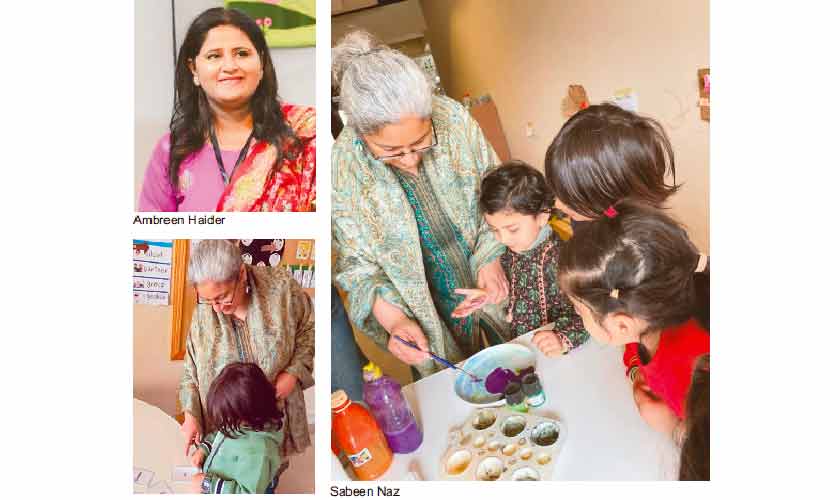
Sabeen Naz is a Pakistani remedial therapist, founder of ‘Raise with Grace’ and a divorced single mother running both her home and her work independently. She has built businesses before. Still, legitimacy has never come easily. “Being a woman gets you concessions. But those concessions ensure you are never taken seriously,” comments Sabeen.
Early on, her work was treated as charity rather than a profession. Support lasted only while she remained small. When she tried to scale, it disappeared. “When I wanted to scale, I stopped being harmless,” she shares.
Ambreen Haider, the leader behind Islamabad’s Women Gala through ‘Let Us Grow Together’, is often cited as a success story. Behind the scenes, the labour is relentless. “People see the gala; however, they don’t see six months of permissions, deposits, guarantees and negotiations for every venue,” expresses Ambreen.
Much of her effort goes into convincing women themselves that their work deserves fair pricing and visibility. Despite measurable outcomes and public visibility, Ambreen continues to face the same institutional scepticism that confronts most women-led initiatives outside corporate norms.
Having worked as a gender advisor with donors and UN agencies, I have seen the nurturing of nepotism and the strengthening of favouritism. I have also seen genuine intent alongside systemic constraints. Funding cycles favour quick results, pushing partnerships toward organisations backed by strong social connections. Grassroots women are sidelined. Nonconformists, free thinkers or empaths with a voice within the system are often sidelined as well.
In my personal journey, I created platforms to connect artisans directly to markets and address systemic exclusion. Funders wanted ‘scalable models’ without funding the infrastructure. Partners withdrew when they realised marginalised communities were at the centre. Innovation without structural backing is penalised, especially when led by women.
Even when women overcome many of these barriers, pay gaps persist. According to the International Labour Organisation’s 2025 report, women in wage employment earn 25 per cent less per hour and 30 per cent less per month than men with similar qualifications, among the highest gaps in South Asia. In the informal economy, the disparity widens to 40 per cent.
The way forward
Let me finish the story I started. Shanzay eventually opened her bank account. It took a male friend with the right surname making a phone call to the bank manager. “I am grateful, but I shouldn’t have to be grateful for basic access. I shouldn’t need connections to exist economically,” she says.
What we need are real reforms that would mean indigenous, context-specific solutions such as:
• Simplified, standardised business registration that does not punish sole proprietors.
• Acceptance of sole proprietorships for funding and contracts.
• Targeted support for women independent entrepreneurs.
• Mandatory intersectional analysis in programs.
• Legal recognition of social enterprises.
Factual empowerment and ceremonial empowerment are two different planets. The former is not about celebrating exceptional women who survive impossible systems; it is about dismantling those systems so that women’s economic participation becomes ordinary, not exceptional.
Beyond the hashtags of sisterhood and empowerment, there exists a far more complex truth: the lived economics of women shaped by class, marital status, disability and access - or lack thereof - to social capital. These are women whose survival depends on their work, not on family background or external protection.
*Shanzay and Sylvia are fictitious names used to protect the identities of real women.
The writer is a leading women’s rights leader and one of the pioneering voices on gender equality and social issues. She can be reached at [email protected]