This week You! talks to some prominent women of the country who share their views regarding the recently passed historic judgment. It recognises marriage as an economic partnership. Read on…
Thirty years ago, an educated woman sat with a lawyer - the only woman lawyer in F-8 kuchehri, Islamabad. In those days, most lawyers had no brick-and-mortar offices; they met clients under open trees, conducting justice in the open air. She and her elderly father held each other’s hands as they crossed uneven ground - literally and contextually. She was told how a woman’s character is torn apart when she dares to step out and claim what is rightfully hers. She could not bear to look at her father’s face. She signed wherever ‘they’ (the powerful in-laws) asked her to sign. She began calculating which rights she could afford to surrender. Her victory that day was leaving without physical harm. This could be the story of countless educated, urban women thirty years ago – and even today.
Decades later, in a much-improved Islamabad - with proper courts and proper offices - another educated woman fought her case across three courts over five years, appearing before the Islamabad High Court (IHC) without a lawyer. The case header records it in two words: In person. She won.
On 24 March 2026, Justice Mohsin Akhtar Kayani of the IHC delivered a 28-page judgment in Amara Waqas v. Muhammad Waqas Rashid (W.P. No. 365 of 2023) that does something Pakistani courts have resisted for decades: it recognises marriage as an economic partnership. It acknowledges that a wife who cooks, raises children, manages a household and enables her husband to earn has contributed to every asset he accumulates - and it says so in law.
For every Amara Waqas who reaches a High Court, thousands do not. This judgment changes the legal ground beneath all of them, including those who will never file a case.
What the judgment actually establishes
The IHC called for serious legislative attention to protect homemakers. The court recommended amending the nikahnama to include a provision for the equal division of property acquired after marriage. It urged the education systems to ensure that women understand and use existing clauses to secure their rights. It called for legislation recognising domestic labour as an economic contribution and reminded the state of its obligations under CEDAW.
Beyond these recommendations, five elements define the ruling:
1. Islamic law’s silence on matrimonial property is not a prohibition; therefore, legislation to protect women is permissible.
2. A husband’s claim of providing ‘every luxury’ is scrutinised; if he cannot prove payment, contribution is presumed to be shared.
3. Courts may use online tools to assess asset value without requiring expert witnesses.
4. A wife’s financial withdrawals for household use are accepted as proof of contribution, even without documentation.
5. Assets registered in the husband’s name may still be treated as matrimonial property if the wife contributed.
What Women Say
So, what may be the implication of this judgement for women? In this context, I reached out to a few prominent women across Pakistan in an attempt to know their views. Read on…
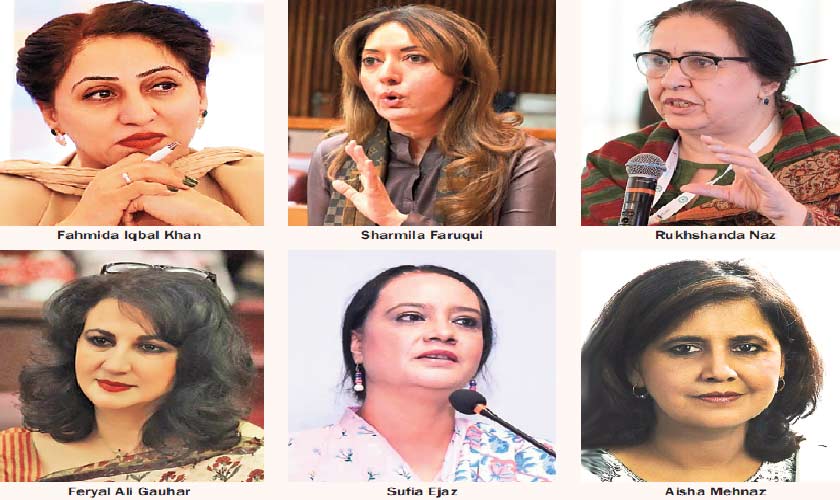
Fahmida Iqbal Khan, Deputy Country Representative at UN Women Pakistan, with more than 25 years of experience working towards the advancement of gender equality and women empowerment, says, “The judgment sends a clear message to families, courts and communities: a woman’s assets are not a marital bargaining chip. For UN Women, this ruling aligns directly with our mandate to advance women’s economic empowerment and their right to own, control and benefit from property on equal terms. It is a step that matters - and one that must now be built upon. Sustained investment in survivor-centred legal services and accountability mechanisms will be essential to ensuring this judgment delivers justice not just on paper, but in practice.”
According to MNA Sharmila Faruqui, the verdict is a step forward, but justice for women cannot remain episodic - it must become structural. “The recent judgment by Justice Kayani is not just a legal clarification; it is a moral correction of a long-standing injustice. What we need now is to translate this judgment into accessible justice. Time-bound recovery processes, penalties for non-compliance and legal aid support must follow. At the same time, we must begin to question the dowry system itself, not just regulate its return.”
For Rukhshanda Naz, a renowned lawyer and former Ombudsperson for Protection of Women Against Harassment, KP, the judgment is an opportunity to initiate proper legislation and incorporate it into family laws. “This is a landmark judgement, a long-awaited by the women’s movements in Pakistan. You might remember Shehla Zia in her life-initiated movement for joint ownership after marriage in 1994. However, it didn't materialize due to resistance in the name of religion. This judgment will likely be challenged but it will still have a greater impact, as many people will begin to recognize women’s contributions to the family through their unpaid work.”
Celebrated actor, author and activist Feryal Ali Gauhar has wholeheartedly endorsed the landmark judgement, ruling that in the event of divorce, a wife not only has the right to claim her full dower along with bridal gifts, but also has an equitable right to all properties acquired by either spouse during the course of the marriage. “To recognise that women’s unpaid and unacknowledged work within the domestic sphere is substantive is a huge stride forward for the economic rights of women,” expresses Feryal. “I fought legal battles in three countries, including Pakistan, to retain my share of marital property which was contested by my husband during the course of our marriage. I succeeded in protecting my interests, but it took twenty years of my life. A ruling such as this would have saved a lot of heartache, legal expenses and frustration caused by the patriarchal mindset of the courts,” she laments.
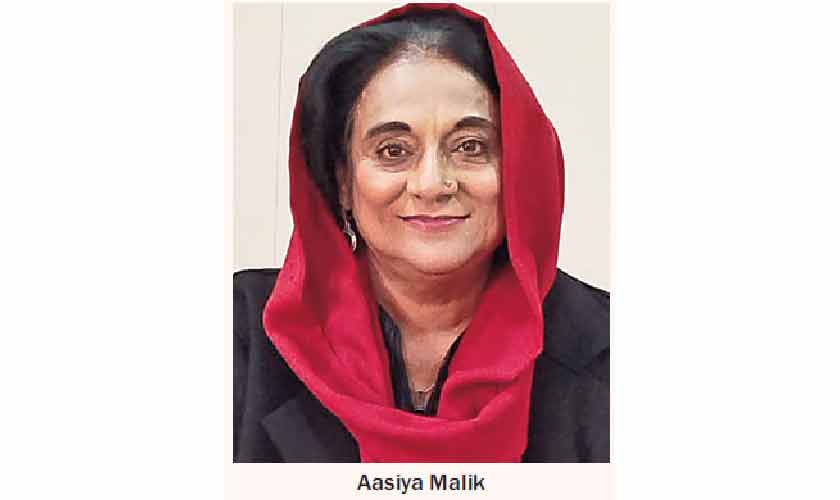
“I would like to quote here an instance when someone close to me sought a divorce. Her ex-husband had taken the gold gifted to her by her parents for investment purposes. After the divorce, the girl could not recover her gold, as there was no proof to present before the law. Laws exist, but there is an unwillingness in society to implement them,” shares Prof. Aasiya Malik. Principal of IMCG Islamabad, who has spent her career shaping young women’s minds.
While welcoming the verdict, Prof. Dr Aisha Mehnaz, a renowned pediatrician and child rights activist, points out, “Not only must dowry and marital assets be rightfully returned to the wife, but mahr, if unpaid at the time of divorce following the consummation of marriage, must also be enforced without exception. The law must close every door through which a woman can be sent away empty-handed.”
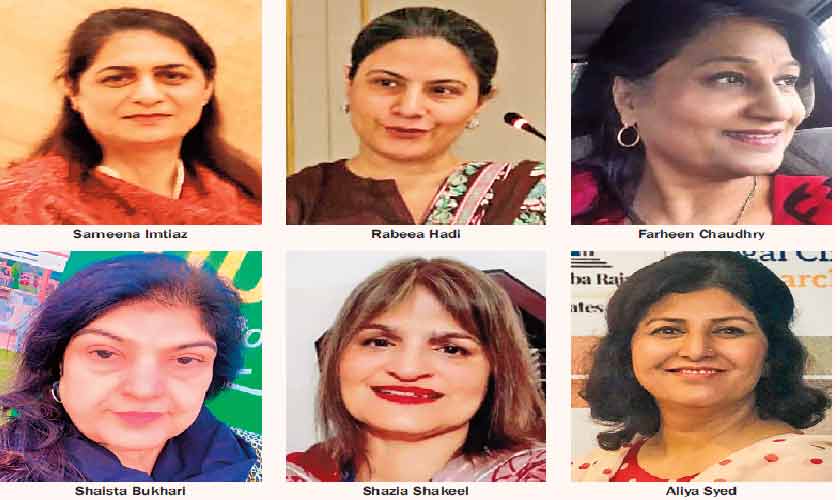
Rabeea Hadi. Director General, Child Protection at the Ministry of Human Rights, views this verdict as a significant affirmation of women’s property rights in Pakistan. “It reinforces an already established legal and Islamic principle that dowry and bridal gifts belong solely to the wife while also providing stronger judicial clarity and enforceability. This is a progressive and much-needed step towards reducing financial exploitation in marital disputes.”
Aliya Syed, a committed development practitioner and technical writer, strongly supports the ownership rights of wives over dowry and wedding gifts. “In a country where the demand for dowry has destroyed many young women’s lives and shattered their dreams, this judgement will work as a form of social security for divorced women, providing them with financial support and the means to move forward.”
“This judgment strengthens the legal rights of women and sends a clear message to society that a woman's financial rights cannot be ignored in the event of divorce,” explains Farheen Chaudhry, a well-known Urdu fiction writer and critic born in Quetta.
Sufia Ejaz, Deputy Convenor of the Women Handicraft Standing Committee at FPCCI, stresses the need to shift the mindset. “The judgement will empower women by giving them legal security. However, in Pakistan many women are unaware of their basic rights and even if they are aware, they face family pressure - “log kya kahain ge” - to relinquish those rights. We need to change this mindset and support women in claiming their rights.”
“A woman leaving an abusive marriage can now more confidently demand the return of her gold, furniture, or cash gifts without fear of legal ambiguity,” comments Shaista Bukhari, an accomplished women rights leader and Executive Director of the Women’s Rights Association, Multan.
Reflecting on the judgment, Sameena Imtiaz, Head of programmes, Think Tank, The Centre for Research and Security Studies and an eminent women’s rights leader, says that this decision can empower women by providing them with greater financial security, particularly after divorce, if effectively implemented. “The judgment has attempted to correct a long-standing ambiguity that has left women in a disadvantaged position in cases of dispute.”
“No matter who is on the wrong side of the conflict, women have always been penalised for the wrongs their counterparts commit,” observes Shazia Shakeel, a gold medalist, author and Head of the English Department at a postgraduate college in Islamabad. “The verdict is the first pleasant rain drop in a season of drought,” she adds.
The IHC has established a principle and called for reform. It cannot determine what happens in Pakistan’s family courts or within households, where silence is often chosen over risk. The implementation of these recommendations depends on legislative will, institutional follow-through and social acceptance.
The orthodox are unsettled, as expected. So apparently, the liberals will welcome this change in law.
What I am waiting for - and what I have always waited for - is the day no woman files a case to secure what was already hers. Not because she won, but because the state ensured it. Rights from birth to grave, married or not, delivered not by courtroom courage but by a state that treats its women as citizens by default. Doorstep justice. She does not seek it; she simply has it.
That day has not come. Until it does, I will keep writing and keep enjoying the discomfort of those who find a woman’s rights more threatening than her suffering.
For too long, a woman leaving a marriage was required to prove her worth to a household her presence helped make possible. This judgment shifts that burden. The assumption, now, is that she contributed. Whether Pakistan’s legislature, its family courts and its social infrastructure will honour that assumption - that is the story still being written.
The writer is a leading women’s rights leader and one of the pioneering voices on gender equality. She can be reached at [email protected]