Some people asked Allah’s Apostle (S.A.W), “Whose Islam is the best? (i.e. who is a very good Muslim)?”

BITS ‘N’ PIECES
Narrated Abu Musa (R.A.):
Some people asked Allah’s Apostle (S.A.W), “Whose Islam is the best? (i.e. who is a very good Muslim)?”
He replied, “One who avoids harming Muslims with his tongue and hands.”
Sahih Bukhari, Volume 1, Book 2, Number 10
Some glaciers are over 40 million years old.
A glacier forms when snow accumulates over time, turns to ice and begins to flow outwards and downwards under the pressure of its own weight. In their upper regions, glaciers gain more snow than they lose through melting, evaporation or calving. When snow survives one melt season, it transforms into firn, a denser and more compact layer. Over the years, layers of snow and firn compress further, forming thick masses of ice. As this process continues, air spaces shrink and become trapped as tiny bubbles, giving glacier ice its dense structure.
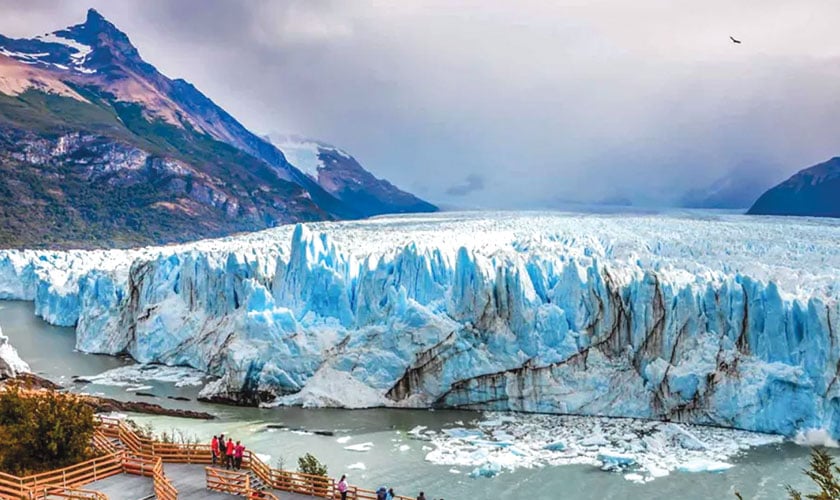
Glaciers move slowly, creeping across landscapes like frozen rivers. They reshape the land, turning sharp ‘V’ shaped valleys into broader ‘U’ shaped ones. Some appear rocky and grey, while others glow with a brilliant blue hue due to the density of the ice. These icy giants can range from the size of a football field to over 100 miles in length.
Today, glaciers cover about 10 per cent of the Earth’s surface, though during the last Ice Age they covered nearly one-third. They are also the largest reservoir of fresh water on the planet, storing around 75 per cent of the world’s supply. Found in 47 countries, glaciers exist in surprising places, even near the equator, such as on Mount Kilimanjaro. The Antarctic ice sheet, the largest glacier on Earth, has existed for at least 40 million years and holds the vast majority of global ice.
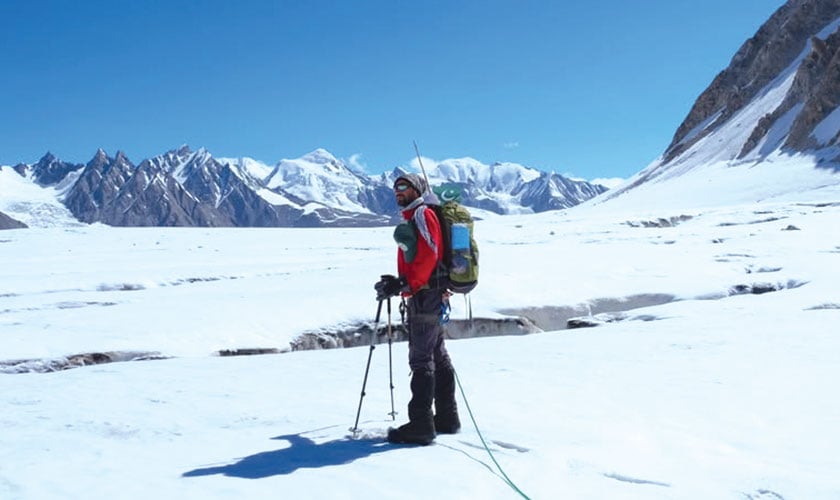
Pakistan is home to some of the most significant glaciers outside the polar regions. Located in the Karakoram and Himalayan ranges, glaciers such as Siachen, Baltoro and Biafo are vital sources of freshwater for millions of people. Pakistan also holds a unique record, as the Kutiah Glacier once surged more than 12 kilometres in just three months in 1953, making it one of the fastest-moving glaciers ever recorded. These glaciers feed major rivers like the Indus, supporting agriculture and livelihoods across the country.
Glaciers are not only natural wonders but also important indicators of climate change. Their ice can be hundreds of thousands of years old, preserving clues about past climates. However, rising global temperatures threaten their existence. If major ice sheets like Antarctica were to melt completely, sea levels could rise dramatically, reshaping coastlines worldwide.