The Prophet (S.A.W) once stayed for nineteen days (when travelling) and prayed shortened prayers....

BITS ‘N’ PIECES
Narrated by Ibn Abbas (R.A)
The Prophet (S.A.W) once stayed for nineteen days (when travelling) and prayed shortened prayers. So when we travelled (and stayed) for nineteen days, we used to shorten the prayer, but if we travelled (and stayed) for a longer period we used to offer the full prayer.
Sahih Bukhari, Volume 2, Book 20, Number 186
Canada is home to the most polar bears, approximately two-thirds of the global number.
Polar bears rely on Arctic sea ice for their survival, a habitat that is literally melting away as the planet warms. They use the ice as a platform to hunt seals, to breed, to roam, and sometimes to den. Polar bears are found across the circumpolar Arctic in five regions: Canada, the United States, Russia, Norway and Greenland. Canada is home to the most polar bears, approximately two-thirds of the global number. Contrary to popular belief, they do not live in Antarctica.
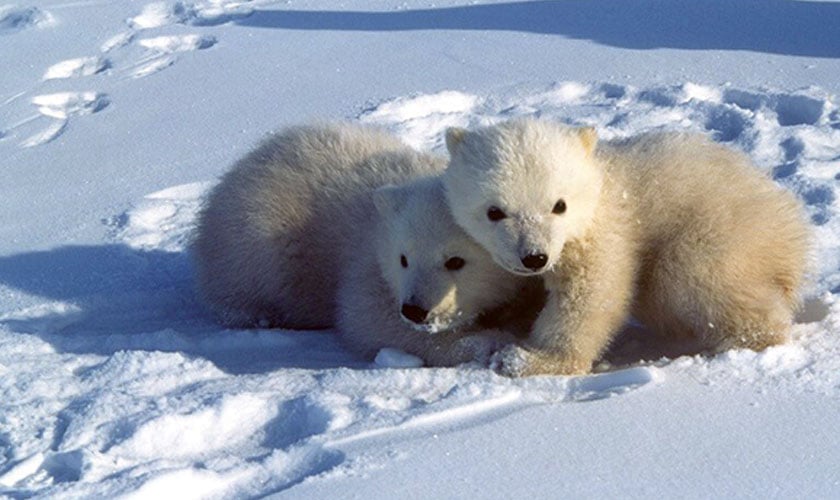
Adult males normally weigh 350 to more than 600 kilograms (775 to more than 1,300 pounds). Adult females are smaller, normally weighing 150 to 290 kilograms (330 to 650 pounds). Scientists usually refer to how tall bears are by measuring them at the shoulder when on all fours. Those heights are typically 1-1.5 meters (3.3-5 feet) for adult polar bears. An adult male may reach over three meters (10 feet) when standing on its hind legs! Polar bears are one of the most mobile four-legged animals. They can travel more than 3,000 kilometers per month and can have home ranges that exceed 600,000 square kilometers.
After feeding throughout the winter and the spring, a pregnant female polar bear digs a den in autumn where she gives birth to her cubs and nurses them. She may go without food for up to eight months, surviving on stored fat. By the time they emerge in spring, cubs can weigh 11 to 14 kilograms, sustained by their mother’s milk, which contains about 31 percent fat and supports rapid growth.
Polar bears are well adapted to their icy environment. Their large paws, which can measure up to 30 centimetres (11.81 inches) across, help them walk on ice and swim efficiently. Tufts of fur between their toes and footpads help with warmth. Surprisingly, polar bear fur looks white but isn’t. Each hair shaft is pigment-free and transparent with a hollow core that scatters and reflects visible light. Polar bears look white because their fur reflects sunlight. Polar bears have two layers of fur that prevent almost all heat loss. In fact, the fur keeps them so warm that adult males can quickly overheat when they run.
These bears are highly carnivorous and rely mainly on seals for food, especially their fat. In fact, most of the carbon in a polar bear’s body originates from marine algae beneath the sea ice, forming a complex food chain that supports life in the Arctic.
Despite the serious threat posed by climate change, reducing carbon emissions could help preserve sea ice in time, securing a future not only for polar bears but for ecosystems and life across the planet.