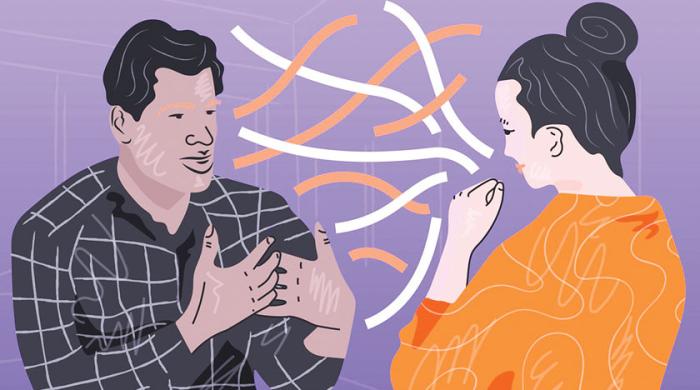
I want to live a happy, normal and independent life. What should I do?

My family is over-protective
Dear Guru,
I am an 18-year-old boy and the youngest in my family. I have three older sisters. My parents and sisters love me so much that at times I feel ready to explode. I try to iron my own shirt, like most boys my age do, but one of my sisters rushes in to press my clothes instead. I cannot even make my own tea or heat my food because my sisters seem to monitor my every move, and before I know it, they have finished whatever chore I started.
My parents are no different. They are caring and loving, but far too protective. Even though I am now an adult, they still treat me like a child. They keep a close watch on my comings and goings and do not even allow me to go out with my friends. My father sometimes speaks to my friends just to make sure they are of good character. On the other hand, most of my friends’ parents are broad-minded. They allow their sons to go out, socialise and enjoy themselves. My parents, however, want me to study all the time and behave as if I am their fourth daughter. I am sick and tired of these unnecessary restrictions. Living like this feels suffocating, and at times I feel so frustrated that I just want to snap at them. I want to live a happy, normal and independent life. What should I do?
Frustrated Guy
Dear Frustrated Guy,
Your frustration is understandable. Excessive love and protection, even when well intentioned, can feel suffocating, especially at your age. However, it is important to realise that your parents’ behaviour comes from concern and love, not from a desire to control your life. As their only son, and your sisters’ only brother, you hold a special place in your family’s heart. Instead of becoming angry and frustrated, try to remain calm and accept their well-intentioned meddling with good grace.
Choose a suitable moment to speak to your parents and explain how you feel. Tell them that you appreciate their love but also need space to make your own choices and learn from your mistakes. Reassure them that independence does not mean disrespect or recklessness, and that you will not betray their trust. Start by asking for small freedoms rather than demanding complete independence. Apply yourself to your studies, as this will show them that you are a responsible young adult. You can also help with household chores, such as getting groceries or running other errands. Let them see that you are capable and trustworthy. When parents see maturity, they often begin to relax their grip. As for comparisons with other families, avoid using them as arguments. Every household has its own values and fears. Focus instead on showing that you are no longer a child and can balance responsibility with social life. Change may not happen overnight, but patience, communication and responsible behaviour can gradually improve your situation. Independence is best earned step by step, not forced through arguments and conflict.
Good luck!
I lose my temper
Dear Guru,
I am a 23-year-old girl and have recently started working in a school as a junior teacher. My problem is that I lose my temper with my students very easily and quite often although I genuinely love them. Generally, I am courteous and behave politely with others, even with complete strangers, but I tend to lose my temper quickly when students become cheeky.
I know that my students are normal children who are sometimes naughty and sometimes well behaved, and I genuinely enjoy teaching them. However, I find it very difficult to tolerate it when they do not pay attention in class. I have just started my career and do not want to spoil my image by being labelled a bad teacher. I want to be popular with my students, but I also want to maintain discipline. How can I control my anger and improve my personality? Please help.
Worried Teacher
Dear Worried Teacher,
Your concern itself shows that you are a conscientious teacher who wants to grow, which is a very good sign. Many new teachers struggle with classroom management, especially in the early years of their careers. Children test boundaries because they are curious and energetic. Their lack of attention is rarely personal, even though it can feel that way in the moment. When you react with anger, however, it may create fear rather than respect, which can worsen classroom behaviour over time.
Try to pause before reacting. Take a deep breath and remind yourself that they are just children. Avoid raising your voice. Set clear rules and consequences, and apply them consistently. When students know what is expected of them and what will happen if they misbehave, they are more likely to cooperate. Work on making your lessons interesting, as a bored child is more likely to be disruptive. Praise students openly when they do well, as it is often more effective than constant scolding or punishment. To improve your classroom management skills, observe senior teachers and seek their guidance. With patience and practice, you can become both a respected and well-liked teacher without compromising discipline.
Good luck!
Kindly send your problems at: [email protected]