2025 was not a year that shouted on the global political horizon, nor did it collapse into chaos....
REVIEW
2025 was not a year that shouted on the global political horizon, nor did it collapse into chaos. Yet, every silence it carried left a mark. No major war was decisively won, no borders were formally redrawn — but alliances shifted, narratives evolved, and power quietly changed direction. Decisions were no longer made at negotiating tables but embedded in behavior, posture, and systems. Some states spoke loudly yet appeared fragile; others remained quiet and emerged more influential. Power no longer announces itself — it signals. It does not seize territory; it rearranges systems. For those paying close attention, it became evident that while 2025 did not witness a global war, it marked the beginning of excavation for a new international order. The central question is no longer who prevailed, but who is prepared for what comes next.
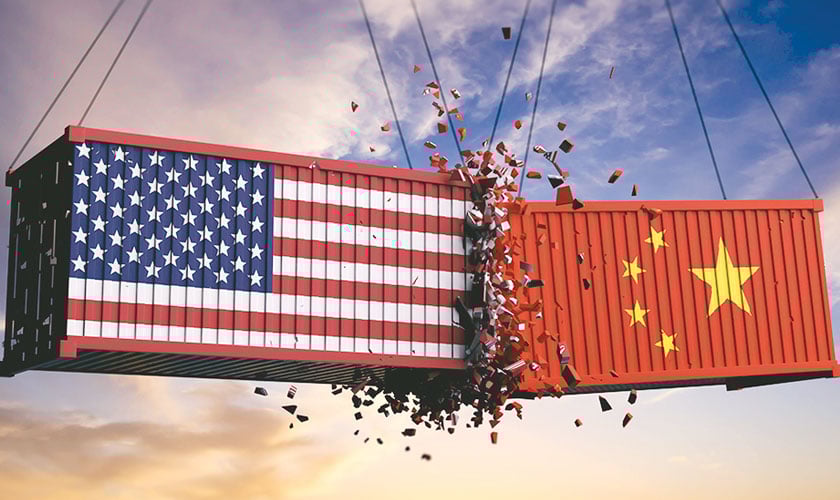
For the United States, 2025 was not a year of reasserting power but of recalibrating it. The stalemate in Ukraine, growing fatigue within NATO, and deep domestic political polarization forced Washington to acknowledge that leadership today is sustained less through rhetoric and more through discipline and system management. Open confrontation with China was avoided, while managed competition was increasingly institutionalized. Defense cooperation expanded in the Indo-Pacific, yet America’s moral authority in the Global South struggled to retain its earlier appeal. Although US defense spending remained historically high, diplomatic energy was directed more toward maintaining alliances than launching new military campaigns.
Across Saudi Arabia and the wider Gulf, 2025 was not about displaying power but redefining it. Riyadh moved beyond treating Vision 2030 as a domestic reform agenda, transforming it into a broader geo-economic and geopolitical identity. Projects such as NEOM, the global reach of the Public Investment Fund, and a strategic economic pivot toward Asia and Africa repositioned Saudi Arabia from an energy supplier to a capital-exporting regional anchor.
For Pakistan, 2025 marked a transition from noise to direction. Despite severe economic pressures, stringent IMF frameworks, and persistent domestic political complexity, Islamabad displayed renewed discipline in its foreign policy. The progression of CPEC into digital and agricultural phases, expanded labour and investment arrangements with Saudi Arabia and the Gulf, and limited yet pragmatic energy engagement with Russia repositioned Pakistan as a functionally responsible nuclear state.
India, by contrast, experienced a relatively uncomfortable year. Despite holding the G20 presidency, deepening engagement within the QUAD, and maintaining high visibility across Western capitals, New Delhi faced perceptions of strategic overreach. Ambiguity within BRICS, unresolved tensions with China, and domestic economic pressures diluted its global momentum.
Beyond major powers, quieter but consequential shifts unfolded across the Global South and mixed economies. China’s GDP growth slowed yet remained stable, allowing Beijing to expand influence through infrastructure, energy, and technology. In 2025, a significant share of global GDP growth originated not from traditional Western economies but from Asia, Latin America, and Southeast Asia, enhancing the bargaining power of the Global South.
The year 2026 represents not a prediction but a test — of political intent, leadership vision, and the ethical weight of power. The world may indeed be moving toward a new order, but that order will not be forged through the noise of power, rather through the decisive silences of statecraft, courageous choices, and the moral resolve that gives power not only survival, but meaning.