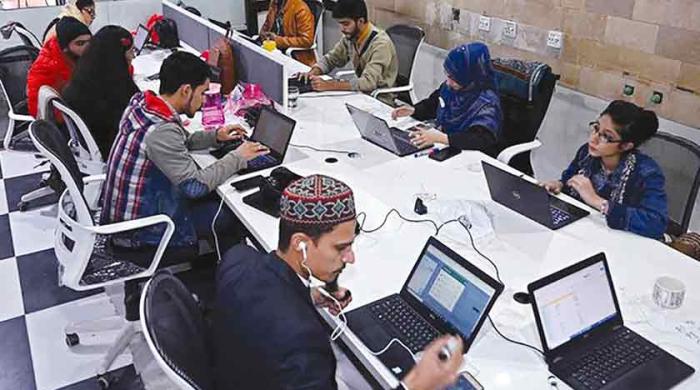
Pakistan’s information technology (IT) industry has emerged as one of the most promising sectors in recent years, demonstrating consistent growth in software exports and digital services.
IT EXPORTS
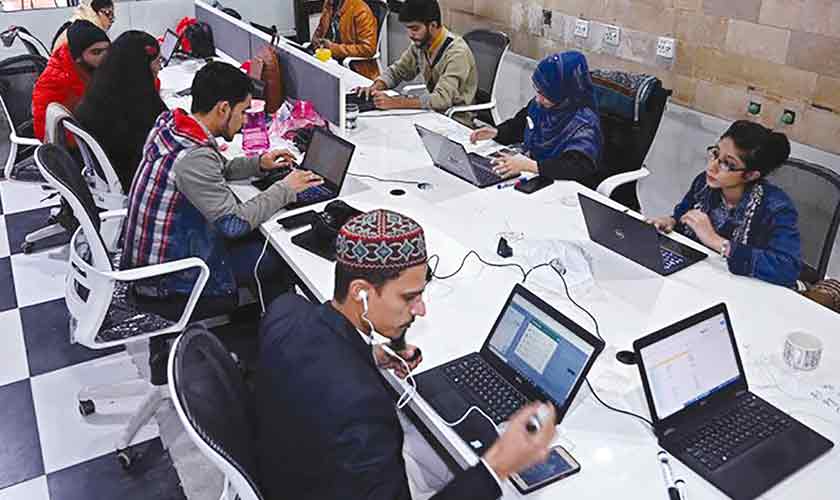
Pakistan’s information technology (IT) industry has emerged as one of the most promising sectors in recent years, demonstrating consistent growth in software exports and digital services.
Yet, to sustain this growth and meaningfully expand into high-value international markets, particularly in Europe, experts believe that the industry must focus on reskilling its human resources. The rapidly changing technological landscape across European economies has created new opportunities, but these opportunities are accessible only to those equipped with the right mix of advanced digital, industrial and communication skills. For Pakistan to make a strong mark in Europe, its IT workforce needs to undergo a significant transformation.
Industry experts emphasise that reskilling and capacity-building are no longer optional, they are necessary for survival and growth. The government, working in collaboration with the information technology companies, universities and professional training institutions, must design and implement structured bootcamps aimed at reskilling the existing workforce. These initiatives would focus on equipping professionals with specialised knowledge and hands-on experience in emerging domains such as artificial intelligence (AI), Internet of Things (IoT), industrial automation and cloud connectivity.
With such training, Pakistan’s IT professionals can not only compete more effectively but also position themselves to serve the sophisticated demands of the European clients. The government’s vision, articulated under the “Uraan Pakistan” initiative, to achieve $10 billion in IT exports by the end of FY2029, depends largely on how quickly and effectively this transformation can be realised.
Syed Saad Abbas, a Germany-based embedded software developer, highlighted that Europe is undergoing a major digital and industrial transformation driven by industrial automation, IoT and smart system integration. The European companies increasingly need intelligent firmware and advanced technologies such as TinyML, edge computing, cloud integration and AI-driven analytics, fields that are now mainstream, he added.
Abbas pointed out that many European firms are outsourcing such projects to external partners, creating strong opportunities for Pakistan if its professionals develop relevant technical skills. Abbas emphasised that Pakistani IT companies can benefit not only from small projects but also from large-scale and long-term contracts, either independently or through collaborations with the European firms.
He also stressed the importance of linguistic and cultural fluency, particularly in German and French, saying that effective communication and cultural understanding are as important as technical expertise and suggested that Pakistan’s IT reskilling efforts should include language and cultural training to strengthen global competitiveness.
In recent years, the Pakistan Software Export Board (PSEB) has played a leading role in showcasing the capabilities of local IT companies at global platforms. Pakistani firms have actively participated in prestigious international events such as GITEX Europe in Germany, London Tech Week in the UK, and technology expos in France and The Netherlands. These exhibitions have helped Pakistan gain visibility as a growing digital hub. However, despite these efforts, only a limited number of companies were able to demonstrate skillsets that fully matched the expectations of the European clients. Many European companies are looking for the vendors with advanced technical capabilities, structured project management systems, and certified professionals, areas where Pakistan still needs to build stronger foundations.
The Pakistan Software Houses Association for IT and ITeS (PASHA) has long advocated for stronger partnerships between academia, industry and the government to create a workforce that is future-ready
The Ministry of IT and Telecommunication (MOITT), through the PSEB, has been investing in various capacity-building programmes to address this gap. Last year alone, the government allocated Rs1 billion to launch nationwide bootcamps focused on training young professionals and existing employees in high-demand digital skills. These bootcamps aim at aligning the talent pool with the global standards and make Pakistani IT exports more competitive.
The success of these programmes, however, will depend on how well they integrate practical learning, global industry exposure, and mentorship from international experts. Industry representatives agree that the need of the hour is collaboration. The Pakistan Software Houses Association for IT and ITeS (PASHA) has long advocated for stronger partnerships between academia, industry and the government to create a workforce that is future-ready.
PASHA Vice Chairman Raheel Iqbal said that Pakistan’s IT exports to Europe are still limited. To grow in this key market, he urged the companies to invest in specialised training, follow international standards like GDPR and ISO, and build trust through quality and compliance. He also suggested opening liaison offices in major European cities to boost visibility and partnerships.
Another aspect that experts highlight is the growing trend of hybrid and remote collaborations. European companies are increasingly comfortable outsourcing complex projects to offshore teams, especially in cost-competitive countries. Pakistan has an advantage here because of its large pool of English-speaking professionals and competitive rates. However, the challenge lies in bridging the gap between general IT skills and specialised technical knowledge. By introducing structured reskilling initiatives in areas like automation engineering, data analytics, and system integration, Pakistan can position itself as a reliable destination for European outsourcing.
The youth bulge in Pakistan also presents a unique opportunity. With over 60 percent of the population under the age of 30, the country has one of the largest potential talent pools in the region. If guided properly through reskilling programmes, this young workforce can help transform Pakistan from a service-based outsourcing hub to a centre of technological innovation. Universities, vocational institutes and industry associations must work together to align curricula with the international market requirements. Short, intensive programmes that combine technical knowledge with practical project experience could prove more effective than long academic degrees in preparing professionals for the European market.
Experts also emphasise that building an international reputation requires consistency, reliability, and long-term engagement. Pakistan’s IT firms must adopt global best practices in project management, documentation and after-sales support. In addition, developing strong intellectual property policies and ensuring data protection compliance will enhance the credibility of Pakistani service providers in Europe. With the right mix of talent, trust and technical depth, Pakistani firms can move from low-value outsourcing work to high-end digital solution development.
Reskilling is, therefore, not just a workforce initiative; it is a national strategy for economic growth. The IT industry has the potential to become one of Pakistan’s biggest export earners, rivaling traditional sectors such as textiles. With focused investment, supportive policy frameworks and international partnerships, the country can unlock new markets and strengthen its position in the global technology landscape.
The road to Europe may be challenging, but it is also full of opportunity. If Pakistan’s IT professionals are prepared to evolve, learn new technologies and communicate across cultures, the dream of achieving $10 billion in exports by 2029 may not be far from reality.
The writer is a seasoned journalist and a communications professional. He can be reached at: [email protected]