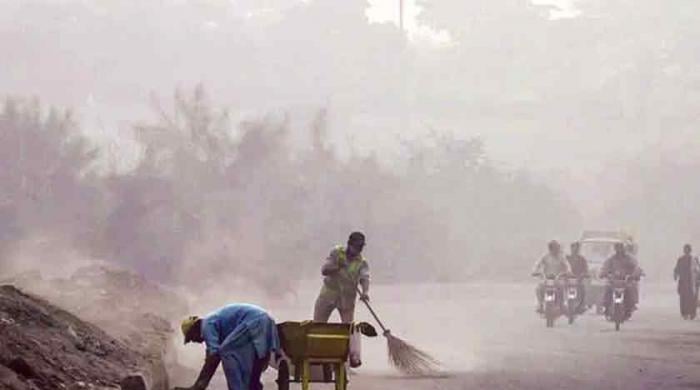
Pakistan stands at the frontlines of the global climate crisis. From scorching heatwaves and prolonged droughts to catastrophic floods that destroy crops, infrastructure, and livelihoods each year, the human and economic toll of climate change is mounting at an alarming pace.
FINANCIAL LANDSCAPE
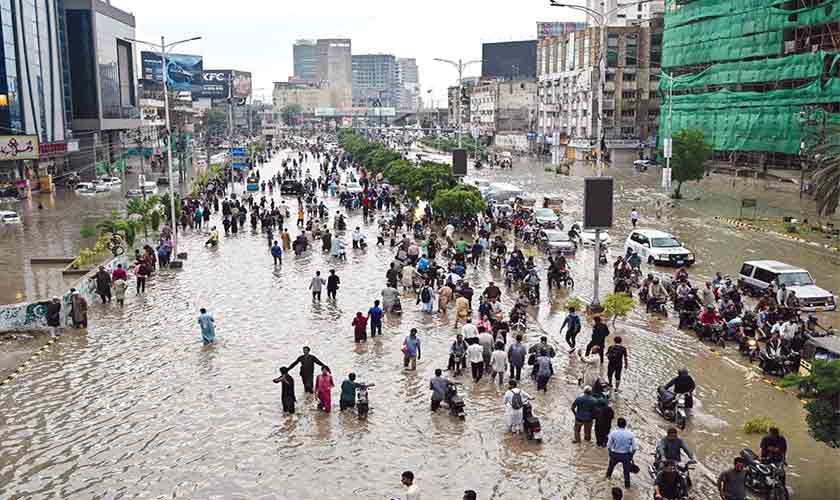
Pakistan stands at the frontlines of the global climate crisis. From scorching heatwaves and prolonged droughts to catastrophic floods that destroy crops, infrastructure, and livelihoods each year, the human and economic toll of climate change is mounting at an alarming pace.
Initial assessments from a leading brokerage firm estimate that the 2025 floods inflicted losses exceeding Rs302 billion on the agricultural sector alone -- a stark reminder of the country’s vulnerability to extreme weather. As climate shocks intensify, strengthening financial resilience mechanisms has become a national imperative.
Agriculture, the backbone of Pakistan’s economy, remains highly exposed to climate variability. Despite contributing nearly one-fifth of GDP and employing about 40 per cent of the labour force, the sector’s capacity to absorb shocks is limited. Agricultural insurance, in theory, can play a pivotal role in protecting farmers, enabling them to recover from losses and sustain production. Yet, traditional insurance mechanisms have struggled to fulfill this promise. As of 2023, only 9.5 per cent of Pakistani farmers were covered by any form of crop insurance. One of the lowest rates in the region.
Multiple barriers explain this gap. Existing insurance products are often ill-suited to smallholder farmers’ realities, the premiums are unaffordable for many, claim assessment processes are lengthy and complex, and product design rarely reflects localised risk profiles. Religious concerns surrounding interest-based contracts also deter many Muslim farmers from engaging with conventional insurance. While Islamic alternatives such as takaful exist, awareness and accessibility remain limited. Consequently, rural households remain largely unprotected, perpetuating a cycle of vulnerability and debt. These challenges underscore the urgent need for innovative, scalable, and inclusive financial protection mechanisms, such as parametric insurance.
Parametric (or index-based) insurance represents a paradigm shift in how climate and disaster risks are managed. Unlike traditional insurance, which compensates for verified losses following physical damage assessments, parametric insurance provides payouts based on the occurrence of a predefined event. Triggers are linked to objective, measurable parameters such as rainfall, temperature, wind speed or floodwater depth.
When these thresholds are breached, payouts are automatically disbursed, often within days and without the need for on-ground inspections. For instance, if rainfall during a growing season falls below a critical level, indicating drought conditions, insured farmers receive compensation automatically. This model offers several technical and operational advantages. By relying on transparent data sources such as satellite imagery, remote sensors, and meteorological records, parametric insurance minimises administrative delays, reduces transaction costs and ensures faster liquidity for affected households. For policymakers, it improves fiscal predictability by pre-defining post-disaster financing. For insurers, it lowers moral hazard and adverse selection risks, as payouts are linked to objective indices rather than subjective claims.
Globally, parametric insurance has demonstrated strong potential in building climate resilience. The African Risk Capacity (ARC), a specialised agency of the African Union, has enabled member states to access sovereign-level parametric coverage for droughts, floods, and epidemics. In recent years, Malawi received a $14.2 million payout to recover from the 2022 drought, while Madagascar secured $10.7 million following Tropical Cyclone Batsarai. Mozambique obtained $2 million in 2025 for drought protection, and Senegal pioneered ARC’s epidemic insurance product covering Ebola, Marburg virus and meningitis.
In an era of intensifying climate volatility, Pakistan must shift from reactive disaster response to proactive resilience planning. Parametric insurance offers a practical pathway to achieve this transformation, one that empowers communities, stabilises public finances and aligns national policy with global climate resilience frameworks
Similar innovation is visible across Asia and the Pacific. In India, a women’s trade union launched a micro insurance product that uses satellite data to trigger heatwave-related payouts. Fiji has provided tax exemptions and subsidies to expand access to parametric disaster coverage, while Indonesia integrates parametric drought insurance into its agricultural modernisation strategy.
In the Caribbean, the Caribbean Catastrophe Risk Insurance Facility (CCRIF) has delivered rapid liquidity to member states after hurricanes and earthquakes, including significant payouts following Hurricanes Irma and Maria in 2017. These experiences collectively highlight how parametric models can complement disaster management frameworks and enhance fiscal resilience.
For Pakistan, where recurrent climate shocks disproportionately affect low-income and rural communities, parametric insurance could be transformative. Each major disaster highlights the financial fragility of households that cannot afford to wait for delayed aid or loans. By linking payouts directly to meteorological indicators, parametric mechanisms provide early and predictable funding, reducing bureaucratic bottlenecks and enhancing transparency. Quick disbursements enable affected families to restore livelihoods, prevent asset depletion and avoid resorting to high-interest borrowing.
For the government, it translates into reduced emergency spending, greater budget stability, and a more proactive approach to climate risk management. Integration with existing financial systems offers further potential. Parametric insurance can be embedded within microfinance, infrastructure protection, social protection, and agricultural credit programs. When bundled with agricultural loans, it serves as a risk management layer, ensuring that farmers can meet repayment obligations even after a climate shock. This integration enhances the resilience of financial institutions, prevents loan defaults, and supports the continuity of income for rural clients. Additionally, digital finance platforms, scientific models and mobile payment systems can streamline premium collection and payout delivery, improving scalability and accessibility for remote populations.
At a macroeconomic level, parametric insurance strengthens national resilience by transferring part of disaster risk from the public sector to the private and reinsurance markets. It reduces dependence on post-disaster donor funding and emergency borrowing, aligning with Pakistan’s fiscal consolidation and climate adaptation goals.
Parametric instruments can attract blended finance, leveraging public, private and donor capital to expand coverage. When integrated into frameworks such as Pakistan’s Green Taxonomy, National Adaptation Plan (NAP), and Nationally Determined Contributions (NDCs), these instruments can support the country’s progress toward Sustainable Development Goals (SDGs), particularly those related to poverty reduction, food security and climate action. However, realising this potential requires overcoming several structural challenges.
First, the success of any parametric product depends on the quality and granularity of climate data. Reliable, high-resolution weather and hydrological data are essential for calibrating indices and minimising the ‘basis risk’, the mismatch between payouts and actual losses. Pakistan’s weather monitoring infrastructure remains limited, particularly in rural and mountainous areas, constraining accurate index design. Investments in meteorological networks, satellite data integration and data-sharing protocols are therefore critical.
Second, awareness and trust among potential users remain low. Many farmers are unfamiliar with insurance concepts or harbour misconceptions about their compatibility with Islamic finance principles. Public education campaigns, partnerships with religious scholars, and the expansion of Shariah-compliant (takaful) parametric products can enhance acceptance.
Third, affordability remains a barrier for small-scale farmers. Subsidised premiums, donor co-financing or public-private partnerships could help bridge this gap. Finally, Pakistan’s regulatory framework must evolve to accommodate index-based insurance products while ensuring consumer protection and transparency. The development of clear standards for index design, disclosure requirements and dispute resolution will be essential for market confidence.
Pilot projects that pool public, private, and donor financing can serve as learning platforms, testing the feasibility of parametric products in high-risk districts and building local technical capacity. Leveraging regional cooperation, such as partnerships with African Risk Capacity (ARC) or Caribbean Catastrophe Risk Insurance Facility (CCRIF), could further strengthen institutional design and reinsurance access. With strategic investment or rather redirecting the investments in data systems, regulatory reform and awareness-building, Pakistan can establish a robust parametric insurance ecosystem that bridges humanitarian relief and financial innovation.
In an era of intensifying climate volatility, Pakistan must shift from reactive disaster response to proactive resilience planning. Parametric insurance offers a practical pathway to achieve this transformation, one that empowers communities, stabilises public finances and aligns national policy with global climate resilience frameworks. By embracing this innovative risk-transfer mechanism, Pakistan can safeguard its most vulnerable citizens while building a more adaptive and climate-smart economy for the future.
The writer is a qualified chartered accountant who works on climate finance, carbon markets and sustainable development across disaster risk reduction and climate change.