From new music releases in Humnava’s debut season to Beauty for a Better Life’s latest Karachi graduates, here are some stories that reflect how art and opportunity can lead to conversations around shared connection and empowerment in Pakistan.
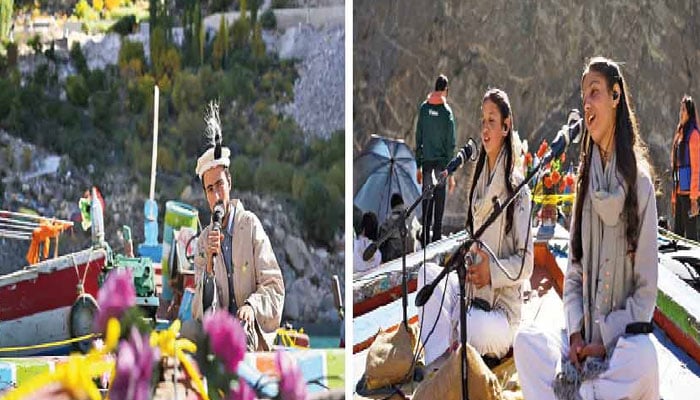
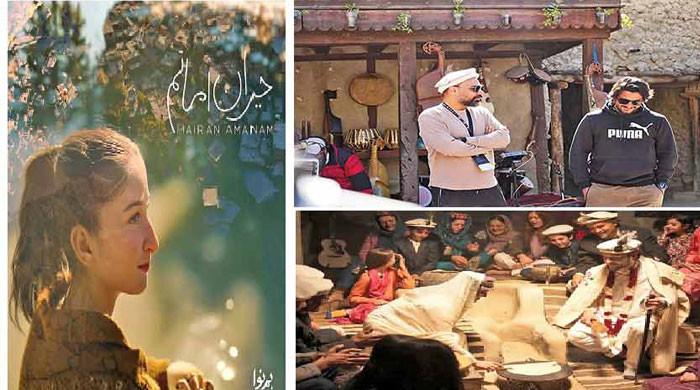
Humnava’s latest releases, ‘Holoyor’ and ‘Sway’, arrive as natural extensions of the season, which first opened with ‘Hairan Amanam’, followed by ‘Noor-e-Nazar’ and ‘Qataghani’ respectively. Yet the last two releases travel in strikingly different emotional directions. While one track turns inward through quiet reflection, the other moves outward with a sense of joy, together capturing the emotional range that Humnava continues to explore.
With Season 1 now unfolding through weekly releases, Humnava is beginning to feel like an evolving cultural dialogue. Co-founded by Zulfiqar “Xulfi” Jabbar Khan and Muhammad Ibrahim, it thrives on collaboration, bringing together artists from vastly different geographies and creative traditions. What is impressive is how organic these exchanges feel. Each collaboration folds naturally into the music’s emotional architecture, as though these artists were always meant to meet here.
‘Holoyor’, which translates to beloved, stands out as a deeply reflective piece. Recorded at the now shrinking Attabad Lake in Hunza, the song unfolds with restraint, allowing its emotional depth to emerge slowly rather than all at once. Sung in Wakhi, the music drifts through memory and longing with gentle grace. It carries the ache of distance, not only from a loved one but from the older versions of ourselves we leave behind without even realising it. There is something haunting beneath its arrangement, but never in a way that feels heavy-handed. Instead, the song lingers between grief and acceptance.
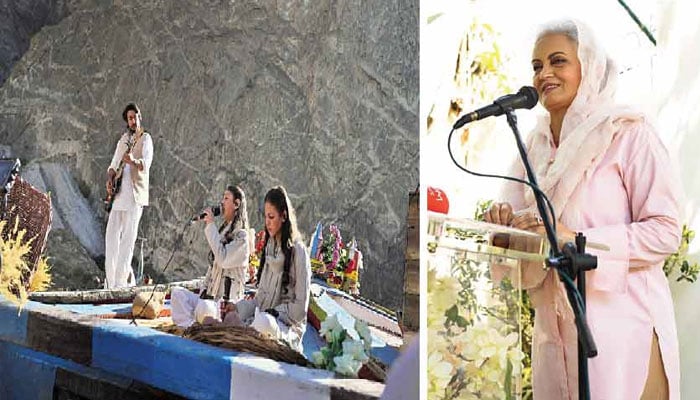
The vocals of Naveed Hassan (Naveed Deevon), Yamna Rahim and Nazalia Rahim make the composition stand out, while the instrumentation builds an immersive world that feels rooted in the mountains yet limitless in its reach.
Sherry Khattak’s electric guitars and backing vocals, Sohail Rumi’s acoustic guitars, Melvin Arther’s bass, Anwar Khan’s flute, Ali Habib’s rubab, Ilhan Karim’s Chitrali sitar, Veeru Shan’s duff, Adnan Karim’s percussion and Dorian Jonas Goetsch’s synth textures blend with remarkable subtlety. Nothing here fights for attention. Instead, each instrument helps create an expansive landscape that keeps the song’s core beautifully simple.
Written by M Rahim, composed by Faiz Rahim and Xulfi, arranged by Xulfi and Sherry Khattak and produced and mixed by Xulfi, ‘Holoyor’ feels cinematic in scale but deeply personal in spirit. Speaking about the song’s emotional centre, Xulfi reflected, “For me, ‘Holoyor’ is about returning to something we quietly lose, our inner child.
We’re born with a kind of magic, a limitless way of seeing the world. But over time, systems and expectations build invisible walls around us until we begin to mistake that confinement for freedom.”
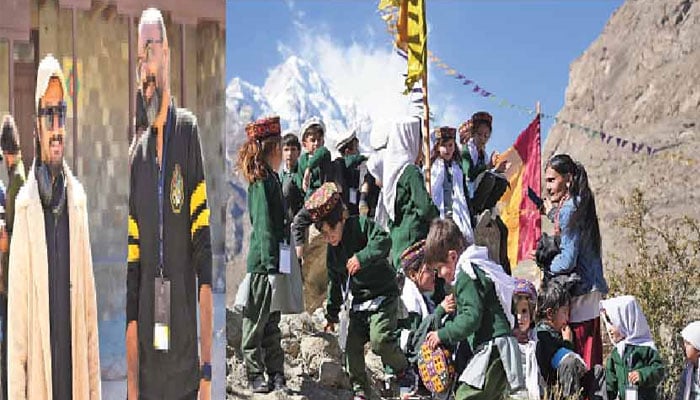
That feeling remains long after the track ends. ‘Holoyor’ does not just mourn the past, it treats memory as sacred rather than mere sentimentality. If ‘Holoyor’ turns inward, ‘Sway’ opens outward with joyful abandon. Recorded at Nasir-e-Khisrow Model Academy in Ghulkin, Gojal, Hunza, the fifth track exudes movement, spontaneity and playfulness. While most songs about childhood lean heavily on nostalgia, ‘Sway’ captures what it actually felt like to live in those moments, playful, free and completely uninhibited.
Featuring vocals by Elijah Bwalya and Joshua Bwalya, alongside Peter John Christopher’s saxophone and backing vocals, Mujeeb Ur Rehman’s rabab, Melvin Arthur’s acoustic guitars, Amine Laroug’s electric guitar, Ilhan Karim’s Chitrali sitar and backing vocals, Dorian Jonas Goetsch’s synths, Adnan Karim and Muhammad Hunaid’s percussion, Veeru Shan’s backing vocals and percussion and Faheem Uddin Hunzai’s dadang, the song carries a warmth that feels both deeply local and global.
“For me, ‘Holoyor’ is about returning to something we quietly lose, our inner child. We’re born with a kind of magic, a limitless way of seeing the world. But over time, systems and expectations build invisible walls around us until we begin to mistake that confinement for freedom.” – Producer Zulfiqar Jabbar Khan, aka Xulfi, on the emotional core of the fourth song from the debut season of Humnava.
Written by Xulfi and Zyad Ahmed Tariq, composed by Ali Raza, Shjr Hussain and Xulfi, arranged by Xulfi and Dorian Jonas Goetsch and produced and mixed by Xulfi, ‘Sway’ moves with remarkable ease. Its setting gives the song a deeper resonance, bringing back universal memories of childhood spaces where happiness came naturally, without any need to perform.
Xulfi described it as “a very pure kind of happiness”, adding, “It takes me back to that part of life where we were not performing joy, we were just living it. Children have this beautiful way of existing without filters. They move, laugh, fall, get up and keep going. There is so much freedom in that.”
That freedom becomes the song’s heartbeat. Nothing feels overproduced or rigid. The arrangement moves with an organic looseness that perfectly matches the spirit it wants to bring to life.
Together, ‘Holoyor’ and ‘Sway’ deepen Humnava’s grander vision. They show that music can be a bridge, not only between different cultures and languages but between emotional states, forgotten selves and shared memories.
“On the surface, it was a ceremony celebrating professional beauty and salon training. Beneath that, though, was something deeper, a reminder of how practical, skill-based education can become a powerful tool for social change, particularly in a country where women’s economic participation continues to lag behind much of the region.”
Beyond the music itself, the project’s intimate listening sessions, deep conversations and community gatherings point to an ambition that goes beyond streaming numbers or weekly release cycles. Humnava is building a living experience around its songs, rooted in reflection, connection and artistic collaboration. It encourages a simple truth: sometimes, the act of listening to a song can itself be a radical choice.
Pakistan is home to dozens of languages. Yet, as Jawad Sharif’s brilliant documentary Indus Blues showed, we are losing both our traditional instrument makers and our native languages because music isn’t seen as a viable career path. A show like Humnava offers a real sense of hope to these ancestors. It suggests that passing down their languages and crafts to the next generation might save these sounds from vanishing. Not everything has to be presented or consumed the way a TikTok video is. Humnava’s pace is therefore, just what we needed.
“Pakistan is home to dozens of languages. But we are losing both our traditional instrument makers and our regional languages because music isn’t seen as a viable career path. A show like Humnava offers a real sense of hope to many ancestors. It suggests that passing down their languages and crafts to the next generation might save these sounds from vanishing. Not everything has to be presented or consumed the way a TikTok video is. Humnava’s pace is therefore, just what we needed.
In the past, Coke Studio handled this balance of modern and heritage incredibly well. But after 15 years, a long line of producers starting with Rohail Hyatt and major format overhauls, particularly under Xulfi in seasons 14 and 15, the landscape has changed. It is Humnava, free from corporate brand ties and backed by UNESCO and the EU, that now has the power to build on its highly impressive first season.
Beauty for a Better Life graduates second Karachi batch
For 60 women in Karachi this week, graduation meant far more than receiving a certificate. It marked the closing of one chapter and the careful, determined beginning of another, one shaped by skill, financial independence and the confidence that comes with being able to build something for yourself.
The second Karachi group of Beauty for a Better Life (BFBL) graduated this week at Depilex M.A Society, completing a vocational training programme supported by L’Oréal through Fondation L’Oréal and implemented in partnership with DepilexSmileagain Foundation and Depilex Institute Karachi.
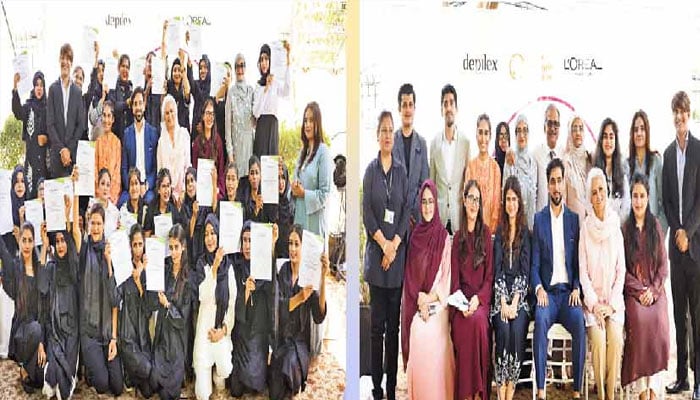
On the surface, it was a ceremony celebrating professional beauty and salon training. Beneath that, though, was something deeper, a reminder of how practical, skill-based education can become a powerful tool for social change, particularly in a country where women’s economic participation continues to lag behind much of the region.
The programme was designed to equip women from underprivileged and marginalised communities with employable beauty skills while also offering mentorship and career guidance. For many, it creates something often denied to women navigating structural limitations, the possibility of self-reliance.
That impact was visible in the numbers. According to organisers, 90 percent of this graduating group is already self-employed, mirroring the success rate of the programme’s first batch. In a sector that continues to expand across Pakistan, this kind of vocational access offers more than immediate income. It creates sustainability, ownership and long-term professional growth.
The beauty industry is often discussed through the lens of aesthetics, but programmes like BFBL reveal its deeper potential. Behind every polished salon chair and carefully learned technique is the possibility of transformation, not simply external but deeply personal.
Speaking at the ceremony, DepilexSmileagain Foundation President Masarrat Misbah reflected on the programme’s larger purpose, “helping women build dignified and sustainable livelihoods.” L’Oréal Pakistan’s Executive General Manager and CEO Rehan Saeed echoed that sentiment, describing the initiative as “proof that skills-based training can create lasting economic opportunities for women.”
Talat Rabani, Head of Depilex Institute Karachi, also emphasised “the role vocational education continues to play in building financial independence,” particularly for women whose opportunities are often shaped by social and economic barriers beyond their control.
Globally, Beauty for a Better Life has reportedly trained more than 67,000 women through employment and entrepreneurship-focused programmes. Its growing presence in Pakistan through partnerships with local institutes and community organisations suggests a model focused not on temporary intervention but on long-term investment.
And perhaps that is what feels most significant here. At a time when conversations around women’s empowerment can sometimes remain trapped in abstract and ambivalent language, consistency matters and this particular effort feels tangible.
Here’s to many more chapters.