In a film industry often defined by caution and convention, one filmmaker continues to move at his own pace. Abu Aleeha speaks about risk, realism and what Pakistani cinema can look like, one film at a time.
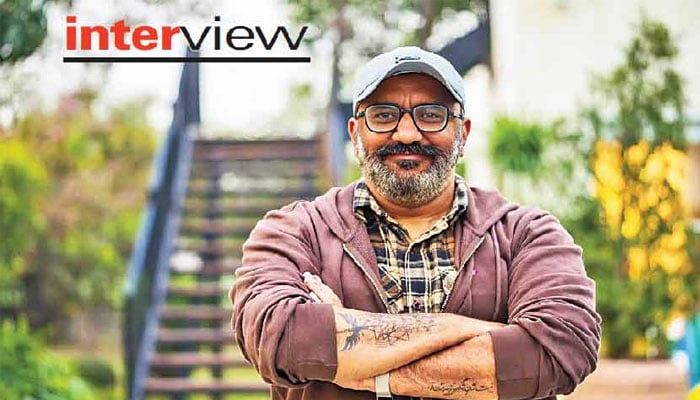
In the ever-expanding landscape of contemporary Pakistani cinema, Abu Aleeha has carved out a distinct space with a strong output that defies the industry’s traditionally slow pace. If his earlier films such as Tevar and Kataksha helped establish his reputation as a director interested in exploring overlooked themes, his later batch of films, including Dadaal, Taxali Gate and Javed Iqbal: The Untold Story of a Serial Killer, brought him critical acclaim, which, despite bans, was recognised internationally at the UK Asian Film Festival.
Abu Aleeha has no plans to rest on his past successes. Looking to make a mark in commercial territory, his upcoming romantic-comedy Laddu is one such example. His decision to do so does not mean he is forgetting his roots as a filmmaker driven by social realism.
A case in point is his new film, Mera Lyari, which opens this week. It premiered in London on May 2 ahead of its nationwide release on May 8 and continues his trajectory of using Lyari-based narratives, where sports are used to challenge local stereotypes.
Hindi films like Dhurandhar and Dhurandhar 2 are shrill, propaganda-laden, hyper-masculine, violent films set in Lyari, though notably, their sets were constructed in Thailand. Abu Aleeha’s portrayal of Lyari is entirely different. Rooted in reality, his films genuinely engage with one of Karachi’s most diverse neighbourhoods and its people. In this interview, the director talks about why Mera Lyari holds a special place in his career.
Instep: Where did the inspiration for Mera Lyari begin?
Abu Aleeha (AA): It started about four years ago while I was conducting auditions for Dadaal. While searching for a female boxer, I was struck by the sheer volume of talent in Lyari. Whether it’s rap, boxing or football, every child there seems to be an artist or an athlete.
The real turning point came near Sarbazi Ground, where I spent days observing girls playing football. That image stayed with me. I realised I didn’t want to tell a story about the “plight” of the area, but about its vibrant, spirited children.
Instep: Why is Mera Lyari being compared to the Indian film, Dhurandhar?
AA: I don’t understand the comparison. Dhurandhar feels like a propaganda film that fails to capture the essence of the area. They didn’t even shoot in Pakistan but recreated Lyari on a set.
Their version of Lyari is geographically and culturally disconnected, focusing only on a past gang war that represents a fraction of the locality while ignoring the fact that about 90 percent of Lyari is a vibrant hub of art, sports and hospitality.
In contrast, we shot entirely on location and nearly 90 percent of our cast, particularly the female athletes, are actual footballers from Lyari. This is an authentic story of the soil, so the comparison doesn’t hold.
Instep: If the comparison doesn’t hold, why has it gone viral?
AA: In today’s digital space, narratives spiral quickly. A comment gets picked up and suddenly that becomes the focus. Instead of discussing our film, everyone is talking about Dhurandhar. As filmmakers, we aren’t enjoying that shift.
Instep: Even then, isn’t the comparison flattering given its scale?
AA: Not at all. Even if you convert their budget into PKR and call it a 1,200-crore film, the comparison feels unjust. Mera Lyari is a small, honest story that deserves to stand on its own. My focus is on the soul of its people, not on a spectacle built on a massive budget.
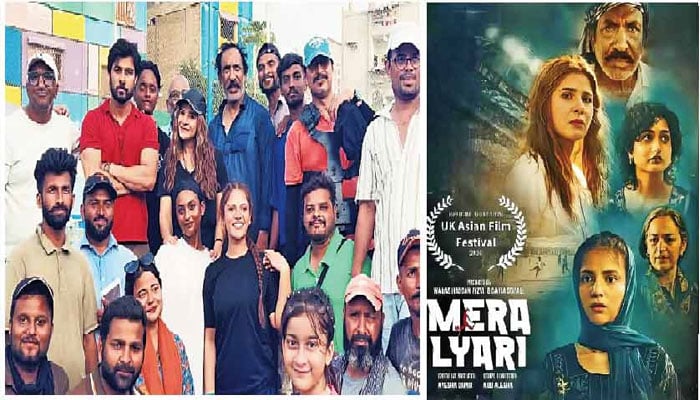
Instep: How did you visualise Lyari on screen?
AA: Lyari is a working-class neighbourhood and I remained committed to that reality. I couldn’t shoot in upscale areas like Defence or Clifton and pass them off as Lyari. While I stay away from the political debate about why its infrastructure remains as it is, my focus was on the people, their resilience, energy and spirit.
Instep: Tell us about the central conflict.
AA: The protagonist is a young girl passionate about football and curious about documentaries, while her father, a struggling rickshaw driver, worries about survival and honour. The emotional core lies in her journey to make him see that her dreams are not a threat to his honour but a reflection of his dignity.
Instep: Who are your cinematic influences?
AA: I deeply admire Iranian cinema, along with Satyajit Ray and Akira Kurosawa. When you examine their filmographies, whether it’s Kurosawa’s Rashomon, Ray’s Apu Trilogy or the masterpieces of Abbas Kiarostami, what stands out is a commitment to realism that stays with you long after the film ends.
Instep: How do these influences shape Mera Lyari?
AA: I don’t claim to be on their level, I am still a student, but I try to incorporate those sensibilities into my work. When you watch Mera Lyari, it will feel like an Iranian-style film told in Urdu.
Instep: You’ve mentioned a personal connection to Iran recently. Has that impacted your current work?
AA: Absolutely. I’ve visited Iran three times in the past year and am currently working on a film project there, with pre-production already underway. That exposure has naturally shaped my approach and its influence is visible in Mera Lyari.
Instep: Why cast real footballers instead of actors?
AA: It was a calculated decision. Teaching actors a sport often looks artificial. It’s far easier to teach performers “performance skills” than to fake authentic athleticism.
Instep: How did you get natural performances from people who never stood before a camera?
AA: By removing the pressure of traditional staging. I avoided rigid setups and instead explained the emotional core of each scene, allowing them to respond naturally.
Instep: How do you direct without strict blocking?
AA: I create a free environment. We didn’t shoot Mera Lyari in a conventional sense, we captured moments. Within days, they forgot about the camera. What you see on screen is a collection of raw, original moments rather than rehearsed performances.
Instep: This is a government-backed project. How was your experience working with the Sindh Government?
AA: The creative freedom was absolute. I’m particularly grateful to Mr Sharjeel Memon for supporting the project. From shaping the story to making key decisions with my producer, Ayesha Omar, including selecting distributors and setting the release date, we were trusted at every step. That level of confidence is rare and it deserves recognition.
Instep: What are your expectations from this initiative?
AA: It is an honour to have the first completed project under this initiative heading to cinemas. I’ve seen other upcoming projects under this initiative by creators like Misbah Ishaq, Mansha Pasha and Zhalay Sarhadi and they look promising. It’s encouraging to see the state support cinema, which is exactly what the industry needs.
Instep: You’ve cast Ayesha Omar against type. What works in your collaboration?
AA: She’s extremely versatile but often typecast. I enjoy challenging her. Whether she was a police officer in Javed Iqbal or the victim of domestic abuse in this film, she consistently surprises me. She can shed glamour and bring raw honesty to complex roles.
Instep: Was casting Dananeer Mobeen a risk?
AA: Initially, yes. Her public image is very different from the character of Afsana Baloch. But after a few workshops, she completely transformed and even elevated the role beyond the script.
Instep: What led you to cast Shoaib Hassan as your lead?
AA: I saw him in Doda and was struck by his authenticity. For a film rooted in Lyari, I wanted a hero with a positive character and he was the perfect fit.
Instep: You’ve criticised box office transparency in Pakistan. Why?
AA: There’s a culture of misinformation. Many films labelled as “blockbusters” don’t recover even half their budgets. It’s all PR smoke and mirrors. With around 120 screens in the country, the numbers simply don’t support those claims.
Instep: What is your model for profitability in the current market?
AA: It’s about smart budgeting. If you make a film under 3 crores, you can recover costs through theatrical release. The profits come from digital, satellite, music and other rights. My last three projects, including Taxali Gate, were profitable because of this model.
Instep: Is offbeat cinema a safer bet than commercial films?
AA: Absolutely. A high-budget film that underperforms loses everything. A low-budget film that breaks even gains through additional revenue streams. It’s the offbeat titles like Joyland, Laal Kabootar, Javed Iqbal and Taxali Gate that are being acquired by major global platforms. That’s where both profit and prestige lie. Large-scale commercial films often fail to attract buyers on international platforms because they lack the necessary narrative quality.
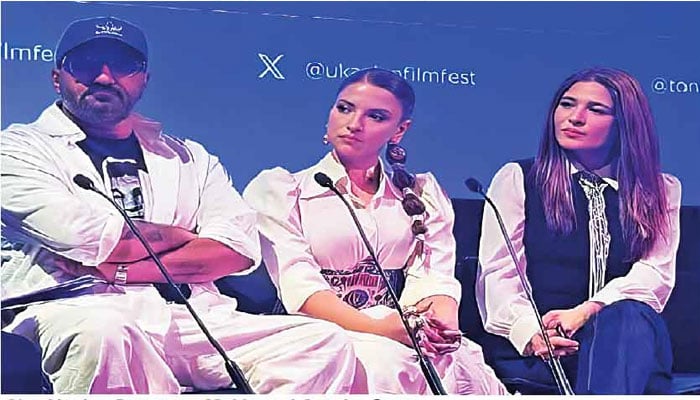
Instep: You’ve often found more appreciation abroad than at home. How do you view your relationship with the UK Asian Film Festival (UKAFF)?
AA: The UK audience often feels deeply connected to Pakistani stories. UKAFF gave Javed Iqbal global recognition when it was banned at home. They chose it as their opening film and I was honoured with the Best Director award. That support is invaluable.
Instep: Why does Pakistani cinema struggle with balance?
AA: We’ve created a divide. Our art films are seen as slow, while commercial films are seen as mindless. But films like The Legend of Maula Jatt or Ghabrana Nahi Hai show that you can balance scale and substance. The key is respecting the script.
Instep: You are known for non-traditional, often dark films. Why shift to a romantic-comedy with your upcoming film Laddu?
AA: I’ve always resisted trends. When the industry was saturated with romcoms, I chose not to follow. Now, with Laddu, starring Farhan Saeed, Kinza Hashmi and Areej Chaudhry, I’m exploring the genre on my own terms. It isn’t mindless entertainment, it carries a strong emotional core.
Instep: Tell us about the most challenging scene in Mera Lyari.
AA: There’s a pivotal scene involving two schoolgirls being harassed, shot in a single take on a real street. We spent half a day meticulously planning the choreography. It was technically demanding but the result is raw and powerful.
Instep: What is your view on film associations in Pakistan?
AA: To be honest, they are a joke. These associations lack any real structure or mechanism to assist with payment disputes or legal support. Instead of relying on them, creators have to keep working and find their own way forward.
Instep: What’s next for you?
A television project, written by Rida Bilal, on cybercrime is in development and Laddu is nearing completion. I’m also working on an international psychological horror film set in London that features a major A-list Pakistani star. I also have a project in Iran, though it is currently on hold due to the regional situation.