Print Story
X




Shahi Bagh, a Mughal-era garden in the city, is being restored and equipped with modern facilities
| S |
hahi Bagh, located at the heart of Peshawar, is a historic and cultural landmark that has shaped the city’s identity for centuries. More than just a recreational park, it is a living symbol of Peshawar’s heritage, social life and evolving urban character.
Established during the Mughal era, Shahi Bagh reflects a time when gardens in the subcontinent were not merely ornamental spaces but places of relaxation, intellectual exchange and cultural activity.
During the Durrani period, the garden continued to receive attention and was well-maintained, further enhancing its importance as a public and cultural space.
Over time, the garden became an integral part of life in the city. It evolved into a gathering place that residents visited not only for leisure but also for literary, social and, occasionally, political activities. Spread over approximately 100 acres, Shahi Bagh has hosted generations of visitors, offering shade, serenity and a sense of continuity in a rapidly changing city.
Once known as a city of over 30 gardens spread across hundreds of acres and rich with diverse flora, Peshawar today retains only three major historic public parks: Shahi Bagh, Shalimar Bagh and Jinnah Park. Among them, Shahi Bagh is the most iconic.
Historically, students have frequented the Bagh to study under the shade of its trees, benefiting from its calm and intellectually stimulating environment. Foreign visitors and diplomats have also included Shahi Bagh in their itineraries, underscoring its significance as a site of both cultural and historical interest. At one point, it was not only a retreat but also a reflection of the city’s vibrant academic and literary atmosphere.
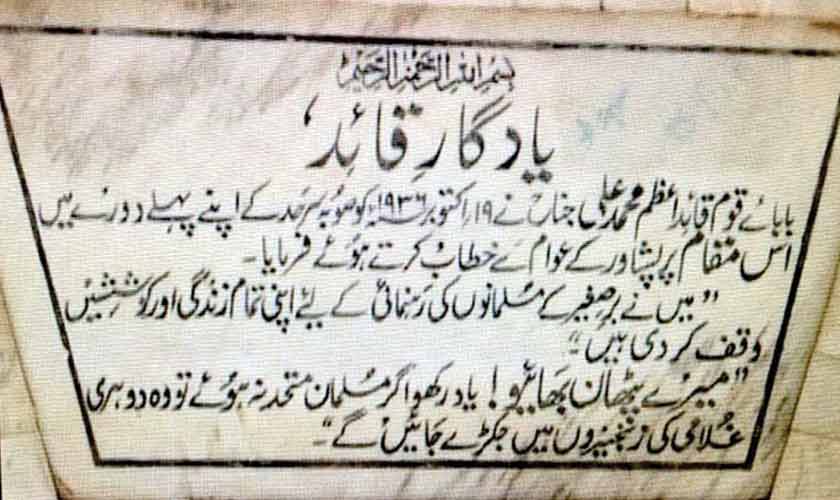
Shah Bagh also retains political and historical importance. Muhammad Ali Jinnah, the founder of Pakistan, visited Khyber Pakhtunkhwa three times between 1936 and 1945, twice during the independence movement and once after the emergence of Pakistan. During his first visit to Peshawar on October 19, 1936, he addressed a gathering at Shahi Bagh.
“I have devoted my entire life and all my efforts to guiding the Muslims of the subcontinent. My Pathan brothers, remember this: if Muslims do not remain united, they will be bound in the chains of a double slavery,” he said.
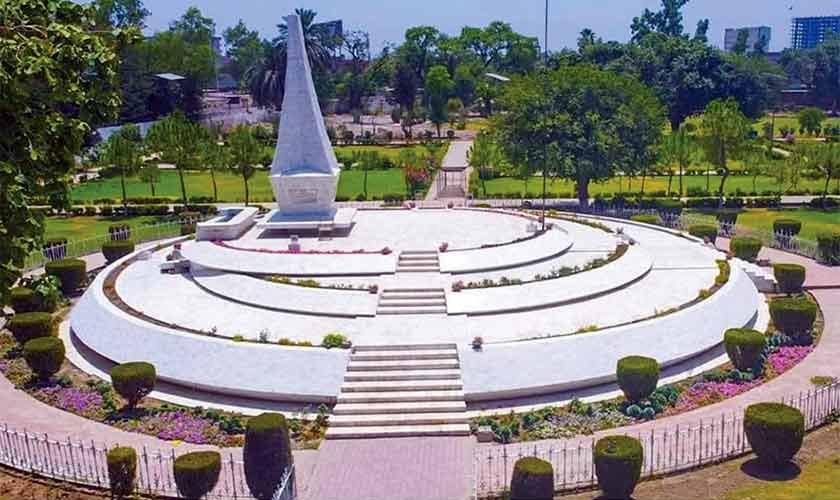
In remembrance of his address, a tall white monument, known as Yadgar-i-Quaid, was later constructed in the garden. The monument bears his words and the date of the speech, serving as a lasting tribute to a pivotal moment in the region’s political history.
Despite its historical prominence, Shahi Bagh has faced significant challenges over the years. Neglect, encroachments and illegal constructions have taken a toll on its structures and beauty. The once-thriving garden had then began to lose its charm.
Efforts to restore the Bagh are now under way. In June 2020, the Peshawar High Court issued directives, ordering the removal of encroachments and the restoration of Shahi Bagh to its original condition. This marked a significant step toward reclaiming the historical integrity of the site.
In recent years, the provincial government has initiated more structured efforts to revive this heritage landmark. Under the Peshawar Revitalisation Plan, restoration work is progressing at pace. The project includes repairing old fountains, upgrading pathways with marble tiles and undertaking fresh plantations to restore the garden’s natural beauty.
Modern facilities are also being introduced to meet contemporary needs. Walking and jogging tracks are being upgraded, providing residents with spaces for physical activity. These enhancements aim to strike a balance between preserving the historical essence and adapting it to modern urban requirements.
Encroachment removal has been a key focus. Authorities report that significant portions of land have been reclaimed as part of the restoration effort. This recovery is considered crucial to ensuring that the Bagh regains its original area and layout.
For neighbours, Shahi Bagh continues to hold deep personal and social value. Nawab Sher, a resident of Charsadda Road, Peshawar, near the Shah Bagh, recalls visiting it frequently during his student years for jogging and recreation. He describes it as accessible for families, a place where children could freely enjoy outdoor activities. Due to professional commitments, he says, his visits have become less frequent, but the sentimental connection remains strong.
“Early in the morning, a number of women from nearby areas come for jogging. Weekends, Eid holidays and national celebrations such as Independence Day draw significantly larger crowds,” Nawab Sher says.
According to Riaz Ghafoor, an official from the Local Government Department, Shahi Bagh remains one of the city’s most important recreational spaces. It attracts large numbers of visitors daily, including men and women who come here for exercise. It offers facilities such as designated jogging tracks, family areas and cafeteria services, making it a comprehensive public park.
“Visitor numbers increase notably on weekends, with around 2,000 people visiting on Saturdays and Sundays, compared to approximately 1,000 on weekdays. Many individuals come for morning and evening walks. Some families gather on the lush lawns to spend quality time together,” Riaz says.
“Under Peshawar Revitalisation plan, the provincial government has allocated Rs 100 million for the renovation of Shah Bagh,” he says.
The writer is a multimedia producer. He tweets @daudpasaney