Print Story
X




The reforms initiated by Syed Sardar Ali Shah are still evolving
| T |
he narrative did not commence in an office, a briefing room or a policy document. In a jurisdiction where official accounts of reform frequently outpace actual developments, it was a social media page—rather than a government report—that provided me the initial reliable insight into the change. Later, I paid a personal visit.
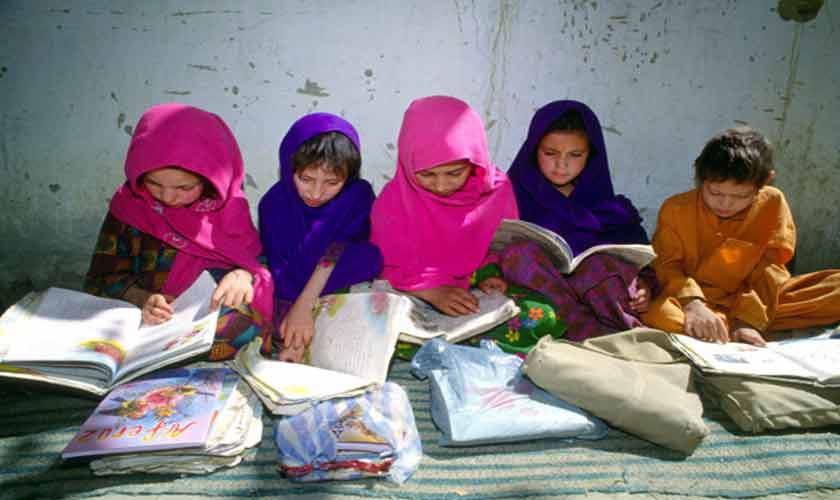
While browsing the Facebook, I came across an unremarkable school site. However, something within it resisted the customary scroll. The photographs depicted a classroom during a lesson, a morning assembly and modest celebrations of academic achievements. Then there were girls—standing in uniform, not arranged, not emblematic, but present in a manner that implied continuity.
The school was situated in Gharaib Abad, Gharo, in Thatta district—a region where education has historically faced challenges in achieving stability. The literacy rate in Sindh remains between 55 and 58 percent, with female literacy in rural areas such as Thatta falling below 40 percent. For years, the crisis here was not merely about access, but also about the absence of educators, operational schools and institutional commitment.
Ten years ago, various sector evaluations indicated the existence of numerous non-operational or underutilised public schools throughout Sindh. Teacher absence was not an anomaly; it was a trend. Schools were established nut many did not function as educational institutions.
The infrastructure of this institution indicated no potential for modification. The classrooms were unadorned, the furnishings rudimentary, the instructional tools scarce. Nevertheless, something was functioning.
Uzama Rehman was at the heart of this transformation. Upon her assumption of responsibility, enrolment was approximately 280 girls. Today, it has surpassed 450. In a rural site where dropout rates, particularly among female students, have traditionally been high, this rise is not coincidental. It signifies a quantifiable resurgence of confidence.
Numerical data alone fails to elucidate the transformation. In one classroom, the attendance register—previously marked inconsistently—now contains daily entries. This administrative action, nearly imperceptible, signifies a broad development: the school has begun to regard itself with earnestness. The events occurring here are not unrelated.
In recent years, Sindh’s education system, led by Syed Sardar Ali Shah, has focused on regaining administrative authority rather than expanding. The focus has been on optimising the performance of existing schools before conceptualising new institutions.
Recruitment into the system has progressively transitioned to standardised, third-party assessment methods. Official statistics reveal that approximately 93,000 educators have been appointed in recent years using meritocratic methods, comprising more than 65,000 primary school teachers, thereby substantially enhancing staffing levels throughout districts. Consequently, the student-teacher ratio has approached 35:1, representing a significant rectification in a system previously characterised by disproportionate distribution and vacancies.
Biometric attendance systems implemented in several districts have commenced tackling absenteeism, a longstanding issue that has significantly impacted public schools. Despite inconsistent implementation, schools under close observation have enhanced teacher attendance, directly affecting classroom continuity.
There is movement—observable, quantifiable and socially pertinent. Enrolment has risen. Attendance has reached a stable state. The school has been enhanced. Geographical obstacles for female students in adjacent villages have diminished. However, the fundamental difficulty of learning persists.
A subtle yet significant transformation has occurred in the organisation of schools. Many low-enrollment or non-operational schools in the province have been merged, reallocating educators and resources to institutions capable of functioning efficiently. The use of school-specific budgeting has enabled head-teachers to address immediate institutional requirements, indicating a gradual shift from strict centralisation.
The framework of learning is undergoing re-evaluation. Early childhood education is currently being broadened in public schools, indicating a recognition that foundational deficiencies arise prior to primary grades. Curriculum modifications, such as the use of the Sindhi language in early education, seek to synchronise learning with the local context—especially in rural regions where linguistic discrepancies frequently lead to early disengagement.
Public-private partnerships have proliferated, with numerous schools now functioning under collaborative frameworks, enhancing access and implementing alternative management methods in designated regions. Each of these initiatives may seem administrative in nature. Together they signify an endeavour to reinstate a key principle: the notion that a public school should operate effectively. In Gharaib Abad School, these reforms have not manifested as policy; they appear to be habits.
Educators arrive with greater regularity. Classes are delivered with cadence. Students attend consistently rather than intermittently. Parents, previously apprehensive, now exhibit measured assurance. One parent stated, “We take pride in our children for attending this school.” As educationist Baela Raza Jamil has pointed out in many education reviews, restoring administrative order can stabilise a failing system, but it does not guarantee learning. “Functionality,” in this sense, is only the first threshold. Without parallel investment in pedagogy, curriculum delivery and student assessment, systems risk becoming efficiently managed—but educationally shallow.
Studies by UNESCO and the World Bank have consistently demonstrated that in inadequately funded systems, enhancements in governance—especially regarding teacher attendance and school-level accountability—can markedly boost enrolment and retention prior to any infrastructural advancement. Recent trends in Sindh indicate a comparable tendency, but inconsistent. Nevertheless, the boundaries remain apparent.
The school continues to lack a fully operational science laboratory. A suitable library is lacking. Digital access is limited. These are not simple matters; they directly influence the extent of students’ learning and their potential achievements. Attendance does not inherently equate to comprehension. Independent evaluations throughout Sindh consistently indicate that a significant percentage of primary students face difficulties with fundamental reading and math skills. This disparity—between enhanced access and inadequate learning outcomes—characterises the present stage of reform.
There is movement—observable, quantifiable and socially pertinent. Enrolment has risen. Attendance has reached stability. The school has been enhanced. Geographical obstacles for females students in adjacent villages have diminished. However, the fundamental difficulty of learning persists. In a system historically reliant on announcements, it is the lack of noise—the consistent recurrence of routine—that now indicates change.
The Facebook page that initially attracted my interest was not chronicling reform in formal terms. It was documenting continuity. For the girls who currently attend consistently and persist in their education rather than abandoning it, this consistency is substantive. It is structural in nature.
The reforms initiated by Syed Sardar Ali Shah, are still evolving. They are characterised by inconsistency, incompleteness and occasional contention. The potential for lasting advances in learning remains uncertain. However, in locations such as Gharaib Abad, a fundamental change has already occurred. In a province where exclusion has long been routine, reform does not begin with transformation. It commences with something somewhat less apparent, yet significantly more challenging to maintain—the commitment of a system to be present daily, without cessation.
The writer,a researcher, can be reached at [email protected]