Print Story
X




For areas riddled with militancy and poverty, Mashaal Library offers locals with books that open up a world beyond their realities
| I |
n the tribal district of Mohmand, where access to books has long been limited by poverty and militancy, a modest initiative has grown into a beacon of learning for thousands.
Najeeb Ullah Mohmand is a young scholar from Michni Bhai Kor, a village in Ekka Ghund tehsil.
Mohmand, who holds a master’s in strategic studies and an MPhil in peace and conflict studies from the National Defence University, Islamabad, founded the Mashaal Library in September 2014 while he was a student.
What began with just 150 books in a room of a mud house has since evolved into a vital community institution, now serving more than 15,000 readers.
The idea for the library came out of personal struggle. While studying in college, he once visited Peshawar to buy textbooks but could not afford additional general reading books he wanted.
That moment became a turning point.
“I realised that if I could not afford these books, many other students in my area must be facing the same challenge,” he recalls. “Our region is underdeveloped. Poverty prevents many students from accessing books beyond their syllabus.”
Determined to change this reality, he began collecting books from his family and launched the library with a simple mission: provision of free access to knowledge.
Mashaal means torch in Pashto. For Mohmand, the name reflected the conditions in which the library was established. At the time, militancy had severely disrupted education across tribal areas. Across the district, schools were destroyed. Fear drove many children away from learning.
“In that darkness, I wanted to light a torch of knowledge so that the future of our region may be illuminated,” he says.
The early days were fraught with challenges.
The library operated from a mud room where rainwater often seeped through the roof, damaging books. Demand for reading materials quickly outpaced supply.
Despite these hardships, he pressed on.
In 2015, he launched the Mashaal Library Mobile Service, delivering books on motorcycles to remote villages. The initiative brought books directly to people’s doorstep, particularly benefitting women and girls who faced cultural restrictions on mobility.
He would take the books on his bike and go to hujras where fathers and brothers would take books home for their women, who would select the books for reading. Books would be issued for a month.
“For the past eleven years, we have been delivering books to homes free of cost,” he says. “This service has helped remove barriers, especially for women.”
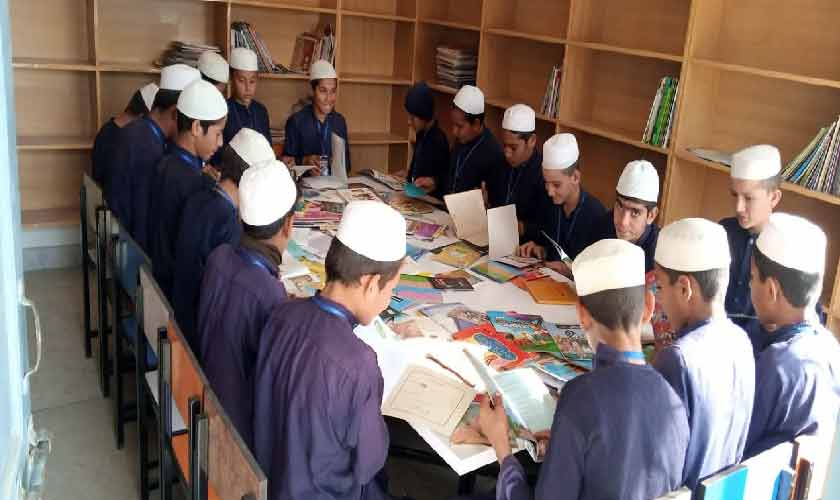
Today, the library houses more than 10,000 books in Pashto, Urdu and English, covering subjects ranging from literature and Islamic studies to science, technology and competitive examinations.
What began with just 150 books in a room of a mud house has since evolved into a vital community institution, now serving more than 15,000 readers.
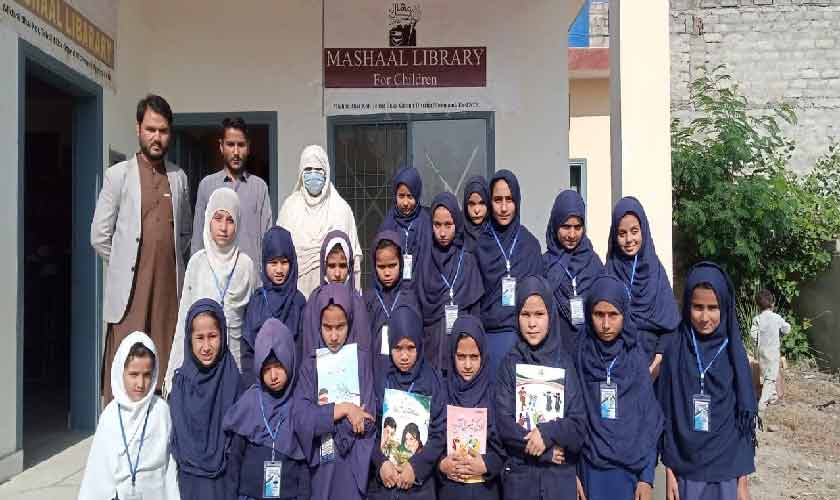
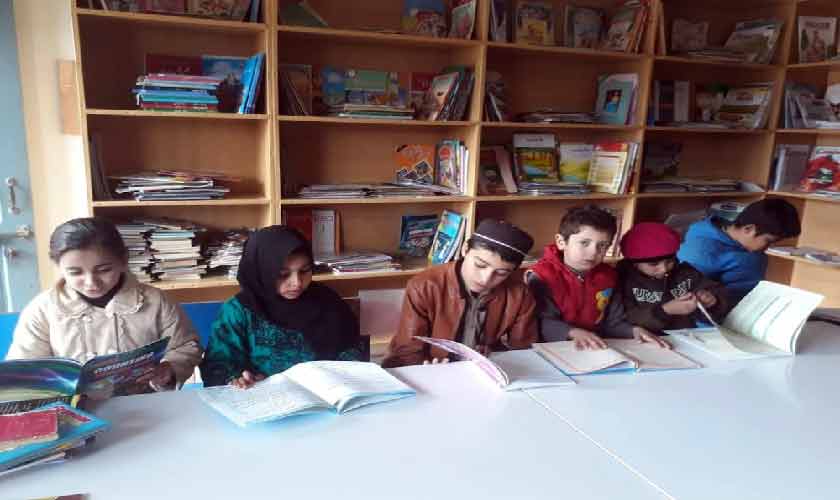
In 2021, Mohmand expanded his vision by establishing the Mashaal Library for Children, Khyber Pakhtunkhwa’s first private library for children. The facility caters to children aged 5 to 12, offering a safe space for learning and exploration.
The impact of the library is evident in the lives it has touched. Many readers have gone on to secure government and private jobs or pursue higher education. One such example is Abdul Waheed, a regular at the library since 2015. Waheed is now an English lecturer and has passed the PMS preliminary examination.
Women, in particular, have benefitted from the initiative. While cultural norms limit their physical access to the library, the mobile service ensures that they receive books at home. Some women who once borrowed books are now working as teachers, spreading education in their families.
The journey has not been without setbacks.
Mohmand says the library has received little institutional support over the past decade. In the beginning, he reached out to political agents but was discouraged.
“I was once told by an assistant political agent that I was doing cheap publicity stunts,” he recalls. “Instead of encouragement, I faced discouragement.”
Even today, the library lacks basic facilities such as computers and internet access, limiting its ability to expand into digital learning. Despite reaching out to various organisations, he has yet to secure consistent support.
Still, there has been progress.
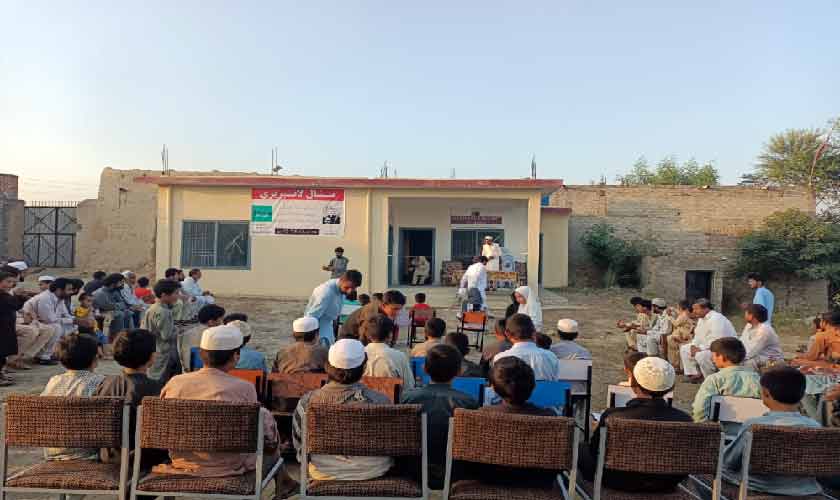
In 2018, a wing commander of the Frontier Corps North helped construct a permanent building, replacing the original mud structure.
Much of the library’s growth has relied on personal sacrifice and community contributions. While studying at National Defence University, Mohmand would save money to buy second-hand books from Sunday markets.
Today, book donations from across Pakistan, collected through social media campaigns, continue to support the library’s expansion.
Looking ahead, he hopes to establish a dedicated space for women; to introduce digital services and expand the library network to other tribal districts.
When he is not home, the library’s day-to-day operations are managed by his parents, who have no formal education. His father assists male visitors while his mother facilitates female readers. Borrowers are asked to record their names and contact numbers in a register maintained by the library. Occasionally, his brothers also help out.
In an area once overwhelmed by militancy, Mashaal Library stands as a testament to the power of individual initiative.
“Young people should read. Solutions to many problems lie in books,” he says. “Initiative, no matter how small, can bring about positive change in a society.”
The writer is a multimedia producer. He tweets @daudpasaney.