Print Story
X




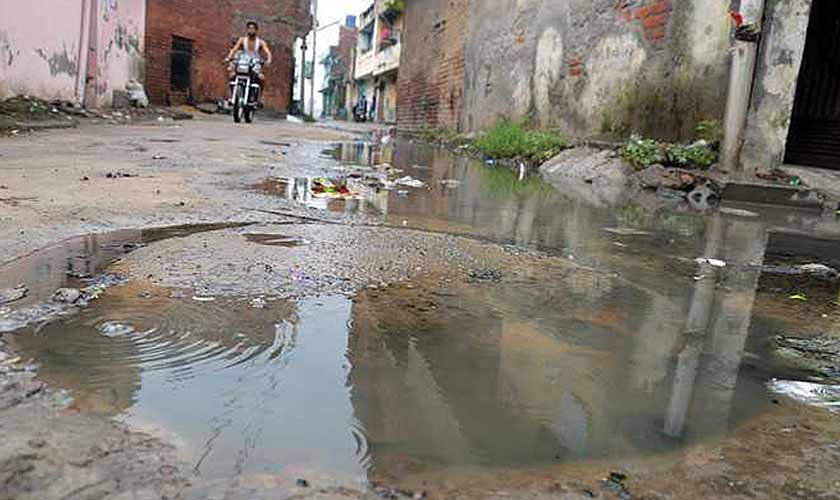
Storm-water drains link up with the sewerage lines; a precious resource is wasted.
| F |
aisalabad’s failure to develop a separate rainwater drainage system is not a new problem. In 1993, the-then commissioner, Tasneem Noorani, had initiated a project through the National Logistics Cell.
Under this project, two-to-three-feet deep rainwater drains were constructed along major roads. However, instead of establishing an independent storm-water network, these drains were connected to sewerage lines. The city never developed a separate system for rainwater disposal.
The drainage issue has remained unresolved for decades. It becomes particularly severe during the monsoons. Heavy rains regularly submerge large parts of the city. Many streets and markets remain inundated for days. Experts have long argued that, instead of disposal through sewerage lines, rainwater should be used to recharge groundwater.
Experts say such an approach will not only ease the chronic drainage problem but also help improve the quality of groundwater. This is especially critical for Faisalabad, where groundwater in most areas is saline and the water table has been falling. The water obtained through bore wells is often unfit for drinking and domestic use.
In this context, a recent initiative by WASA Faisalabad has been welcomed by citizens and experts alike. The authority has begun constructing recharge wells in several parts of the city. Ten recharge wells are being built in the initial phase, including one in the green belt along Susan Road and another in Malikpur.
The WASA has also decided to construct underground storage tanks at four locations to collect rainwater during the monsoon season. The first such tank is being built in the green belt opposite Faizan-i-Madina in Madina Town.
While the construction of recharge wells has been widely welcomed, some citizens also stress the need to repair the decades-old rainwater drains. They say that rainwater collected in these drains should also be diverted to recharge wells, instead of being mixed with sewage. Environmental and water management experts share this view and have repeatedly called for separating these old drains from the sewerage system and linking them to groundwater recharge mechanisms.
WASA officials say that integrating these drains poses a technical challenge due to their shallow depth and localised levels. However, they say, the issue may be resolved through coordinated efforts by the WASA and the District Planning Office. Such collaboration could lead to a sustainable rainwater utilisation system and help save billions of rupees that would otherwise be spent on expanding the drainage network.
Questions are also being raised by some citizens about the plan to construct underground storage. Instead, they suggest prioritising the construction of recharge wells. They also say that water from the storage tanks should be used for irrigating parks and green belts and other municipal purposes.
Some of the experts have consistently opposed underground storage tanks. They consider recharge wells a long-term asset and storage tanks a liability. Some environmental warn that the extensive use of concrete and construction material required for storage tanks could further disturb the ecological balance.
It is worth noting that 350 sites across the city have been identified as suitable for recharge wells. In addition, wells could also be developed in large parks and green belts.
These measures have become urgent now that Faisalabad’s drains can carry only about 35 millimetres of rain fall. Heavier rainfalls cause delays in drainage. Lacking a separate network for storm-water disposal, the city remains vulnerable to flooding and waterlogging.
The contributor is the Bureau Chief of Jang News, Faisalabad