Print Story
X




Given the dismal street infrastructure in cities, drastic reforms are needed to make them safe for our children
| N |
ews reports related to the general safety and wellbeing of children in Pakistani cities have been very disappointing in the recent past. Several children lost their lives in Karachi after falling into open manholes on streets. One such incident on University Road in the dark of the evening recently captured the attention of the entire city when a happy toddler was devoured by an open manhole while his parents watched. Accidents in public parks are also very common. Some years ago, there was a major accident involving a ride in an amusement park in Karachi. Many children were injured; a girl was killed.
Only major accidents are reported in the media, receiving some attention. Children continue, meanwhile, to face the consequences of living in poorly managed infrastructure and amenities in our cities. The safety and security surrounding their normal movement and conduct are routinely affected by a lack of properly maintained infrastructure, faulty governance and absence of empathy towards their specific needs.
Let us recount the essential needs of children in cities. Options of safe mobility to and from home to schools and places of recreation; clean air to breathe and potable water to drink; accessible and affordable possibilities of recreation, sports and play spaces; adequate parks and playgrounds within the sight supervision of parents and guardians; facilitation during pedestrian movement in both supervised and unsupervised situations (for older children and teenagers); prevention and safeguard from harassment and molestation; drop in spaces for resting and washing for those children who dwell on the streets and public spaces; and befitting support arrangements for children with special needs are some mentions.
When one examines the available urban infrastructure in our cities, in general, the status is dismal.
Take pedestrian mobility, for instance. Nothing could be as joyful and natural then to be able to walk from home to school for children. In our context, this natural choice is mired in complexities. For many, the schools are far away and not reachable through a 15-20 minute-walk. Where such a possibility remains, the sidewalks are simply non-existent or completely encroached. In other cases, walking on footpath could be perilous due to unsafe electricity wires and poles along the right of way; fast moving motorbikes that consider it prudent to hop on footpaths during traffic jams; or even the swarm of beggars and loiterers of all sorts. For girls, to negotiate these obstacles to reach school on time is a daily challenge.
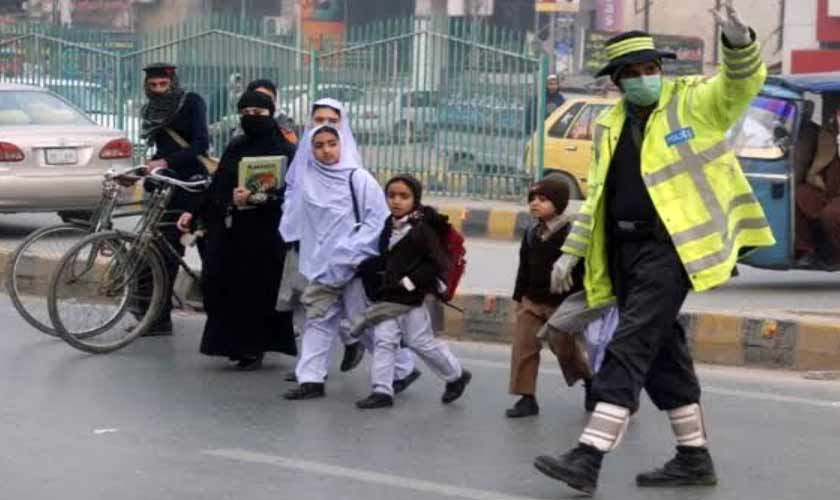
Development work in our cities often consumes footpaths. In some cases, the inundation caused by broken sewers or after rain spells, leaves children and their accompanying guardians with very little space. It is a disappointing sight to find the elderly and frail grandparents—who take upon themselves the duty of accompanying grandchildren to schools—waiting to cross the busy roads as motorists refuse to slow down. Road signs indicating schools to warn such macho motorists to behave are rare. Even where signs exist, little regard is paid to the plight of children.
Using overhead pedestrian bridges is another challenge. The designs of steps and railings are unfriendly for children, especially those carrying heavy school bags. Many teenagers aspire to go to school riding a bicycle. But in the absence of dedicated bike lanes and with a very hostile traffic, especially during rush hours, this common option of mobility remains a distant dream. With the exception of some gated communities and smaller cities, cycling to school is a scantily exercised choice. Needless to say, reliance on walking and cycling can reduce many van, car and motorcycle trips and can cause improvement in our environment.
The street infrastructure in cities needs substantial reforms to make these child-friendly.
So, what can be done?
Small interventions can bring about significant reforms in transforming our cities to ensure the safe existence, mobility and conduct of our children.
One, a performance audit of footpaths, sidewalks, street crossings, pedestrian bridges and other components of street infrastructure must be done by union committees (where elected councils exist) or development authorities for appropriate utilisation by children and teenagers. Necessary repairs and maintenance must be carried out to enable children access schools, parks and playgrounds without hassle.
Routine check on proper placement of covers on stormwater drains and manholes along sewerage must be done without fail. Such checks must be done intensely along places where children routinely frequent. A digital dashboard of this stocktaking should be created on the concerned municipality’s website for access to all.
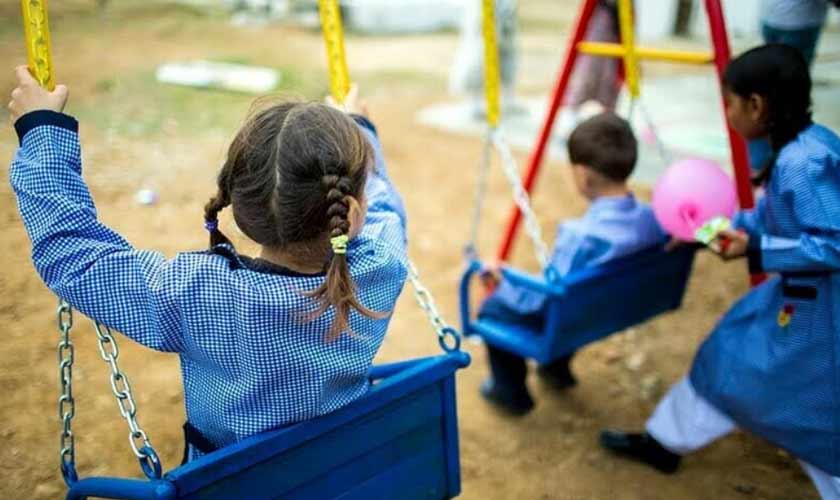
Two, the traffic police must be advised to help children, their accompanying parents and grandparents cross roads on the way to schools during morning and afternoon hours. Volunteers, city wardens and scouts may be inducted in this function to enable maximum number of students reach schools without facing the challenges of traffic.
Three, a strict regime of fitness checking must be done for school vans for their suitability for transporting children. Deadly accidents in the past caution us to take this point very seriously.
Four, wherever a safe city facility is functioning, special emphasis must be laid upon the safety of children. Digital apps and network related to Zainab Alert platform must be integrated to extend safety and protection to children. Episodes of missing children must be effectively communicated to all agencies and stakeholder groups for effective response.
Five, parks and playgrounds should be developed in every neighbourhood according to accessibility convenience. For children residing in remote and under-provided neighbourhoods, pilot projects must be initiated to facilitate periodic visits to city parks under the support of municipalities and corporate social responsibility funding from major business houses.
Six, differently abled children must be mainstreamed by enhancing access according to respective challenges and optimisation of options.
The writer is an academic and researcher based in Karachi.