Print Story
X




The future will be assembled, unevenly and imperfectly, through effort. It will not arrive as a windfall
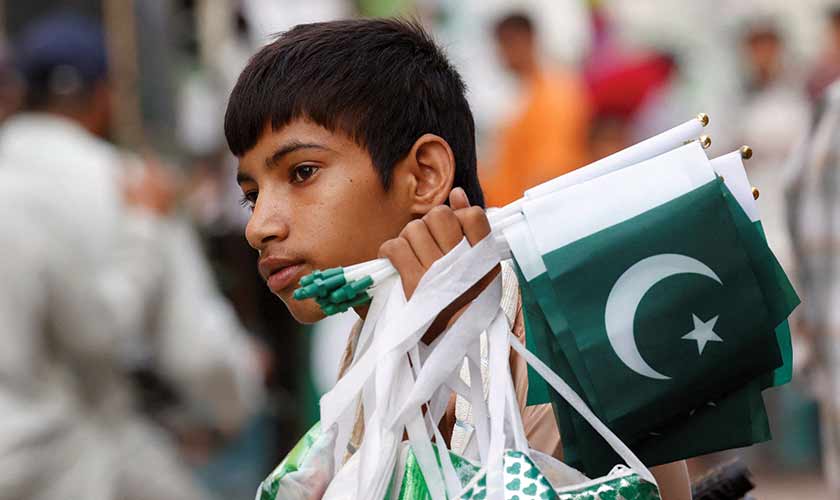
“The future is not a gift; it is an achievement.”
—Robert Kennedy
| T |
here is a story often told about Steve Jobs that he possessed a “reality distortion field”—an ability to help those around him see possibilities they could not otherwise imagine. Closer to home, I encountered something similar in one of my mentors. The late Prof Dr Faisal Masud—physician, teacher and the first permanent vice-chancellor of our university—led with an unusual mix of moral authority and dramatic audacity. During his four years in office, from 2013 to 2017, he made it possible for many of us to glimpse a future for Pakistan which, at times, felt improbably within reach.
As one of his faculty members and a former student, I watched that future take shape in small, cumulative ways in: institutional reform; standards quietly raised; and the confidence he instilled in younger colleagues. Until his sudden death from a heart attack in 2019, he remained a force, through both charisma and conviction.
As another turbulent year draws to a close, it is worth asking whether we, too, can manage such a glimpse. In a world increasingly marked by rage and violence, where might we be a year from now?
The past year offered little comfort.
In 2025, we lived through yet another serious conflict with our much larger eastern neighbour. Many of us heard the whine of drones over our cities last summer. One fell uncomfortably close to our home in Lahore as I was finishing my morning bicycle ride. For a fleeting moment, I wondered—privately, guiltily—whether I had made the right decision years ago to return to Pakistan from the US with three young children. The risk was not to me, but to them.
My grandfather, Faiz Ahmed Faiz, once described this tension as “the selfishness of idealism”—the idea that those closest to us bear the cost of our principles, sometimes unnecessarily. It is an accusation that anyone who has chosen to stay—or return—must periodically confront.
Later that same day, in the crowded outpatient clinic at Mayo Hospital, I found myself once again speaking to student doctors. One of them asked, half in earnest, half in bewilderment, what a psychiatrist could possibly contribute in a time of war. I reminded her, lightly but sincerely, that wars are first fought, then won or lost, in the mind. Our task, I suggested, was not peripheral; it was to help preserve morale, judgment and psychological resilience—not only during conflict but, far more importantly, in peace.
The challenges before us require no embellishment.
Our population continues to grow rapidly, while opportunities for education and employment stagnate under a chronically weak economy. Cities expand chaotically as rural-urban migration accelerates, overwhelming infrastructure that was never planned for such scale. The consequences—pollution, inadequate sanitation, fragile law enforcement, overburdened public health systems—are familiar and cumulative.
Our healthcare system, in particular, groans under a double burden: long-standing infectious and maternal health problems alongside the more recent afflictions of middle-income societies—obesity, diabetes, cardiovascular disease, rising mental illness and an epidemic of road traffic injuries.
In mental health, Pakistan has fewer than a thousand formally trained psychiatrists for a population exceeding 250 million. This is not merely a statistic; it is a daily lived reality for patients and clinicians alike.
At the same time, we remain what might bluntly be called a “finishing factory” for the global labour market. At King Edward Medical University, as in many other institutions, we continue to train young doctors who are rapidly absorbed by health systems abroad. The outflow—to the UK, Ireland, the Gulf and increasingly North America—has accelerated sharply in recent years, driven by economic uncertainty at home. While remittances remain a crucial lifeline for the country, local services inevitably suffer when experience and expertise leave faster than they can be replaced.
So what does 2026 hold?
In all likelihood, more of the same, but with an important qualification: we can continue along this path either reflexively or deliberately.
Human migration is not a failure of patriotism; it is a constant of history. Exporting skilled labour, moreover, brings far greater returns—economic and reputational—than exporting unskilled workers. Recognising this, our university has begun formal collaborations with the government to train healthcare professionals—doctors, nurses, technicians—specifically for international markets. Our graduates are increasingly recruited immediately upon qualification by health systems in the Gulf, Europe and North America.
At the same time, serious—if uneven—efforts are under way to strengthen the domestic pipeline. The Punjab government’s Daanish School system for underprivileged children offers one example of targeted investment in human capital. Within universities, we are rethinking admissions and support structures to broaden access while raising baseline academic skills, including communication and critical reasoning. These are incremental reforms, but they matter.
In conversations with friends in business, I hear familiar complaints: erratic regulation, power shortages, inequitable taxation. Yet, what strikes me is not despair, but persistence. Most are not asking for miracles; only for a level playing field and predictable rules—unlike those taken for granted elsewhere.
Perhaps that is where a sober optimism lies. The future will not arrive as a windfall. It will be assembled, unevenly and imperfectly, through individual and institutional effort.
A modest New Year’s resolution, then: if by December 2026 each of us can point to one thing we have done well—one patient treated with care; one student mentored honestly; one system nudged toward fairness—that would amount to 250 million small achievements in a single year. Not a bad way to greet 2027.
The writer is a psychiatrist and faculty member at King Edward Medical University. His forthcoming book, Secrets: Stories of Psychiatry from America and Pakistan, will be published later this month.