Print Story
X




Pakistan continues to experience regular terrorist attacks that pose serious challenges to its security and stability
| P |
akistan emerged independent from the colonial yoke in 1947. It has since then been a state-nation with varying degrees of socioeconomic development. Indeed, divided between East and West Pakistan, particularly after the One-Unit policy, regional disparities grew between the two wings. Owing to over-centralisation of power in West Pakistan and a lack of appreciation for political and cultural differences, the West Pakistan-based leadership preferred personalistic and elite interests rather than transferring power to the leadership emerging from East Pakistan, whose dominant political party outperformed West Pakistan-based political groups in the 1970 general elections. Tragically, however, largely due to domestic structural factors and situational variables—most notably India’s military intervention in East Pakistan—the state of Pakistan was partitioned, leading to the creation of Bangladesh on December 16, 1971.
In the post-breakup period, Pakistani civil and military leadership focused primarily on military modernisation and defence, particularly through nuclearisation. Pakistan strengthened its defence capabilities through the induction of first American and later, Chinese weapons systems.
However, socioeconomic disparities have continued to grow in various parts of the country, including both rural and urban areas, which followed different trajectories of socioeconomic development. While underperforming in education, health and gender indicators, Pakistan opted to side with the United States in its War on Terror in the wake of the tragic events of 9/11 that drastically reshaped the global order and impacted regional geopolitics, especially in South Asia.
Although in the immediate context of 9/11 the then Pakistani military leadership reaped strategic, political and economic benefits, the repercussions of these short-term policy choices were faced in the long run in the form of large-scale incidents of terrorism. Empirical evidence suggests that thousands of Pakistanis, including both civilians and security personnel, were killed in terrorism-related violence over the following years, making Pakistan one of the worst-affected countries globally during this period.
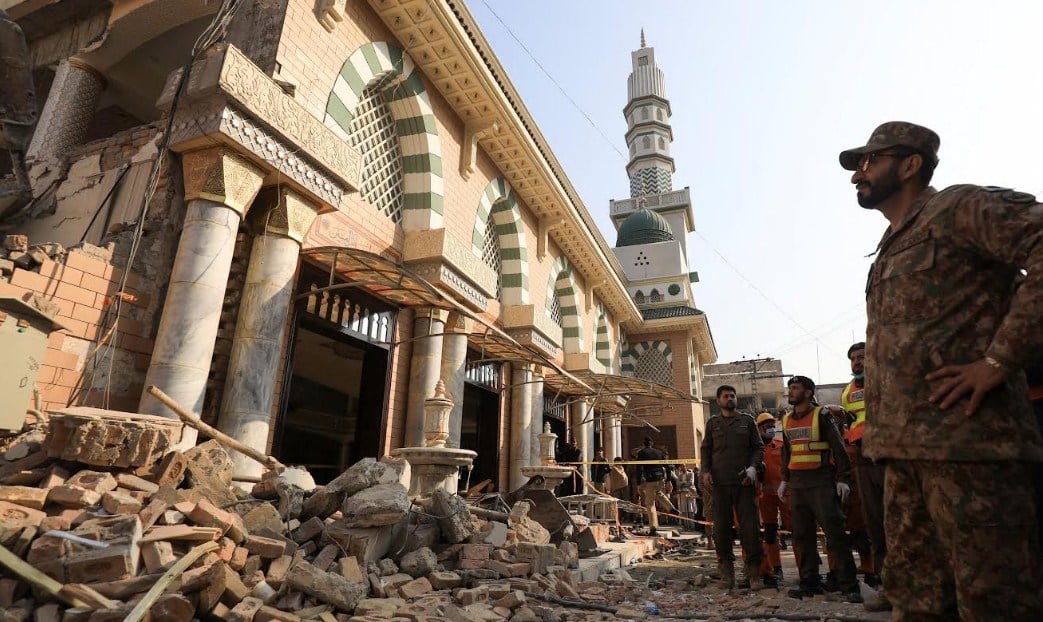
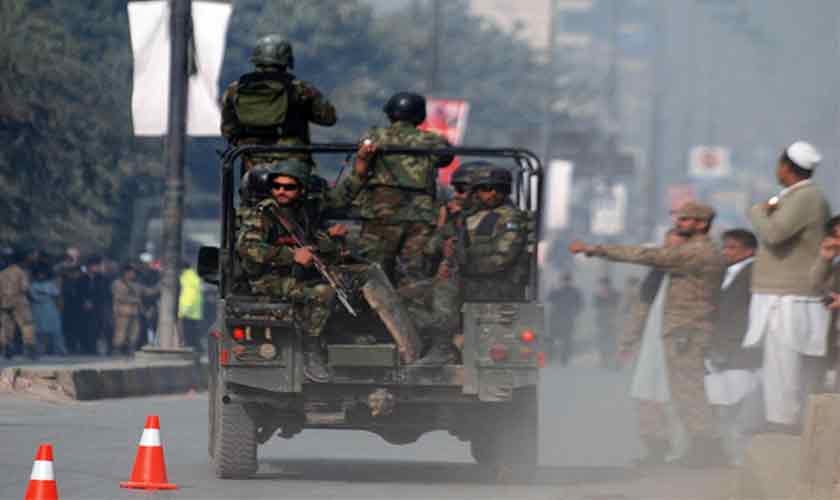
On December 16, 2014, the Tehreek-i-Taliban Pakistan attacked the Army Public School in Peshawar, killing 149 innocent people, including 132 children. This incident jolted the nation as well as the state apparatus. The National Action Plan was launched to cope with terrorism. It hinged on a 20-point framework aimed at eradicating religious extremism, terrorism and reducing socioeconomic disparities such as chronic poverty.
Operationally, some points of the NAP were executed through military operations, which significantly reduced the frequency of terrorist attacks during 2015-2020. Data from terrorism monitoring databases indicate a marked decline in terrorism related fatalities during this period compared to the pre-2014 peak years. However, major components of the NAP remained unimplemented.
The Pak-Afghan relations have deteriorated sharply, with skirmishes along the international border, largely due to the Afghan Taliban’s refusal to curb TTP activities.
Besides religiously inspired terrorism at the hands of the TTP, the state also faced ethnically oriented militancy, particularly in parts of Balochistan, where non-state actors such as the Balochistan Liberation Army have intensified terrorist attacks against the state apparatus as well as civilians. These include incidents such as the hijacking of the Jaffar Express, targeted attacks on security personnel and assaults on Chinese nationals working on CPEC-related projects. Since 2021, at least 20 Chinese citizens have been killed and more than 34 injured in such attacks, highlighting the international dimension of Pakistan’s internal security challenge.
In addition to structural variables, there is an external factor, in terms of Modi-led India’s support of terrorist organisations such as the BLA. Kalbhushan Yadav’s example is frequently cited by Pakistani authorities as a case in point. The BLA has also reportedly benefited from sanctuaries in Taliban-controlled Afghanistan. The Pak-Afghan relations deteriorated sharply in 2025, with skirmishes along the international border, largely due to the Taliban’s refusal to curb TTP activities.
There has been a clear intensification of terrorist attacks since 2022, with fatalities rising sharply, particularly in Khyber Pakhtunkhwa and Balochistan. In 2024, Pakistan witnessed a sharp escalation in terrorist violence, recording the highest number of fatalities in nearly a decade. This trend continued into 2025. During the third quarter alone, nearly 900 fatalities and close to 600 injuries were recorded from over 300 incidents. By the end of the third quarter, total fatalities in 2025 had already approached those recorded in 2024, suggesting a reversal of the gains made during the post-2015 period. Notably, Khyber Pakhtunkhwa and Balochistan accounted for more than 96 percent of all violent activity, with Khyber Pakhtunkhwa emerging as the most volatile region in terms of both fatalities and incidents.
The TTP remained the most active and lethal group, particularly in Khyber Pakhtunkhwa, where it targeted police, paramilitary and Army units, especially in the newly merged districts. The BLA played a central role in the surge of violence in Balochistan, carrying out suicide bombings and coordinated assaults on security convoys and installations. As indicated above, the scale and intensity of violence during 2024-2025 reversed the declining trend observed between 2015 and 2020. Unsurprisingly, Pakistan ranked second globally in the 2025 Global Terrorism Index.

Pakistan is facing multiple challenges. There are growing socioeconomic disparities: poverty has exceeded 45 percent; the country ranked 168th on the Human Development Index in 2025; and has done poorly on global inequality measures. Coupled with these structural issues, it is experiencing regular terrorist attacks, posing serious challenges that add to opportunity costs. Foreign Direct Investment remains low and several multinational corporations have exited Pakistan in recent months.
Pakistani leadership must tackle terrorism through a multi-pronged approach. While military operations may be effective in certain cases, there is a growing need to neutralise structural causes by enhancing socioeconomic development, reducing intra-provincial and rural-urban disparities and empowering women through quality education and employment opportunities. Pakistan’s literacy rate declined in 2025 compared to the previous year and spending of education remained below one percent of the GDP.
The federal authorities need to rely more on soft measures, such as consoling and consulting local stakeholders in Balochistan, Khyber Pakhtunkhwa, Gilgit-Baltistan and Azad Kashmir and engaging them meaningfully in policy planning and implementation. Only through a combined strategy, can the menace of terrorism and growing disparities be managed. If left unaddressed, these issues will further complicate politics, policy and societal cohesion in the country. While the state’s capacity is stronger than terrorist and separatist forces, these pressing challenges must be converted into opportunities. This can be achieved by removing the structural roots of extremism and separatism that continue to affect Pakistan’s polity and development trajectory.
The writer has a PhD in political science from Heidelberg University and has done post-doc work at University of California, Berkeley. He is a DAAD and Fulbright fellow and an associate professor. He can be reached at [email protected].