Print Story
X




A fragmented health support leaves patients exposed and vulnerable
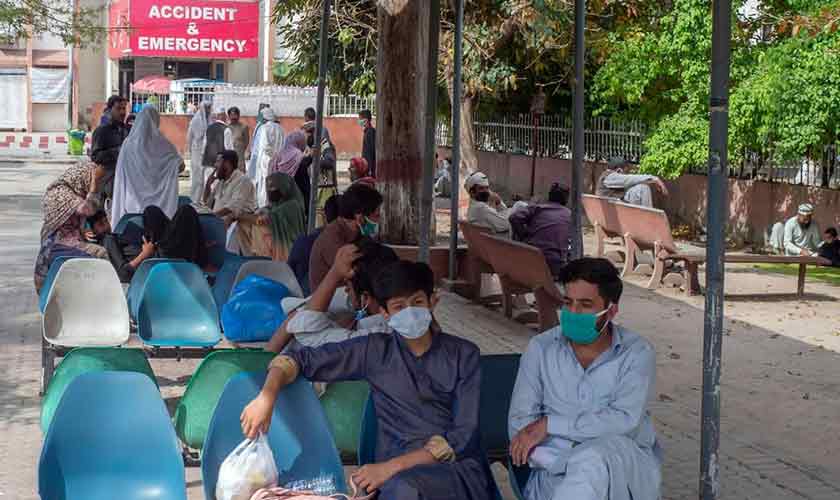
When sixty-five-year-old Salma Ahmed suffered a heart attack at her home in Islamabad in March 2022, her family rushed her to the cardiac centre of the Pakistan Institute of Medical Sciences. Doctors advised an urgent angioplasty. She was terrified, but the Sehat Sahulat Programme of the then government absorbed the entire cost of the procedure. She left the hospital without paying a single rupee. Follow up medicines had to be purchased from her own pocket, but those were manageable. The real burden would have been the angioplasty itself, which costs Rs 400,000-500,000. Her retired husband could not have arranged that amount. For her, the health insurance card was a lifeline.
This August, when her husband needed the same procedure, the family discovered that the card was no longer valid. The federal government has discontinued the Sehat Sahulat Programme for residents of the federal capital, Kashmir and Gilgit Baltistan. While citizens in the Punjab, Khyber Pakhtunkhwa and Balochistan continue to receive the insurance benefit, people living in Islamabad and Sindh, along with the mentioned territories, have been left out. The family that once relied on state-funded care suddenly found itself paying out of pocket.
Muhammad Arshad, the Sehat Sahulat Programme CEO, says the revival of the scheme for Islamabad, Kashmir and Gilgit Baltistan is on the prime minister’s agenda. He says the programme may return with improved features, including partial outpatient cover and other services that were not included earlier.
He says that the scheme was already one of the closest models Pakistan had to universal health coverage since it offered hospitalisation cover to every enrolled citizen. All treatment expenses at the hospital were the responsibility of the authorities, except for transplants. The missing link, he acknowledges, was the absence of outpatient care. This they now hope to include once the programme is revived.
Experts say in its true sense universal health coverage means that every person can access essential health services without financial hardship. It ensures care from prevention to treatment and rehabilitation, whether for a routine check up or a major medical emergency.
In countries like Pakistan, where the largest share of health spending comes directly from the patient’s pockets, universal health coverage is essential to protect families from falling into poverty because of illness. When primary care is weak, people avoid treatment due to the cost. A medical emergency can wipe out a lifetime of savings. A strong nationwide health protection system therefore becomes a fundamental need.
Most Pakistani patients pay for medicines out of pocket. For a population where millions survive on less than two dollars a day, even a modest increase in medicine prices can be devastating.
Dr Zafar Mirza, a former special assistant on health to the prime minister, has repeatedly said that universal health coverage is not only about hospital admissions. He says it is about giving people access to prevention, timely treatment, rehabilitation and care that does not push them further into poverty.
Dr Mirza has long argued that Pakistan under-invests in primary healthcare and spends far below the minimum level required to guarantee universal health coverage to its population. He stresses that a strong primary care network is the backbone of any universal system and that hospital-based insurance schemes cannot succeed unless the first level of care is accessible, well staffed and functional.
Currently, the cost of medicines is not fully covered under the insurance-based health protection. After the deregulation of drug prices, the pharmaceutical industry claims that the supply situation has improved.
Tauqeer-ul Haq, Pakistan Pharmaceutical Manufacturer Association’s former chairman, says that deregulation has brought medicines back to shelves after years of shortages. According to him, the market is now more stable, drugs are more accessible and the overall availability has improved for patients across the country.
Manufacturers say that while prices have risen, production has become viable. This has reduced stock outs and brought a wide range of medicines back into circulation.
Most Pakistanis pay for medicines out of their pocket. For a population where millions survive on less than two dollars a day, even a modest increase in medicine prices can be devastating.
Salma Ahmed and her husband’s story is a reminder that many families cannot depend on fragmented support. Insurance schemes that protect only a part of the treatment cycle leave people exposed to the pauperization risk.
To make health coverage affordable, the country needs a wider and fairer system. This means including outpatient care in the revived insurance package; subsidising essential medicines for low-income households; strengthening primary healthcare clinics so people do not have to rush to hospitals for minor problems; and ensuring that no citizen is excluded based on where they live. A national health protection plan that is simple, inclusive and sustainable can help prevent medical emergencies from turning into financial disasters.
The writer is an investigative reporter, currently covering health, science, environment and water issues for The News International.