Print Story
X




How the PPP’s legislative record squares up with its stated ideology
| Z |
ulfikar Ali Bhutto, along with many stalwarts of socialism and aspirants of progressive politics in the country, founded the Pakistan Peoples Party in 1967, in Lahore. By then, the country had experienced around a decade of direct military rule under Ayub Khan that had disfigured political, economic and social landscape of Pakistan. The class configuration had developed deep-seated regional and class disparities, coupled with dictatorial control over the media and public sphere. The situation had worsened following the 1965 war with India. Bhutto, the foreign minister, was observing these changes. After falling out with Ayub, he decided to launch a new party, the PPP.
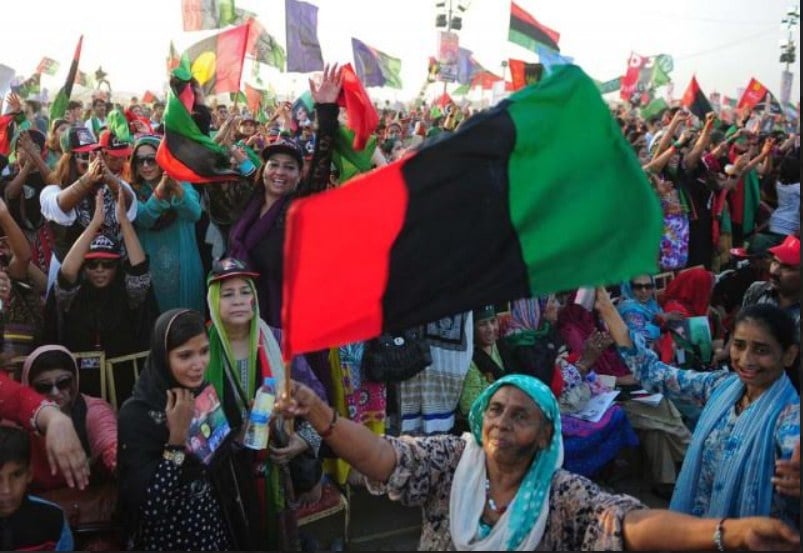
The party claimed to be democratic and socialist. It was meant to be positioned centre-left to left. It claims credit for constitutional development and legislative reforms. The party’s legislative journey started in April 1972, when it adopted the interim constitution, with the support of the opposition, within four months of assuming power. The adoption of the 1973 constitution—a consensus document backed by all parliamentary parties—was an even greater achievement.
The First Amendment to the constitution was related to the territorial reconfiguration after the secession of East Pakistan. The Second—seeking permanent settlement of the issue of Ahmadi’s religious status—proved far-reaching in its impact on that community as well as on the role of clerics in politics.
While the Third Amendment extended the preventive detention power of the state to tighten internal security laws in a period of perceived political volatility, the Fourth to Sixth were related with superior judiciary—meant to reduce judicial interference in administrative decisions. The Seventh—last amendment by the ZA Bhutto administration—allowed the prime minister to seek a public vote of confidence via a referendum.
Another feather in the cap for the PPP in terms of its democratic credentials was its support to the Pakistan Muslim League-Nawaz in the reversal of the Article 58-2b and other sweeping amendments made to the constitution under the Zia regime. The party, then led by Benazir Bhutto, supported Nawaz Sharif and maintained its democratic credentials, even though it had alleged massive rigging in the 1997 elections.
The party vehemently resisted arbitrary and controversial changes brought about under the Musharraf regime seeking to legalise and constitutionalise the Legal Framework Order of 2002. Nevertheless, with the help of a newly cobbled together king’s party, the Pakistan Muslim League-Quaid, Musharraf was able to revive Article 58-2b; permit himself to simultaneously hold the offices of president and army chief; validate military government’s actions between 1999 and 2003; and form the National Security Council through the passage of the 17th Amendment.
The PPP’s democratic deal—the Charter of Democracy signed with the PML-N on May 14, 2006, in London—was a political super-stroke. It was meant to be a roadmap to end military intervention in politics and restore constitutional democracy. The agreement sought to bar intelligence agencies from political manipulation; pass constitutional amendments only through a parliamentary process; ensure reversal of laws and constitutional changes made by military regimes; restore parliamentary sovereignty; roll back 58-2b; judicial independence; fair and free elections; and end political victimisation; strengthen provincial autonomy, restore civil liberties and human rights; ensure accountability through parliament and equitable sharing of resources among the provinces; and press for economic and social reforms to benefit the people of Pakistan.
The PPP-led government, through the 18th Amendment in 2010, sought to fulfil some of the promises made under the COD. This amendment was the result of a national consensus among major parliamentary parties. President Asif Ali Zardari relinquished important presidential powers to strengthen the parliamentary rule. The amendment also addressed issues of parliamentary supremacy, reduction of presidential powers, reforms in judicial appointments, provincial autonomy through the NFC and the CCI, and election reforms.
However, it could not structurally address the misuse of intelligence agencies, accountability reforms and restoration of civil liberties. The party conceded space to the Judiciary in legislating the 19th Amendment.
The completion of the government’s five-year term in office raised hopes for sustained democracy even though Yousaf Raza Gilani, an elected prime minister, was ousted from office by an intransigent judiciary. Later, the PPP supported the establishment of military courts in 2015 during the PML-N government following a major terrorist attack on the Army Public School in Peshawar that had shook the entire nation. However, the military courts were mandated to conduct trial of only terrorism related cases. The jurisdiction and time-frame of these special courts were definitive. This amendment was defended on the pretext of state necessity.
The democratic credentials of the PPP are alleged to have been compromised after it became part of the Pakistan Democratic Movement setup. Some see the party’s role—particularly after the controversy around the general elections of 2024— as driven by power politics, while compromising on its stated ideology and becoming a beneficiary of the establishment’s policies. It is also accused of turning back on fundamental rights, civil liberties, trichotomy of powers, parliamentary sovereignty and ensuring the consolidation of democracy.
PPP’s bargaining position is seen to have been affected due to allegations of corruption against Zardari and some other major leaders.
Some say that Zardari’s seeking of lifelong immunity under the 27th Amendment has disillusioned the party’s ideological cadre. The party has also been accused of undermining judicial independence and rule of law, supporting concentration of executive powers, weakening of democratic and constitutional balance, gagging of the media and allowing greater risks to human rights and civil liberties in the country.
It can still be argued that the Pakistan Peoples Party has a brighter track record of democratic legislation than any other mainstream political party in Pakistan.
The writer heads the History Department at University of Sargodha. He has worked as a research fellow at Royal Holloway College, University of London. He can be reached at [email protected] His X handle: @AbrarZahoor1.