Print Story
X




Urban Sindh has long resisted PPP’s dominance. Today, the party has mayors in urban centres, including Karachi
| K |
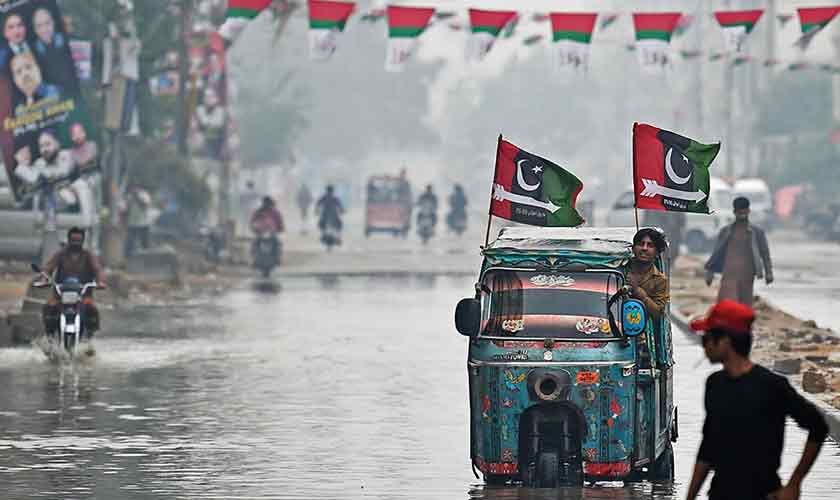
arachi, the restless heart of Pakistan, has finally fallen to the quiet, relentless advance of the Pakistan Peoples Party. For the first time in half a century, the PPP holds the mayoral chairs of Karachi, Hyderabad, Sukkur and Mirpurkhas. What was once unthinkable has become a reality: urban Sindh, long the last redoubt against Bhuttoism, is turning green.
The PPP achieved this breakthrough by capitalising on two decisive developments: the fragmentation of the Pakistan Tehreek-i-Insaf vote after the events of May 9, 2023; and the systematic dismantling of the Muttahida Qaumi Movement following the August 2016 operation against it.
For over fifty years, rural Sindh has remained an impregnable PPP fortress. Urban Sindh, however, long resisted the party’s dominance, even though PPP kept a presence.
After Zulfikar Ali Bhutto’s execution, Gen Zia‑ul Haq’s early‑1980s crackdown reshaped the party’s fortunes and exposed critical missteps that only became clear later. One such mistake was the 1985 boycott of non‑party local‑government elections.
Journalist Owais Tohid recalls the late Benazir Bhutto telling him that boycotting the 1985 non‑party elections under Gen Zia was a mistake. “We believed our party wouldn’t get a free hand in the elections under the shadow of Zia’s rule, but we later regretted it. It was a mistake that we never repeated. Under any circumstances, no political party should ever boycott an electoral process. It leaves a vacuum,” Tohid quotes Bhutto as having told him.
“What BB said was in clear reference to the changing political landscape of the country after the 1985 elections: the emergence of the Sharifs and Chaudhrys as political figures close to Gen Zia’s military establishment. It was the rise of a new political class, which impacted electoral politics forever,” Tohid says.
In 1988, following the death of Gen Zia, Nawaz Sharif’s party rose as a nationwide alternative. At the same time, Mohajir ethnic politics took root in urban Sindh culminating in the MQM sweeping elections in Karachi and Hyderabad. This cemented a clear political divide between urban and rural Sindh, Tohid says.
The MQM sparked severe ethnic clashes among Mohajirs, Pashtuns and Punjabis.
“The ensuing violence divided cities. It also triggered massive intra‑city migration, creating ethnically homogenous enclaves: Sindhis fled to Qasimabad in Hyderabad while Hyderabad and Latifabad became predominantly Mohajir settlements, reshaping the cities’ demographics and ushering in narrow ethnic politics.”
Deeply entrenched in both the Punjab and Karachi since the 1970s, the PPP, however, lost massive electoral support in the Punjab and Sindh from the 1990s until roughly 2013.
The party’s decline was further compounded by the devastating Karsaz bombing in 2007. The deadly attack on Benazir Bhutto’s homecoming procession killed over 150 PPP workers and leaders, including many from Lyari, that also formed her security detail.
Since the early 1970s, the Bhutto family had nurtured a deep, almost familial bond with the people of Lyari. “Lyari and its jiyalas (die-hard followers) of the Bhuttos—remained an unwavering bastion for the PPP. Their hearts beat for the Bhutto family. They were devoted workers and supporters... They faced imprisonment and exile but stayed loyal,” says Tohid.
“The relationship between the Bhuttos and the people of Lyari was a unique political romance, underscored when Benazir Bhutto celebrated her wedding with Asif Zardari at a crowded function there.”
However, after Benazir Bhutto’s assassination, Lyari endured nearly a decade of gang-driven violence. This turmoil overturned its status as a staunch PPP stronghold, prompting disheartened supporters to move away. The gang war reduced the area to an impoverished locality.
“This changed the opinion of many die-hard supporters; they felt neglected, even disowned,” says Tohid.
This collapse coincided with the 2018 elections when Bilawal Bhutto-Zardari lost the Lyari seat—an outcome contested for various reasons.
All along the city and its dwellers continued to suffer.
Tohid believes that despite having the opportunity to address Karachi’s chronic urban-service deficiencies, MQM’s successive mayors failed to do so. They repeatedly lamented being caught between the PML-N-dominated federal government and the PPP-controlled provincial government, which left them fiscally constrained and politically marginalised.
Some commentators argue that aided by the MQM’s split and the PTI’s estrangement from the Establishment, the PPP staged its Karachi comeback through constituency gerrymandering and by fielding strong candidates in non‑Mohajir areas such as Malir, Keamari and other districts, thereby reshaping the political landscape in its favour. The party also sailed comfortably in the last mayoral elections in Sukkur, Hyderabad and Mirpurkhas, even though Karachi’s mayoral result remained controversial.
The PPP has now regained control of all of Sindh. Yet, it consistently fails to deliver tangible good-governance outcomes in urban Sindh.
Critics attribute this delivery deficit to its uninterrupted incumbency in the province since 2008 (and especially, since 2013). Another factor is the absence of viable rival parties to provide check and balance, allowing the PPP to function largely as a political fiefdom.
Urban governance in Karachi remains stagnant, as evidenced by the annual catastrophic flooding after rainfall and last week’s tragic death of a three-year-old, who fell into an uncovered manhole—symptoms of systemic political neglect, chronic under-investment and institutional decay in municipal infrastructure.
Adding to the frustration, many Karachiites nostalgically recall the era of Gen Pervez Musharraf, who grew up in Nazimabad and harboured a soft spot for the city. Jamaat-i-Islami mayor Naimatullah Khan and later, Mustafa Kamal of the MQM, channelled massive funding into infrastructure projects and urban revitalisation.
Tohid argues that this failure effectively transformed the City of Lights into a sprawling urban graveyard with a litany of civic maladies: chronic power outages, acute water scarcity, poor sanitation, crippled transport networks and a deteriorating law-and-order apparatus.
Seeking to address these shortcomings, the PPP launched its Charter of Karachi, a seven‑point plan promising One Voice, One City, One Authority. The ambitious document, endorsed by Bilawal Bhutto-Zardari, vows to unite the city and celebrate its diversity, according to Dr Sharmila Farooqui, MNA and PPP information secretary (Karachi Division).
The city’s tragic problems stem from a disjointed maze of multiple agencies that often work at cross-purposes without accountability. Dr Farooqui sees the Charter of Karachi as the solution to this nagging problem: “One Voice, One City, One Authority offers a single, empowered administrative command that plans, implements and is held accountable.”
After decades of fragmented governance, this would unify departments, local government, utilities, civic agencies and community stakeholders under one direction, she says.
Under the PPP, Karachi is finally building a modern transport system that includes the People’s Bus Service, Pink Bus for women, electric buses and the Orange Line. In health sector, the reinvigoration of the National Institute of Cardiovascular Diseases and the Sindh Institute of Urology and Transplantation continue to offer quality and free treatment.
Acknowledging the magnitude of the crises, Dr Farooqui says Karachi requires both an immediate response and long-term structural reform. The teeming millions contend with a lack of ownership, under the PPP rule, rendering the megacity increasingly unliveable. The Economist Intelligence Unit’s 2025 Global Liveability Index declares Karachi as the “least liveable,” ranking it 170th out of 173 cities.
The situation is starkly illustrated by the stalled Red Line BRT on University Road, a project launched in 2022 that remains far from completion as 2025 ends, leaving commuters trapped in endless traffic and dust. The linked K-IV water-augmentation scheme similarly drags on with no clear completion date.
While the PPP has won the political war for urban Sindh, governing Karachi is not the same as winning its mayoralty. Whether the PPP turns this political conquest into a functioning, liveable city remains to be seen.
The writer is a senior The News staffer in Karachi.