Print Story
X




To find a killer, one has to think like a killer. What can that do to a person?
| I |
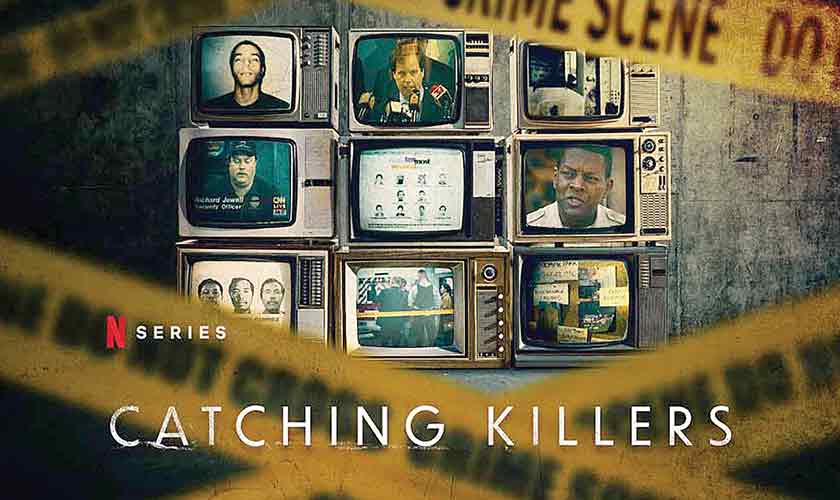
t’s a little dated, but rather than glorifying serial killers, Catching Killers highlights the painstaking investigative process. From early leads to psychological profiling, forensic breakthroughs and, sometimes, investigative failures, the docu-series humanises law enforcement officers who often suffer a psychological toll from years of exposure to gruesome crimes.
In a world saturated with dramatised true crime series, Catching Killers on Netflix stands out for its unsettling honesty. It does not glamourise bloodshed or turn serial killers into pop-culture icons. Instead, it turns the camera toward those who have spent years chasing shadows—detectives, forensic psychologists and prosecutors whose lives have been shaped, and sometimes scarred, by their pursuit of justice.
The series, spanning multiple seasons since its 2021 debut, revisits some of the world’s most notorious murder cases. Each episode brings together the people who lived these investigations: the officers who walked through homes soaked in horror, the forensic experts who combed through microscopic clues and the survivors who continue to live with the weight of what they witnessed. Through their recollections, Catching Killers becomes less about the monsters who commit crimes and more about the human cost of catching them.
Unlike many crime thrillers, this docu-series resists sensationalism. There are no overly dramatic soundtracks or stylised re-enactments. Instead, it uses real footage, archival reports and interviews to piece together the puzzle of each case. The simplicity of the format becomes its great strength—it feels raw and painfully real. The Green River Killer, BTK, Aileen Wuornos and John Wayne Gacy reappear here not as characters in a script but as reminders of how depraved the human psyche can become when empathy collapses entirely.
Psychologically, the show serves as an intense exploration of both pathology and perseverance. On one side are the killers who are often exhibiting clear signs of antisocial personality disorder, psychopathy or deep-seated trauma. On the other are the investigators, who are forced to enter the mental labyrinths of these criminals, often at great personal cost. The show captures this duality powerfully. The detectives must think like predators to find them, yet doing so blurs the boundary of professional detachment.
What emerges is a subtle but significant commentary on vicarious trauma—the emotional residue experienced by professionals who repeatedly confront human suffering. In one episode, a homicide detective admits that, after years of investigating child murders, he began to feel detached from his family, numb to ordinary emotions. Another recalls being haunted by recurring dreams of the victims. Such moments reveal the often-ignored reality of policing: behind every solved case is a human being carrying invisible scars.
From a cinematic perspective, Catching Killers maintains a documentary restraint. It does not manipulate the viewer through graphic imagery or emotional cues. Its horror lies in the ordinariness of evil; how suburban homes, quiet towns and seemingly normal people conceal unimaginable brutality. This restraint allows the psychological material to breathe.
Catching Killers also highlights the evolution of forensic psychology and investigative science. From early reliance on intuition to modern psychological profiling and DNA technology, it tracks how the field has moved toward a more systematic understanding of deviant behaviour. The interviews with behavioural analysts provide an academic richness where terms like “ritualistic compulsion” and “control-oriented violence” are used not for shock but for insight. The viewer learns that serial killers rarely act out of pure rage; rather, many seek domination, recognition or fulfillment of psychological needs rooted in early developmental disruptions.
The treatment of gender and power dynamics is equally revealing. In the episode on Aileen Wuornos, often dubbed “America’s first female serial killer,” the discussion extends beyond her crimes to the social and psychological conditions that shaped her. Abused, abandoned and exploited, Wuornos represents a complex interplay between victimhood and violence. The experts in the series do not excuse her actions, but they question what happens when trauma festers without treatment—a theme resonant in both forensic psychology and feminist criminology.
From a cinematic perspective, Catching Killers maintains a documentary restraint. It does not manipulate the viewer through graphic imagery or emotional cues. Its horror lies in the ordinariness of evil; how suburban homes, quiet towns and seemingly normal people conceal unimaginable brutality. This restraint allows the psychological material to breathe. The viewer is invited to think, not react; to analyse, not sensationalise.
Critically, the show has received mixed responses. Some viewers find its pacing slow, but for those interested in the psychology of crime, that pacing feels deliberate. It mirrors the painstaking process of investigation—months of false leads, exhaustion and obsession before a breakthrough. This narrative rhythm creates empathy not only for the victims and their families but also for those who devote their lives to seeking justice for them.
What lingers after watching Catching Killers is not the horror of the crimes themselves but the quiet devastation they leave behind. Detectives speak of marriages that collapsed under the strain of long investigations, of sleepless nights replaying interviews with remorseless killers, of guilt when they could not save the next victim in time. In these confessions lies the heart of the series: the idea that the pursuit of evil inevitably changes those who chase it.
…a sobering, psychologically layered portrait of crime and conscience, a reminder that catching monsters often means confronting the monster within.
For psychology students and true-crime enthusiasts alike, Catching Killers functions is both a case study and a cautionary tale. It shows how understanding human depravity requires empathy, science and emotional resilience in equal measure. The investigators are not portrayed as heroes but as people who are flawedand fatigued, yet unyielding in their pursuit of justice.
In the end, the series reminds us that evil is rarely extraordinary. It hides in plain sight; among neighbours, colleagues and strangers one might never suspect. But Catching Killers also restores faith in the painstaking, often thankless work of those who refuse to look away from the darkness. It is a sobering, psychologically layered portrait of crime and conscience, a reminder that catching monsters often means confronting the monster within.
The writer has a degree in psychology with a minor in mass communication. She can be reached at [email protected]