Print Story
X




Have our governments lost the ability and will to act before a calamity strikes?
| P |
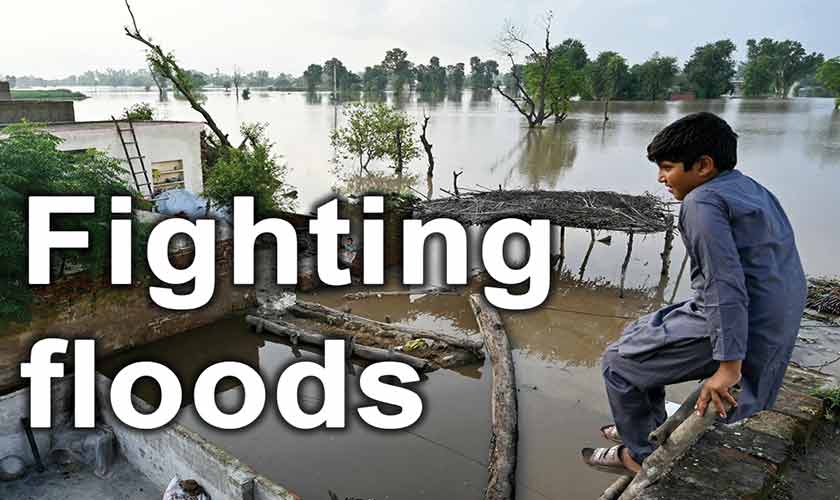
akistan is once again struggling to contain the damage from one of the worst floods in its history. Following multiple flash floods and heavy rain spells in the northern and north-western parts of the country, excessive monsoon downpours in the eastern, central and southern districts in the Punjab, unprecedented inflows from India in the Chenab, Ravi and Sutlej Rivers have wreaked havoc throughout the country. Rivers that for decades looked like mere drains turned into mighty torrents within days. Riverfronts broke and embankments compromised, inundating thousands of villages and towns. Several cities faced urban flooding as drainage systems failed to carry rain run-off efficiently.
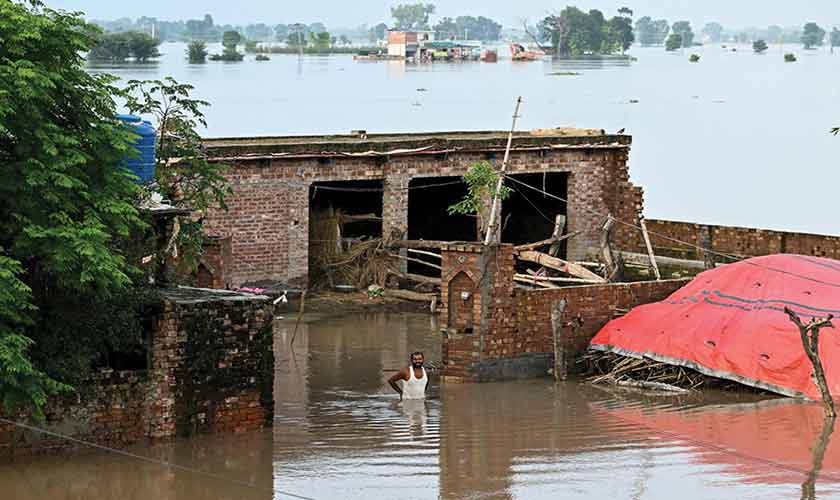
It was devastation all over again.
The worst is apparently over for the northern and central regions of the country. Disaster management officials have already announced the end of this year’s monsoon. However, millions of people have been displaced and billions of rupees have been lost in infrastructure and farmland destruction across the country. Death toll until the first week of September was close to a thousand. The National Disaster Management Authority data painted a bleak picture as flood waters entered Sindh during last week.
Pakistan is no stranger to natural disasters. If it is not floods, there are earthquakes. There have been 29 super floods since independence 78 years ago. The first reaction of the state functionaries has frequently been to look for someone to blame. By now the list includes act of God and global polluters. Climate change, a relatively new phenomenon, has also been added to the list. India, the upper riparian, can always be blamed, with varying degrees of justification. Several ministers chose to emphasise the latter. Indian authorities meanwhile claimed that they were similarly struggling with excessive rains in Himachal and the Occupied Jammu and Kashmir—the catchments of Ravi, Beas and Sutlej Rivers. The fact that India ‘suspended’ the Indus Basin Waters Treaty following the May skirmishes did not help.

While authorities were busy dealing with the impending disaster, thousands of people thronged to bridges and barrages to witness the once-in-a-life time spectacle. The media recalled that the last such calamity had hit the country four decades ago. For Gen Z and the Millennials, water in the Ravi and Sutlej were a God-given opportunity to create content for social media accounts. Had they bothered to read global reports on climate change and its impact on Pakistan, they would have known that such floods were forecast to be a frequent occurrence in the future.
During a visit to Buner, one of the worst-hit districts in Khyber Pakhtunkhwa, Prime Minister Shahbaz Sharif told the locals: “It is qayamat (doomsday) for you and for us too. To be better prepared for similar disasters, we need to make [adaptation] policies. If we don’t, Allah won’t forgive us.” Famed for his ‘speed’ and preference for ‘action,’ the prime minister did not blame departmental degradation or institutional inefficiencies, possibly because that would have amounted to criticising oneself. Blaming widespread ‘corruption’ and ‘mismanagement’ could have been easy options in a province run by the opposition Pakistan Tehreek-i-Insaf since 2013.
Speaking to journalists during a weekly press briefing last week, Foreign Office spokesperson Shafqat Ali Khan stayed true to diplomatic officialese when asked pointedly if India had deliberately released water to exacerbate floods in Pakistan. “I am not in a position to comment on whether water was stored in a certain manner, to be released at a certain time. But regarding the sharing of information... the Indian side has indeed shared some information about river flows through diplomatic channels. However, it has not been as detailed as it was in the past.”
Pakistan may be a poster boy for drought-and-deluge destruction cycle. The federal and provincial governments may get away with a mere slap on the wrist.
Several multiple recent international reports and indices mention Pakistan as one of the countries most vulnerable to climate change impacts. Rising temperatures, glacial lake outburst floods and record-breaking monsoon rainfall could all contribute to this. No wonder former climate change minister and Pakistan Peoples Party Senator Sherry Rehman had objected to drastic cuts in the environment protection allocations in the 2025-2026 budget. She had called it an “abdication of responsibility” in the face of challenging climate induced catastrophes. Rehman had also warned the cuts could send the wrong message internationally: “If we are not seen investing in our own resilience, why would others support us?”
Writing about the 2022 floods wherein more than 1,700 people perished, over a million homes were destroyed and more than 33 million people were impacted, the Time magazine had pointed towards “inadequate” emergency plans. That reminded one of Charles James Lyall, a noted British ICS officer in the late 19th Century who topped the 1865 competitive examination for the Indian Civil Service. He had once famously remarked that “the present is the key to the past.” Pakistani governments have consistently failed to learn from their mistakes.
Successive Pakistani leaders are known for making unrealistic promises when faced with natural disasters and calamities and then faltering on the follow up. Pakistan may be a poster boy for a drought-and-deluge destruction cycle. The federal and provincial governments may get away with a mere slap on the wrist for their failures on multiple fronts.
The Khyber Pakhtunkhwa government of the PTI could not cry louder for the destruction in the province. Close to 40 percent of deaths this year were reported in that province. Damage to infrastructure and homes was also significant. But then Khyber Pakhtunkhwa is also a deforestation nightmare. Many media reports point to organised corruption underpinned by political and bureaucratic complicity. Laws like the River Protection Act are violated with impunity and the most vulnerable communities are allowed to live by riverbeds. They routinely encroach upon the river courses despite warnings.
Public statements by the government and its leading allies often point to confusion or lack of conviction. In July 2025, Federal Minister for Planning Ahsan Iqbal was calling on developed countries to fulfil their climate finance promises—ostensibly the Loss and Damage pledges made during COP27. Last week, he said “Pakistan will undertake rehabilitation and reconstruction of the damaged areas using its own financial resources and without taking any external assistance.” He is possibly aware that international help may not be coming after all.
Should the international community come to Pakistan’s help while Finance Minister Muhammad Aurangzeb concedes that Pakistan had “failed to present bankable projects to international donors, preventing the full materialisation of pledges made in the aftermath of the 2022 flash floods.”
PPP chairman Bilawal Bhutto-Zardari says the government should seek foreign help. He says the federal and provincial governments could not manage the disaster on their own. Only a few days ago he had been reported as praising Chief Minister Maryam Nawaz and her team for doing a stellar job of mitigating flood-hit people’s problems.
Incarcerated PTI leader Imran Khan finally ‘spoke’ on the ongoing flood calamity on September 3. A post shared on his official X account, which reportedly is managed by someone in his party for him, said: “I appeal to the people of Pakistan to take part, with their customary zeal, in the ongoing rescue and relief efforts amidst the tragic floods engulfing the country. The PTI will also play its role for the flood-affected without any discrimination.”
In another X post on September 8, Khan said: “At this moment, the entire country is submerged in floods. People have suffered immense losses because of these floods in the Punjab and Khyber Pakhtunkhwa. The whole nation must unite to confront this situation. If I were not in prison, I would be conducting fundraising telethons. From here, I call upon my nation to contribute generously and wholeheartedly to relief efforts for the assistance of flood victims.”
The flood waters will start receding soon. Prime Minister Shahbaz Sharif has done what almost all Pakistani government leaders do in similar situations—he has formed a “high-level committee to assess agricultural and food security losses. It will estimate the damage to cash crops and examine the impact on livestock, fodder and exports.”
Not distrusting the honesty of purpose in this exercise, I’d like to quote Charles Lyall again. He said, “There are four things that hold back human progress: ignorance, stupidity, committees and accountants.”
The writer is the resident editor of The News, Islamabad.