Pakistan’s sustained diplomacy, which has led to the first framework document for peace between Iran and the US, is not just a victory for our mediation; rather, it has forced the world to reconstruct its perceptions of our nation.
Setting aside the cliched laudatory accolades, what best describes the world’s sentiments towards the new Pakistan is ‘enhanced respect and prestige’.
There are various strands to this reimagined Pakistan. Pakistan’s newfound respect in the world is not just based on its recent diplomatic efforts in the Middle East, -it arises from its robust military response to India’s aggression in May 2025, its real time fine-tuned military partnership with China which was demonstrated to the world for the first time, a carefully re-crafted relationship with Iran in parallel to deepening military-diplomatic ties with Saudi Arabia, aggressively pursual of restraint between GCC countries and Iran, and pursuing purposeful shuttle and telephone diplomacy while simultaneously firefighting its ties with Afghanistan and India. This indeed is a challenging cocktail of foreign policy endeavours, yet Pakistan came out trumps despite these challenges.
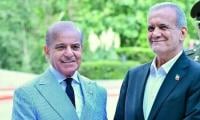
While we were always perceived as a military-dominated state, new facets of Pakistan’s civil-military relationship have caught the world by surprise. The COAS-CDF-led national security policy coopted three political leaders – the prime minister, the foreign minister and the interior minister. The surprise to the world was the lack of civil-military dissonance in the conception and execution of external policy. Shuttles were perfectly timed and diplomacy was ably executed. From being a laughingstock in the world because of policy duality, we became known as a country where various components worked well together.
Pakistan’s institutions also seem to be gelling well. It is no secret that many around the world have always thought of Pakistan as an iffy state where one arm of government is always at variance with the others. That image has changed, at least in the short term. Pakistan’s institutions are now perceived to work well together both internally and externally.
Pakistan’s foreign ministry officers were co-opted to draft and bridge differences in the negotiations. One hopes that Pakistan mediates the finer details of the very difficult next phase of talks on the nuclear issue, the timeline for the lifting of sanctions, the drafting of the sovereignty clause on the Straits of Hormuz as well the inclusion of the UN Security Council in the final agreement.
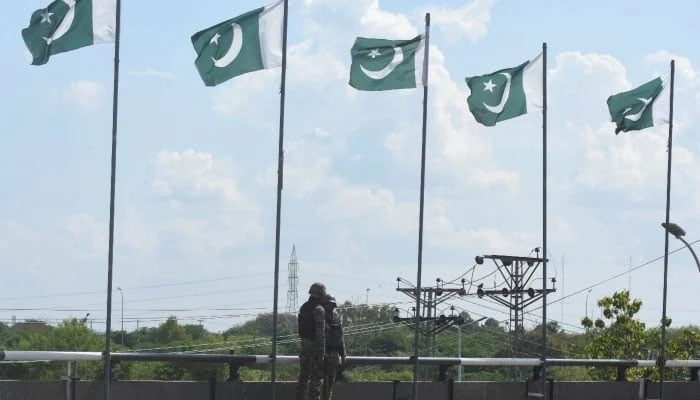
Pakistan’s indigenisation and modernisation, militarily, are also topics in the halls of military strategy and warfare. The Pakistan Air Force’s multidomain superiority was evident during Operation Swift Retort (2019) but was largely dismissed as a one-off encounter. May 2025 has changed that forever. The PAF’s integration with its air defence systems and overall technological superiority is now being researched. Pakistan’s counter-air operations and human-technological synergy with China were on display and have now changed perceptions about Pakistan’s overall military prowess. Pakistan’s joint design agreements and Transfer of Technology arrangements with Turkey and China have led to the indigenous production of Frigates and Hangor-class submarines.
We must rejoice in this moment of prestige. However, an introspective nation must cater for challenges and for future dark moments. We need structural reforms to sustain our newfound respect in the comity of nations. The pillar of Pakistan’s newfound prestige needs to be institutional. Pakistan needs a national security institution, such as a National Security Council, in which middle-level civil and military officers can work together to create bottom-up integration, rather than the top-down harmony of the past. This togetherness has to go beyond counterterrorism (Nacta) to embrace technological collaboration and broader internal and external policy recommendations between the two arms of our intelligence.
Pakistan has achieved macroeconomic stabilisation and an increase in remittances, but faces structural challenges like high poverty, inflation and heavy debt. It has weathered the inflation storm of the Iran-US war with difficulty. Therefore, it is not considered a collapsing economy but a challenged one.
Pakistan’s poverty is now a huge challenge. Nations that cannot reduce poverty can never attain long-term respect and prestige. Pakistan’s civil service is antiquated and cannot provide services to its people. Pakistan’s military and political elite have no plans for reducing poverty for the vulnerable or for reforming the corrupt, visionless and inefficient civil service.
On the national security front, we are currently capable of matching and even outperforming India, but in the long run, India has the capacity to outspend and exhaust us in an arms race. It is now developing an aggressive multi-theatre doctrine against us. We will not be able to finance our military deterrence to India if we don’t reform bleeding state enterprises and taxation architecture.
Pakistan today enjoys unprecedentedly high standing and cordial relations across continents, especially in the Middle East, with the US, China, Russia and the EU. It has now been reimagined in the world as a peacemaker with significant military strength and a stable but fiscally challenged economy. The ‘new’ Pakistan fills our hearts with pride, but we must introspect and reform to remain respected internationally.
The writer is a Fulbright scholar and has served as Pakistan’s ambassador to Oman. He can be reached at:[email protected]