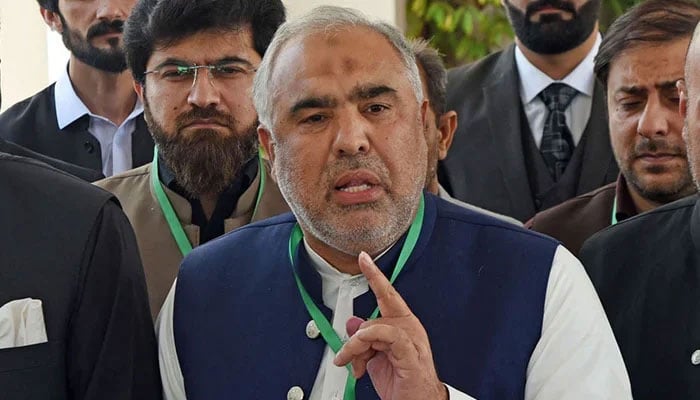
QUETTA: Pakistan Tehreek-e-Insaf (PTI) leader and Member of the National Assembly Asad Qaiser on Monday said that governments formed in Balochistan have historically failed to represent the true will of the people, stressing that the province must be given its due rights in accordance with the Constitution and law.
Speaking at a press conference in Quetta, Asad Qaiser said he had arrived with a message of solidarity and goodwill for the people of Balochistan on behalf of Khyber Pakhtunkhwa and Pakistan Tehreek-e-Insaf. He said the people of Balochistan had always made great sacrifices and that his party’s position on the prevailing situation in the province was clear.
He alleged that non-representative governments had repeatedly been imposed in Balochistan and claimed that a majority of members in the provincial assembly did not genuinely represent the people. He said depriving citizens of their fundamental rights would only worsen the
situation.
The former National Assembly speaker expressed concern over the deteriorating law and order situation in Balochistan, saying the government’s writ was weak and highways across the province had become unsafe. He claimed that people were being killed while travelling on roads, creating a sense of insecurity among the public and discouraging investors from bringing business to the province.
Asad Qaiser said the youth were increasingly falling into despair, while the closure of border trade routes was adding to unemployment. He demanded the immediate reopening of border trade corridors to create employment opportunities and ease economic hardships.
Referring to PTI founder Imran Khan, he alleged that plans were being made to hand down more punishments to him and urged people to stand up for justice.
He warned that unless the voices of the people were heard, the situation would continue to deteriorate. Calling for effective implementation of the National Action Plan, he also criticized the National Assembly, claiming that none of the legislation passed so far had been in the public interest.