TEHRAN: US President Donald Trump said Iran has requested a meeting that will be held in Qatar on Tuesday (today), despite Tehran earlier denying that any technical talks on the deal aimed at ending the Middle East war were planned.
The announcement came after Iran held its first talks with Oman on managing the Strait of Hormuz since the US-Iran deal was signed, and as Washington and Tehran agreed to halt their attacks, which had strained the agreement.
“IRAN HAS REQUESTED A MEETING. IT WILL TAKE PLACE TOMORROW IN DOHA!” Trump posted on his Truth Social platform on Monday, without specifying the participants.
White House spokeswoman Karoline Leavitt later told Fox News that US envoy Steve Witkoff and Trump´s adviser and son-in-law Jared Kushner “will be flying to Doha for high-level meetings this week”.
A diplomat with knowledge of the talks confirmed to AFP that officials from the US and Iran were due to meet in the Qatari capital to discuss the deal signed earlier this month.“Technical teams working on the implementation of the MoU are scheduled to meet in Doha in the coming days,” the diplomat said on condition of anonymity.
The diplomat added that “communications channels created to de-escalate any incidents are in place” after the strikes.Iran´s deputy foreign minister Kazem Gharibabadi, however, denied reports that technical talks were “planned for this week”, state TV reported.
Iran’s Foreign Ministry Spokesperson Esmaeil Baghaei said in a statement that no US-Iran talks are scheduled in the coming days, adding that an Iranian technical delegation will visit Qatar this week, but has no relation to US officials visiting the country. Nevertheless, a US official also told AFP that the negotiations would continue despite the recent strikes. “Both sides will stand down for now and vessels can move freely” in and around the Strait of Hormuz, the official said in an email.
Iran´s exercise of control over the strait has sparked repeated flare-ups, the latest of which came early on Sunday when US Central Command said it had attacked 10 Iranian military targets over “continued Iranian aggression against commercial shipping”. Iran said it retaliated with strikes against US bases in Kuwait and Bahrain.
The blockade remains a key sticking point in the US negotiations. Iran and Oman border the strait and Iran said on Monday they held their first talks since the deal was struck. “During a trip to Muscat, the first meeting of the Joint Hormuz Committee was held,” said Gharibabadi on X. “While reviewing the current issues related to the strait, we exchanged views on the future management.”
The strait comprises Omani and Iranian territorial waters, but under customary international law the two cannot generally block passage or charge tolls.Iran warned on Sunday that any attempt by ships to bypass its preferred route through Hormuz would “increase tensions” in the Middle East.
Iran insists ships transiting the strait pass through a corridor near its own shores.How the memorandum is to be implemented remains unclear, with the issue of de-mining sparking Iranian displeasure on Monday.
In a joint statement following a meeting between French President Emanuel Macron and Omani Sultan Haitham bin Tariq, Paris and Muscat said they would conduct “joint de-mining operations”.
In response, Gharibabadi insisted on X that under the agreement only Iran was to conduct de-mining efforts and “no other country”. “The situation is sensitive and complex. We strongly advise France not to complicate it further with its provocations,” he wrote.
Traffic slowed over the weekend after a vessel was struck while transiting the waterway on Saturday, with 29 commodity vessels crossing on Saturday and 12 transiting on Sunday, according to data from the maritime tracking firm Kpler.
No vessels used a southern corridor through Omani waters according to data from Kpler, while AXSMarine found that 44 vessels had stopped publicly transmitting their position.The published text of the memorandum of understanding says Iran will define the future administration of the strait in dialogue with Oman and the other Gulf States, but “in line” with international law.
Iran´s Revolutionary Guards said they were taking measures to control traffic in the strait and that vessels violating those measures would be dealt with more firmly than before.Mohammad Mokhber, adviser to Iran´s supreme leader, wrote on X that as long as Iran managed the strait, Washington´s “hegemonic dreams in the region will not be realised”.
Experts said there would likely be more Hormuz incidents. For Iran, “a drawn-out negotiation accompanied by controlled pressure in the strait can work to its advantage”, said HA Hellyer of the Royal United Services Institute, a London think tank.
US Secretary of State Marco Rubio and special envoy Steve Witkoff will brief the full US House of Representatives and Senate by phone on Monday on the deal with Iran, a White House official said.
Iranian President Masoud Pezeshkian said that, after an agreement with the United States lifted oil and petrochemical sanctions, $6 billion out of $12 billion of assets frozen in Qatar would be released and returned to Iran, Iranian state media reported.
Germany will provide €250 million in additional support for hard-hit regions in Africa and Asia facing the impact of the prolonged blockade of the Strait of Hormuz, the development ministry said on Monday.
The money will be used to improve acute food security, strengthen local resilience and assist small farmers, Development Minister Reem Alabali Radovan said at the Hamburg Sustainability Conference according to the statement.
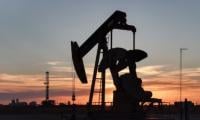
Middle East producers are pushing ahead with oil and liquefied natural gas loading despite fresh ship attacks in the Strait of Hormuz and renewed strikes between the US and Iran in recent days, shipping data showed.
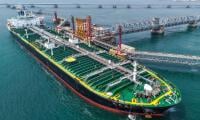
Energy shipping in the strait slowed after attacks on a container ship on Thursday and an oil tanker on Saturday sparked tit-for-tat strikes, threatening Washington and Iran’s interim peace deal. But on Sunday a US official said the two countries had agreed to halt recent hostilities and renew talks over the strategically important waterway.
Oil prices rose on Monday with Brent crude futures up almost 1 per cent after the weekend tension highlighted the fragility of the U.S.-Iran accord. Wall Street’s main indexes opened higher as easing tensions in the Middle East lifted sentiment following days of hostilities between the US and Iran.
Lebanon´s President Joseph Aoun told the head of US forces in the Middle East that Beirut intended to assert its sovereignty over the entire country, with the army deployed right up to the Israeli border.
Aoun met Admiral Brad Cooper, the head of US Central Command, to discuss the Washington-brokered agreement signed last week by Israel and Lebanon aimed at a peace deal.Cooper also met Lebanon´s army chief Rodolphe Haykal, with the discussions addressing “the latest developments in Lebanon and the region”, the army said in a statement.
As part of the Washington deal, Hezbollah is to be disarmed, with the onus for doing so on the Lebanese army. Israeli leaders have said their troops will continue to occupy the south until then.
The Iran-backed militant group has fiercely opposed the agreement and leading figures have warned of conflict within Lebanon if the deal is forced on them.The Israeli military has destroyed underground infrastructure used by Lebanese militant group Hezbollah in a village in southern Lebanon, according to a joint statement by the Israeli prime minister and defence minister on Sunday.
Iraq´s government has given pro-Iran armed groups in the country until September 30 to disarm, coinciding with the end of the US-led anti-jihadist coalition´s mission, its spokesman said on Monday.
The announcement comes ahead of a visit to the United States by new Prime Minister Ali al-Zaidi, with Washington exerting pressure on Baghdad to ensure the factions turn in their weapons.
Qatar advised on Monday the temporary suspension of sailing and fishing boats until further notice, but said commercial shipping and vessels subject to international conventions were exempt. The transport ministry said the precautionary measure includes jet skis and all other maritime vessels. A spokesperson said commercial shipping was exempted.
The ministry did not give a reason for the measure, but it comes a day after Qatar said one of its nationals was killed after sustaining injuries from shrapnel due to “military operations in the region” after his vessel went missing.
Traffic through the Strait of Hormuz slowed sharply over the weekend as ships avoided a transit corridor off Oman after a fresh exchange of strikes between the United States and Iran. Only four tankers and one container ship used the Omani southern corridor to enter the Gulf on Sunday, escorted by US Navy vessels, according to research firm HFI Research. No vessels used the route to leave the Gulf on Sunday, according to data by maritime tracking firm Kpler.
The United Arab Emirates will allow its nationals to travel to Lebanon starting on Monday, the state news agency WAM reported. UAE citizens planning to visit Lebanon must register through an official service, an emergency and support platform by the ministry of foreign affairs, before their departure, the agency added.