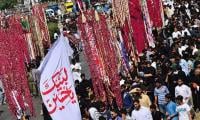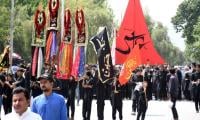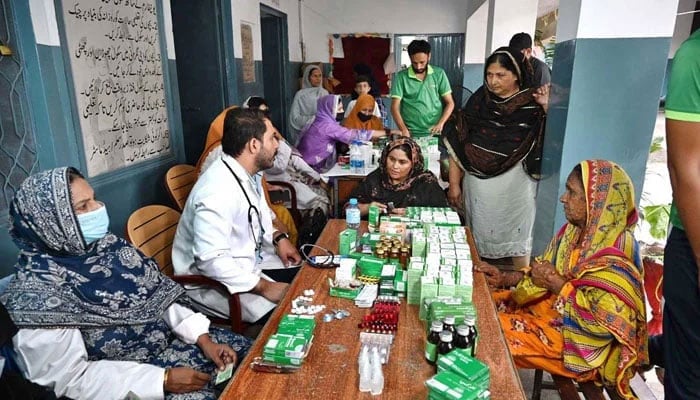
Rawalpindi:District Health Authority (DHA) Rawalpindi has finalised contingency plan and established medical camps to provide medical cover to participants of mourning processions during Muharram-ul-Haraam while a control room has also been made operational on Monday, yesterday, at the Chief Executive Office, DHA Rawalpindi to supervise and monitor health-related activities during the Muharram processions.
According to the District Health Authority, specific officers have been nominated as focal persons to supervise and monitor field activities throughout the district on a regular basis till June 27. Dr. Naveed Qasim, District Health Officer (Medical Services), has been designated as District Focal Person who is responsible for monitoring all Muharram-related health activities in District Rawalpindi, said District Focal Person for Media at DHA Dr. Waqar Ahmed while talking to ‘The News’ on Monday.
He added that the Deputy District Health Officer (DDHO) Rawal Town has been given the task of overseeing the medical camps at Jamia Masjid Road, Fawara Chowk, Committee Chowk, and Imambargah Col. Maqbool Hussain while Dr. Hamza Razi, DDHO Rawalpindi Cantt is responsible for medical camps at Tench Bhatta/ Qasai Chowk, Choohr Harpal Chowk, and Dheri Hassan Abad. Dr. Hanan Javed, DDHO Rawalpindi, is monitoring the activities at the Dhama Syedan medical camp.
Dr. Waqar said Shahid Mehmood, District Sanitary Inspector, is supervising all sanitary activities across the district while to ensure emergency readiness, the district has mobilized an extensive network of healthcare facilities. Major public institutions form the core of this infrastructure, notably Holy Family Hospital, Benazir Bhutto Hospital, and Rawalpindi Teaching Hospital.
He added that the centralized capacity is supported by primary and secondary public health centres distributed across the region, including various tehsil headquarters hospitals, rural health centres, and basic health units. Furthermore, the contingency plan integrates the private sector by incorporating several private hospitals—such as Bilal Hospital, Ahmed Hospital, and Razi Hospital—to provide supplementary emergency coverage.
Dr. Waqar explained that medical coverage for processions will be provided via stationary camps and mobile units operating in specific shifts. Staff are divided into two primary shifts, an early shift from 08:00 a.m. to 04:00 p.m. and a late shift from 04:00 p.m. until the end of the procession.
Mobile medical camps are deployed between the 7th and 11th of Muharram at critical junctions, including Jamia Masjid Road, Imambargah Col. Maqbool Hussain, Committee Chowk, Fawara Chowk, Dheri Hassanabad, Dhama Syedan, Qasai Chowk/Tench Bhatta, and Choohr Harpal Chowk. He added that specific vehicles have been assigned to these camps, led by doctors.
On Control Room assignments, Dr. Waqar informed ‘The News’ that personnel have been assigned to multiple control rooms to coordinate the district-wide response. Staff will perform duties at the Control Room of the Chief Executive Office, DHA Rawalpindi, from the 6th to the 11th of Muharram while officials have been directed to perform duties at the District Control Room, established in the Safe City Building and Civil Defense Office, till June 27, to meet any emergencies as directed by the Government of the Punjab.