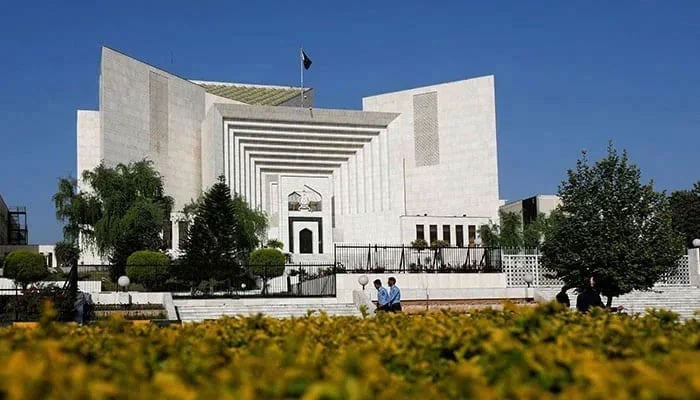
ISLAMABAD: The Supreme Court on Tuesday ruled that the courts’ jurisdiction could not be invoked for immaterial questions having no nexus with a valid grievance.
A three-member bench of the apex court, headed by Justice Muhammad Ali Mazhar, announced its judgment in a matter related to the appointment of lecturers in the College Education and Literacy Department, Sindh. Justice Aqeel Ahmed Abbasi and Justice Muhammad Shafi Siddiqui were the other members of the bench.
The petitioner — Sindh province through its chief secretary — had filed an appeal with the Supreme Court against the judgment passed by the Sindh Service Tribunal on June 2, 2025.
After hearing the case in detail, the court dismissed the appeal, observing that it did not find any illegality, irregularity or perversity in the impugned judgment passed by the tribunal. “In our considered view, the directions contained in the impugned judgment do not require any interference,” says the 10-page judgment authored by Justice Muhammad Ali Mazhar.
The court noted that the aggrieved party was the Sindh government rather than the persons whose seniority was affected by the impugned judgment.
In its judgment, the Supreme Court held that locus standi to challenge seniority disputes typically vests in employees directly affected by the disturbance of seniority, in violation of relevant principles such as date of appointment, date of regularisation, date of promotion, and applicable rules governing seniority or inter se seniority, as seniority is determined under rules and not preferences.