ISLAMABAD: At a time when neighbours are investing more heavily in climate resilience, Pakistan has decided to reduce climate-related development spending in its FY2026-27 budget despite growing evidence of being most vulnerable country to climate change.
The federal government has allocated Rs2.4 billion ($8.6 million) for climate-related Public Sector Development Programme (PSDP) projects in FY2026-27, a sharp decline of 60 per cent-plus from approximately Rs6.4 billion allocated five years ago.
Across South Asia, several neighbouring countries including China, India and Bangladesh have moved in the opposite direction. The contrast is notable because Pakistan is widely deemed as one of the countries most exposed to climate-related disasters.
International assessments consistently rank Pakistan among the countries most affected by extreme weather events. The Climate Risk Index published by Germanwatch has repeatedly placed Pakistan in the group of nations experiencing the highest impacts from climate-related disasters.
The World Bank’s Climate Change Knowledge Portal identifies Pakistan as highly vulnerable to rising temperatures, extreme weather events and changing water availability.
The country is also experiencing more intense heatwaves. The World Bank warns that temperatures in Pakistan are projected to rise significantly during this century, increasing health risks, reducing labour productivity and placing additional pressure on energy and water systems.
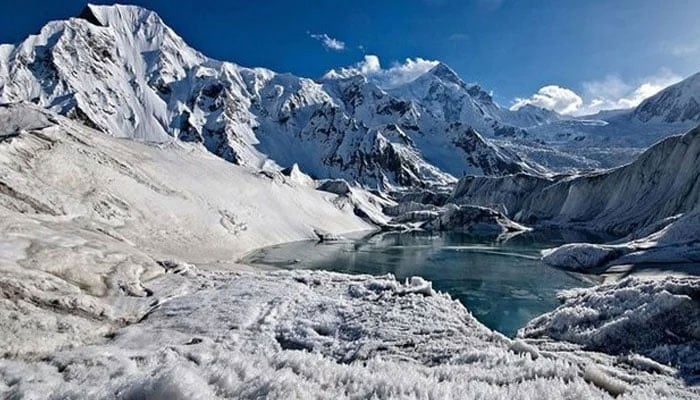
Pakistan faces several overlapping climate threats. Rising global temperatures are accelerating glacier melt in the Hindu Kush-Karakoram-Himalayan region, which feeds the Indus River system that supports most of the country’s agriculture, industry and urban population.
According to the United Nations Development Programme (UNDP), accelerated glacier melt increases the risk of glacial lake outburst floods while also threatening long-term water security.
Research by the Pakistan Institute of Development Economics (PIDE) notes that floods, droughts, erratic rainfall and rising temperatures are already affecting crop productivity and food security.
Bangladesh has steadily increased climate-related public spending over recent years, with climate expenditures rising from about Tk24,226 crore in FY2020-21 to more than Tk42,206 crore in FY2024-25, according to analyses cited by The Daily Star and Bangladesh’s climate-budget reports.
India has also expanded climate-related investments through funding for renewable energy, green hydrogen, electric mobility and adaptation projects across multiple ministries, according to budget analyses and government reports.
Pakistan’s vulnerability is amplified by its geography. Few countries face the combination of glacier melt, river flooding, extreme heat, drought risk and water scarcity at the same scale. The country depends heavily on a single river system -- the Indus Basin -- which supports roughly 90 per cent of agricultural production. Climate shocks affecting that basin, therefore, have nationwide consequences.
The country experienced catastrophic floods in 2022 that affected more than 33 million people and caused billions of dollars in economic losses, according to the Pakistan government and the United Nations.