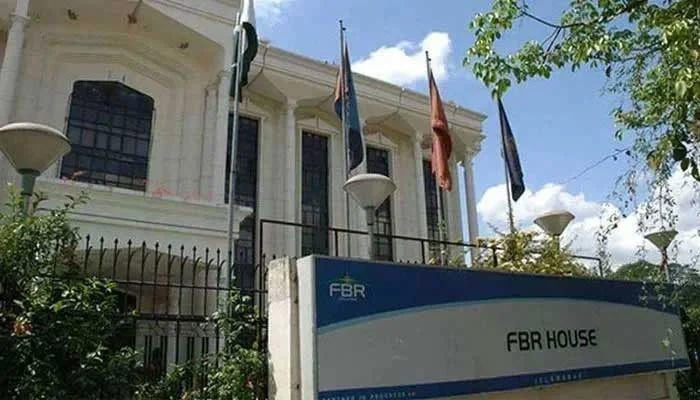
ISLAMABAD: National Assembly Standing Committee on Finance and Revenue has rejected a proposed amendment to Finance Bill 2026-27 that would have authorised FBR to obtain banking information to identify potential non-filers.
However, the committee approved an enabling provision allowing State Bank of Pakistan (SBP) to establish, operate, and maintain a secure centralised virtual repository of banking data, including information, records, and financial transactions maintained by scheduled banks.
The Standing Committee on Finance continued its review of Finance Bill 2026-27 at Parliament House under chairmanship of former Finance Minister and PPP MNA, Syed Naveed Qamar.
The committee examined proposed amendments to Section 175AA, which concerns exchange of banking and tax information relating to high-risk individuals. It approved the provision empowering SBP to create and manage a centralised virtual repository of banking data.
However, the committee rejected a separate amendment that would have allowed central bank, microfinance banks, and Electronic Money Institutions (EMIs) to provide FBR with final analytical results derived from banking data through algorithm-based assessments.
PPP MNA Hina Rabbani Khar opposed the proposal, arguing it would effectively make banks participants in tax investigations. She said while FBR is responsible for investigating taxpayers, amendment would also require banks to conduct similar investigations.
Another PPP MNA, Sharmila Faruqui, expressed concerns about potential misuse of taxpayers’ data, citing instances where provisions of income tax laws had allegedly been used to target political opponents.
Defending the proposal, Dr Najeeb Memon, Director General of Tax Policy Unit (TPU) at Ministry of Finance, said tax return analysis is conducted through Compliance Risk Management (CRM) system. He assured the committee information regarding significant discrepancies would remain confidential.
According to Dr Memon, purpose of proposed amendments to Section 175AA of Income Tax Ordinance, 2001, was to identify individuals conducting substantial banking transactions while failing to file income tax returns.
Committee Chairman Naveed Qamar clarified the provision establishing SBP’s centralised banking data repository would remain in the bill. All other proposed amendments under Section 175AA would be discarded, he added.
FBR Member (Strategic Transformation) Dr Hamid Ateeq Sarwar informed the committee nearly Rs37 trillion circulating through bank accounts remains outside effective tax scrutiny. He questioned how authorities could identify individuals conducting large financial transactions without filing tax returns.
He noted approximately 76 percent of tax revenue comes from large corporations and asked whether the country could continue relying primarily on corporate sector for tax collection. Without cross-matching banking data, it would be difficult to detect such individuals, he said.
The committee approved amendments related to tax offences and penalties, subject to certain modifications. Members objected to proposed increase in penalty for late filing of tax returns by individuals, from Rs1,000 to Rs25,000, arguing genuine late filers should not be subjected to such severe penalties.