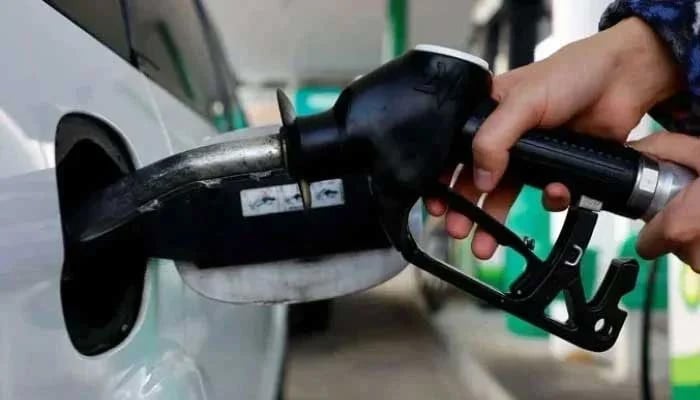
ISLAMABAD: Prime Minister Shehbaz Sharif on Friday announced a reduction of Rs74 per litre in petrol and Rs67 per litre in diesel prices, following an improvement in the regional economic situation and a decline in international oil prices.
“In view of the improvement in the regional economic situation and the decline in oil prices, the benefit is being immediately passed on to the public. We are now fulfilling the promise we made to the nation, by the grace of Allah,” the prime minister said in a statement on fuel prices following the establishment of regional and global peace through Pakistan’s mediation.
As a result, the price of petrol will decrease from Rs373 to Rs299 per litre, and diesel from Rs378 to Rs311 per litre.
“Providing maximum relief to the public remains the government’s top priority,” he said.
He said the government fully understood the difficulties faced by the people, who had shown remarkable patience and resilience during these challenging times. “We are deeply grateful to the people for supporting the government throughout this difficult period,” he said.
He recalled that during the crisis, the government made every possible effort to reduce fuel prices using available resources. He pointed out that the federal government utilised Rs129 billion, saved through development budget adjustments and austerity measures, to provide relief to people across the country and cushion them from the sharp rise in fuel prices.
He also noted that federal and provincial governments worked together to maintain economic stability. “I am grateful to all provincial chief ministers for their cooperation,” he said. He reiterated that the federal government took every possible step to protect the public from the effects of global inflation. “Any reduction in oil prices in the international market is being transferred directly to the people,” he said.
He said Field Marshal Syed Asim Munir deserved special congratulations for his tireless efforts and professional capabilities, which made this peace agreement possible. “I also pay tribute to Deputy Prime Minister and Foreign Minister (DPM/FM) Ishaq Dar, Interior Minister Mohsin Naqvi, and the entire government team who worked sincerely toward these peace efforts,” he said.
Moreover, he said the economic team—including Finance Minister Muhammad Aurangzeb, Planning Minister Ahsan Iqbal, Economic Affairs Minister Ahad Khan Cheema, Petroleum Minister Ali Pervaiz Malik, the Finance Secretary, Petroleum Secretary and Chairman FBR—made valuable contributions during the economic crisis, and their efforts were highly commendable.
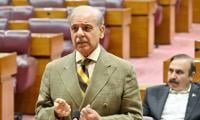
Meanwhile, addressing the National Assembly, the prime[KA1] minister said Pakistan had earned global recognition for its role in facilitating the peace agreement, calling it a moment of pride for the nation.
He observed that the achievement reflected the country’s growing diplomatic stature. “Pakistan is being acknowledged around the world for helping bring about this peace deal,” he said.
Addressing the opposition, the prime minister said a message should go to the world that this was an achievement of the entire nation and that despite political differences, the whole nation was united when it came to national interests.
“Several countries have sought such respect for centuries, but could not get the respect that God has blessed Pakistan with today. From Japan to Saudi Arabia, from Kuala Lumpur to Casablanca and from Mexico to India, if any country’s name is being highlighted with respect and honour, it is Pakistan’s,” he said.
The prime minister thanked Field Marshal Syed Asim Munir for playing a key role in efforts to establish peace in the region. He also acknowledged the contributions of Deputy Prime Minister and Foreign Minister Ishaq Dar and Interior Minister Syed Mohsin Naqvi.
He expressed confidence that Pakistan and Iran would enter a new era of prosperity, economic cooperation and stronger bilateral relations following the signing of the Islamabad Memorandum of Understanding (MoU) between Iran and the United States for peace in the region.
He informed the House that he had received a telephone call from Iranian President Masoud Pezeshkian, who thanked Pakistan and its people for supporting Iran during a difficult period. Shehbaz said he invited the Iranian president to visit Pakistan and told him that the entire nation would warmly welcome him upon his arrival.
He said Pezeshkian also invited him to participate in the funeral prayers of Iran’s Supreme Leader Ayatollah Ali Khamenei. He assured that a Pakistani delegation would attend the funeral.
Shehbaz hoped that the ceasefire and peace efforts would improve economic conditions in both the countries and that international oil prices had declined significantly following the ceasefire.
The prime minister thanked provincial governments for their cooperation in managing economic challenges and acknowledged the roles played by Iran, the United States, Qatar, Saudi Arabia, Turkiye and China in supporting the peace initiative. He described the diplomatic achievement as a historic moment for Pakistan and expressed gratitude for the international respect the country had received.
Meanwhile, the National Assembly unanimously passed a resolution recognising that Pakistan’s sincere and tireless efforts for the US-Iran peace agreement had positioned the country as a trusted neutral mediator on the global stage.
The resolution, moved by Law Minister Azam Nazeer Tarar, appreciated the efforts of Prime Minister Shehbaz Sharif, Deputy Prime Minister Ishaq Dar, Interior Minister Mohsin Naqvi, Field Marshal Syed Asim Munir and the entire team engaged in the negotiation process.
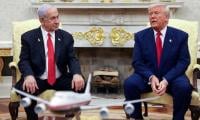
The House noted with immense satisfaction and pride the landmark diplomatic breakthrough in terms of cessation of hostilities and the signing of an agreement for peace and stability between the United States and Iran. The resolution congratulated and appreciated the leadership of Iran and the United States for signing the historic peace deal. It also highlighted the adverse impact of the conflict on regional peace and stability, as well as on global economic stability and energy security.
It also congratulated the leaders of Iran and the United States on the successful conclusion and signing of the historic peace deal.
Meanwhile, Deputy Prime Minister and Foreign Minister Ishaq Dar spoke with Iran’s Foreign Minister Seyed Abbas Araghchi and the two leaders exchanged views on regional developments and highlighted the ceasefire violations conducted by Israel in Lebanon, expressing serious concern over the situation.
The DPM/FM felicitated the leadership, government and people of Iran on the signing of the historic “Islamabad Memorandum of Understanding” with the United States. He also conveyed his best wishes for the commencement of the next phase of negotiations, expressing hope that the process would move smoothly and yield positive outcomes.
Araghchi expressed gratitude for Pakistan’s constructive and sustained mediation efforts. He also thanked the DPM/FM for Pakistan’s facilitation in the repatriation of 30 Iranian nationals, including 8 fishermen rescued at sea by the United Kingdom and 22 crew members recently interdicted by the United States. The transit arrangements of whom are currently being coordinated by Pakistan. Both the sides agreed on the importance of continued engagement and agreed to remain in close contact.
Meanwhile, DPM/FM Dar will travel to Cairo today (Saturday) to attend the 4th Meeting of the R-4 Group of Countries’ foreign ministers, at the invitation of Egyptian Foreign Minister Dr Badr Abdelatty.
The meeting, scheduled for June 21, will bring together the foreign ministers of Egypt, Saudi Arabia, Türkiye and Pakistan to discuss regional developments and exchange views on issues related to peace, security and stability.