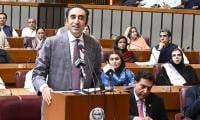
ISLAMABAD: The Senate Standing Committee on Climate Change and Environmental Coordination Chairperson Senator Sherry Rehman has warned that Pakistan is entering a period of heightened climate vulnerability marked by intensifying heatwaves, accelerating glacier melt, erratic rainfall, growing water insecurity and deteriorating urban environmental conditions.
Chairing a meeting of the Senate Standing Committee on Climate Change and Environmental Coordination on Thursday, Senator Sherry Rehman stressed the urgency of the situation. She directed that monsoon preparedness remain the committee’s immediate priority and called for stronger institutional coordination to confront what she described as a widening climate polycrisis.
Expressing concern, Senator Sherry Rehman noted that the Climate Ministry’s total allocation had fallen to Rs2.478 billion in the PSDP, while it had already been reduced from Rs3.5 billion to Rs2.7 billion in the previous fiscal year. “Climate risks are increasing, not decreasing. Yet allocations continue to shrink while implementation challenges persist. This is a grave concern. But it is imperative to note there is an existing inability by the Ministry to utilise the funds that were already allocated.”
Senator Rehman questioned the logic of creating parallel institutional structures, referring to the Climate Authority. “What is the function of this Authority? And what is it doing that the Climate Ministry cannot achieve? Losses of SOEs in Pakistan reached Rs832.848 billion in FY2025, with cumulative losses now standing at Rs6.563 trillion. Yet another Rs451 billion has been allocated to SOEs in this budget.” She stressed that climate governance requires greater coordination, not additional bureaucratic silos such as the Climate Authority.
Turning to the monsoon agenda, Senator Sherry Rehman directed that the committee focus on the emerging risks facing Pakistan in the coming months.
Chairman NDMA Inam Haider Malik told the committee that 2026-27 is expected to be shaped by El Niño, intensifying extreme weather across the region. He noted that June 2026 global temperatures were about 1.47°C above historical averages, while Pakistan’s were around 1.56°C above baseline. He warned that rainfall patterns are becoming increasingly erratic, with reduced overall rainfall but more intense downpours, alongside prolonged dry spells worsening pressure on water and agriculture.
He further said glacier melt has increased by around 3.5 per cent and evaporation by nearly 3 per cent, with rising risks of flash floods and GLOF events in northern Pakistan, projected to increase from about 33 to nearly 50.
Sherry Rehman sought details of the national drought action plan and questioned the costing of climate adaptation measures. She also raised concerns over regional water security, stressing the need for greater transparency on transboundary flows and calling for a July briefing on water resources and storage challenges.