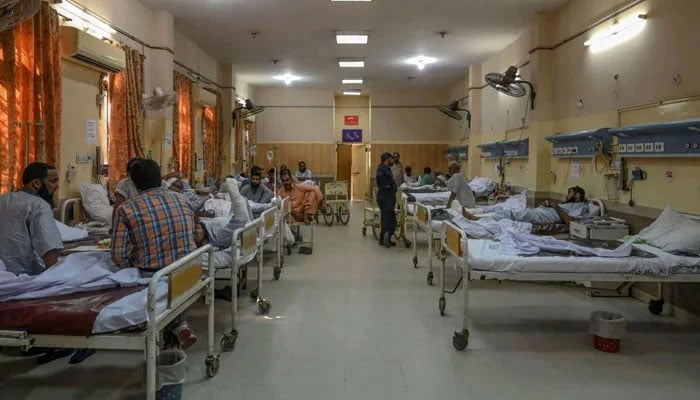
The Sindh government has allocated Rs381.83 billion for healthcare services, including Rs336.46 billion for current expenditure and Rs45.38 billion for development spending, as it continues to expand hospitals, primary healthcare facilities, emergency services, disease prevention programmes and modern medical infrastructure to improve access to quality health care across the province.
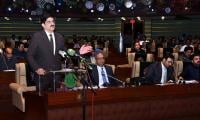
Presenting the provincial budget for 2026-27, Chief Minister Syed Murad Ali Shah said that the provision of quality health care is essential for addressing the needs of vulnerable and underserved populations, and ensuring equitable access to medical care in both urban and rural areas.
Shah said the government is strengthening healthcare delivery through investments in specialised hospitals, emergency services and disease prevention programmes.
He said the National Institute of Cardiovascular Diseases has continued to strengthen its position as one of the world’s largest publicly funded cardiac care systems.
A new outpatient complex developed at a cost of Rs1.2 billion has become operational, and is currently serving an average of 46,230 patients and conducting around 40,500 diagnostic tests every month.
A 100-bed emergency block costing Rs600 million has also been established, while a dedicated clinical trial unit is being set up with an investment of Rs250 million to support advanced cardiovascular research.
According to the budget speech, the Sindh Institute of Cardiovascular Diseases, which operates 10 cardiac hospitals and 30 chest pain units (CPUs), provided free treatment to more than 3.44 million patients during 2025-26 at an expenditure of approximately Rs13.3 billion.
The network performed 15,927 emergency angioplasties, 12,757 cardiac catheterisation procedures and 1,914 open-heart surgeries, while its CPUs treated 432,999 patients, including 9,610 emergency heart attack cases. New CPUs have been established in Sanghar and Dadu, while another is nearing completion in Shahdadkot.
The Sindh Institute of Urology & Transplantation (SIUT) continued expanding its specialised services, with its 250-bed children’s hospital now about 80 per cent operational and expected to become fully functional by August.
The facility has already provided more than 53,000 outpatient consultations. The SIUT Medical Centre in Sukkur treated tens of thousands of patients and dialysis cases during the year, while an oncology centre is under construction and a state-of-the-art urology hospital is planned for Larkana.
The Jinnah Postgraduate Medical Centre, one of the country’s largest tertiary-care hospitals, provided treatment to around 2.58 million patients, including more than 617,000 emergency cases, during the outgoing fiscal year. The hospital recorded 63,554 admissions and performed 38,487 major surgeries.
Its oncology services managed 51,711 cancer patients and carried out over 31,000 radiotherapy sessions. The government has allocated Rs3.85 billion for equipment and utilities for the hospital’s under-construction 550-bed medical tower.
The Sindh Institute of Child Health & Neonatology expanded its network from 790 beds to more than 1,120 beds, and provided treatment to over 1.2 million children during the year.
A 125-bed Mother & Child Hospital in Jamshoro has become operational, while a new children’s hospital in Mirpurkhas is expected to start functioning during the first quarter of the new fiscal year. New satellite centres have also been established in Shahdadpur, Qamber Shahdadkot, Mirpur Mathelo and Sujawal.
The Gambat Institute of Medical Sciences treated around 2.97 million patients and performed 174 liver transplants, 16 kidney transplants, 29 bone marrow transplants and 209 cardiac surgeries during the year, maintaining its position as Pakistan’s leading public-sector transplant centre.
Emergency medical services were also expanded through Sindh Integrated Emergency & Health Services 1122, with 110 new ambulances added to increase the fleet to 545 vehicles.
Emergency coverage has now been extended to all major highways, while a boat ambulance service with 26 boats has been launched for coastal and riverine areas.
The government has also approved the expansion of air ambulance services across Sindh, and launched a round-the-clock telemedicine helpline, 1123 Tele-Tabeeb, providing free medical and mental health consultations.