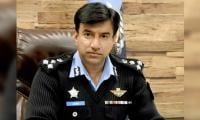
RAWALPINDI: A senior security official on Tuesday said Pakistan’s civil and military leadership acted with a broader vision, stressing that its peace efforts were aimed at regional stability and harmony across the Muslim Ummah.
“Pakistan’s civil and military leadership is not driven by narrow motives; its mediation efforts are focused on regional stability and peace within the Muslim Ummah,” the official told the media here. He said through consultations and cooperation with all key stakeholders, Pakistan — particularly Field Marshal Asim Munir — helped avert a major war that was planned to be imposed on the region, carrying grave consequences.
He described it as a victory achieved by Field Marshal Asim Munir through sincerity, competence, strategic acumen and Allah’s blessings for the greater good of humanity — a war won without being fought, reflecting the pinnacle of strategy. “This sensitive diplomatic process demands the utmost confidentiality, responsibility and caution,” he said. He noted that, as a responsible mediator, Pakistan could not afford speculation and would therefore not discuss the contents, substance or future course of any talks.
“Spoilers and detractors will continue to try to subvert peace efforts; however, Pakistan, alongside its partners, will pursue peace with utmost sincerity,” the security official said.
He added that much of the credit went to Muslim countries, particularly Saudi Arabia, for demonstrating leadership, restraint and strategic patience, and the Field Marshal’s wisdom in preventing a war that could have engulfed the region and pitched Muslim against Muslim.
The security official maintained that military diplomacy and relations with friendly countries could not be viewed through a single, narrow lens, as they formed part of the broader diplomacy of both countries based on national interests.
He said the National Security Committee’s declaration of April 24, 2026, was read out to participants, clearly stating that water was a vital national interest that would be protected at all costs through the full spectrum of national power. “Pakistan’s economic and social fabric is closely linked to water, agriculture and food security; therefore, what and when needs to be done to protect, it would be done”, he said.
The official said that while there was no ambiguity about Pakistan’s military capability, resolve and response, the country had also launched a highly successful legal and diplomatic response to India’s violation of the Indus Waters Treaty (IWT). He added that improved water management and conservation were mandatory. “Regardless of what the military can and will do, we must go for more storage canals and better regulatory structures,” he said. “Indian rhetoric on water stems from their domestic political compulsions to keep building narrative around Pakistan,” he said.
“India is great without greatness and historic without history,” the security official observed.
The security official maintained that Kashmir was an unfinished part of the completion of Pakistan. “The 1948 war was fought jointly by the Pakistani military, Kashmiris and tribal fighters. A total of five wars have been fought over Kashmir so far,” the media briefing was told.
The development projects and subsidies in Indian-administered Kashmir cannot buy the emotions and aspirations of the Kashmiri Muslim population, and efforts to alter the demographic balance and legal maneuvers cannot eliminate the Kashmiri Muslims’ right to self-determination.
According to the security official, India is attempting to create instability in Azad Jammu and Kashmir in order to conceal its failures in the Indian-administered Kashmir. He said the motives behind the so-called rights movement and its true face had now become apparent.
Pakistan’s leadership has always prioritized dialogue and negotiations. Negotiations were held over the past two years and all requested facilities and concessions were provided. Pakistan’s government is democratic and seeks to resolve issues through dialogue and negotiations before considering any other option, the security official said.
The Public Action Committee initially emerged around public issues. However, the state had already identified hidden elements within the movement and anticipated that they would eventually be exposed. Several individuals embedded among the protesters and their actual objectives have now come to light, and they will be dealt with in accordance with the law.
The Azad Jammu and Kashmir government adopted a democratic and conciliatory approach and attempted to include the Public Action Committee in all stages of the process. In contrast, the Joint Awami Action Committee resorted to violence, arson and vandalism, while encouraging the public toward inflammatory and provocative actions. The now-banned Public Action Committee ignored the ruling of the Supreme Court of Azad Kashmir, continued on a path of violence, and consistently promoted anti-state sentiments.
The 12 reserved seats are linked to the Constitution and the Kashmiri right to self-determination, and no group or armed faction can impose its decisions through force. The state has no ambiguity about how those who choose violence and disorder will be dealt with. “No one can be allowed to take the law into their own hands. If anyone attempts to challenge the authority of the state under the guise of a rights movement while pursuing an external agenda, the law will take its course,” the security official said.
Security forces and law enforcement agencies across Pakistan conducted a total of 32,092 operations this year to counter terrorism. A total of 2,170 terrorist incidents occurred with the support and backing of the Afghan Taliban regime during which 1,861 terrorists were killed, while 640 Pakistani security personnel sacrificed their lives in the line of duty.
He said these figures demonstrate how Fitna al-Khawarij and Fitna al-Hindustan, operating under the patronage of the Afghan Taliban regime, had become serious threats to Pakistan’s national security. After decades of engagement, Pakistan has reportedly reached the conclusion that the Taliban regime supports the implementation of what Pakistan considers a distorted interpretation of Islam. The Taliban regime’s irresponsible and violent behaviour leaves little room for meaningful diplomatic engagement or cooperation. “It was due to the Afghan Taliban regime’s intransigence and lack of seriousness that Pakistan decided to target the terrorist hideouts across the border”, the security official said.
He went on to say that Fitna al-Hindustan (BLA) was purely a terrorist organization, supported by India and certain European elements. Anti-Pakistan elements are actively working to obstruct the development and prosperity of Balochistan. He pointed out that anti-state narratives were being created and promoted by India and other anti-Pakistan actors.
The security official said the so-called narrative war was largely confined to social media and did not reflect the ground realities.
More than 18,000 vehicles travel daily on Balochistan’s road and highway network, which spans approximately 32,000 kilometers. Terrorists exploit the vastness of Balochistan by targeting isolated vehicles and then use social media and some foreign media outlets to portray the province’s situation negatively.
The Balochistan government is striving to achieve better results through transparent allocation of funds at the district level, proper project selection, and timely implementation.
The Reko Diq project and other mining initiatives are considered important milestones for the welfare of the people of Balochistan.
Talking about the defence budget, the senior security official said the budget had been increased to Rs3 trillion, but inflation had significantly reduced its real value adding that more than 80% of the allocated budget was spent on essential expenditures, including rations, maintenance, and salaries. “These mandatory expenditures are reinvested into the national economy and contribute to its stability,” he said. He said after covering these expenses, only a limited portion remains for procurement of equipment, development projects, and enhancement of military capabilities.